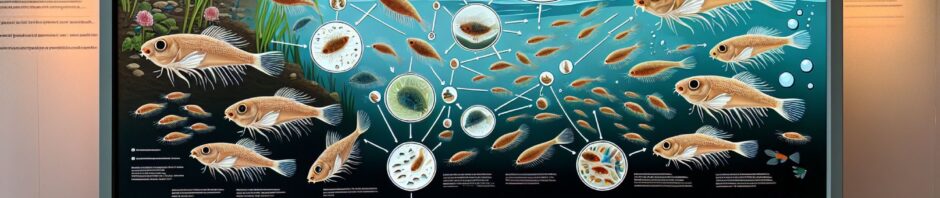
Daphnia, commonly referred to as “water fleas,” are tiny freshwater crustaceans that form a crucial part of aquatic ecosystems. These planktonic organisms may be small in size, but their impact on environmental health, food web dynamics, and scientific research is immense. In this in-depth article, we will explore the vital role of Daphnia in freshwater habitats, their unique life cycles, and their use as bioindicators and models in ecotoxicology and other scientific studies.
Introduction: Understanding Daphnia and Their Place in Aquatic Ecosystems
Daphnia belong to the group Cladocera and are characterized by their transparent exoskeleton and jerky swimming motions powered by their antenna. These aquatic invertebrates are a staple in the diets of various fish species, linking them directly to higher trophic levels within the food web. But the significance of Daphnia stretches far beyond their nutritional value. They are powerful bioindicators of water quality and environmental change due to their sensitivity to various chemical pollutants and other stressors.
Daphnia’s Life Cycle and Reproductive Strategies
Perhaps one of the most fascinating aspects of Daphnia biology is their reproductive method. Daphnia display a reproductive strategy known as parthenogenesis, allowing them to reproduce asexually under favorable conditions. This leads to rapid population growth and swift responses to environmental changes. However, when conditions become challenging, Daphnia can switch to sexual reproduction, producing hardened cases called ephippia that ensure the survival of their genetic material through harsh periods.
Daphnia as Filter Feeders: Ecological Significance
As filter feeders, Daphnia consume algae, bacteria, and detritus suspended in the water, playing a critical role in nutrient cycling and maintaining water clarity. They are particularly effective in controlling algal populations, which can prevent the occurrence of harmful algal blooms associated with eutrophication. Moreover, their filtration activities contribute to higher levels of dissolved oxygen in the water, benefiting other aquatic organisms.
The Role of Daphnia in Biomonitoring and Toxicity Testing
Daphnia are widely used in biomonitoring and toxicity testing due to their quick responses to environmental changes. Researchers have developed standardized tests using Daphnia to evaluate the effects of chemicals and pollutants on aquatic lifeforms. This has led to the development of water quality guidelines and regulations aimed at preserving the health of aquatic ecosystems.
Impact of Environmental Factors on Daphnia: Temperature and Dissolved Oxygen
Environmental conditions such as temperature and dissolved oxygen levels have a significant influence on Daphnia physiology and population dynamics. Daphnia are ectothermic animals, meaning their body temperature and metabolic rate are directly influenced by the water temperature. Dissolved oxygen is crucial for their respiratory processes, and decreases in oxygen levels can lead to stress, reduced fecundity, or even mass mortality. Understanding these effects is essential for proper management and conservation of freshwater habitats.
Daphnia’s Role in Food Web Dynamics and Trophic Levels
At the core of their ecological importance is Daphnia’s position within the food web. They are primary consumers, feeding on primary producers like phytoplankton, and serve as a vital food source for secondary consumers such as small fish and invertebrate predators. Disruptions in Daphnia populations can have cascading effects through different trophic levels, leading to shifts in community structure and ecosystem function.
Daphnia and Predator-Prey Interactions
Predator-prey interactions involving Daphnia are dynamic and complex. Daphnia have evolved behavioral responses and other adaptations to evade predation, such as diurnal vertical migration and changes in body size or morphology. Conversely, the presence of predators can influence Daphnia population dynamics, life history traits, and even lead to evolutionary adaptations.
The Use of Daphnia in Ecotoxicology and Environmental Assessment
Daphnia are widely used in the field of ecotoxicology to understand the impacts of chemical pollutants on organisms and ecosystems. Their sensitivity to a range of toxic substances makes them excellent candidates for assessing the acute and chronic effects of environmental chemicals. Studies often measure endpoints such as survival rate, reproductive output, and behavioral responses to assess overall health and viability.
Daphnia’s Evolutionary Adaptations to Environmental Stressors
In response to environmental challenges, Daphnia have developed a variety of evolutionary adaptations. These can include changes in life history strategies, such as altering the timing of reproduction or the allocation of resources to different life stages. Daphnia’s ability to adapt to changing conditions not only aids in their survival but also provides scientists with valuable insights into the principles of evolutionary ecology.
Conclusion: Why Daphnia Matters to Aquatic Health and Scientific Research
Daphnia are more than just water fleas; they are bioindicators, filter feeders, and pivotal food web constituents that have a profound influence on ecosystem health and stability. They offer scientists a window into the effects of environmental stressors and help guide conservation efforts. Understanding and preserving the ecological integrity of Daphnia populations is crucial for maintaining the balance of freshwater ecosystems we depend upon.
Sources:
- Lampert, W. (2011). Daphnia: Model Herbivore, Predator and Prey. Pol. J. Ecol. 59: 125–140.
- Haeba, M., Hopp, U., & Müller, R. (2005). Daphnia magna as a bioindicator of toxicity in the assessment of water quality: a case study from the Roter Main River, Bayreuth, Germany. Hydrobiologia, 544(1), 99-109.
- Colbourne, J. K., Pfrender, M. E., Gilbert, D., Thomas, W. K., Tucker, A., Oakley, T. H., … & Lynch, M. (2011). The ecoresponsive genome of Daphnia pulex. Science, 331(6017), 555-561.
Using these insights and data gathered from research on Daphnia, scientists and environmental managers can make more informed decisions regarding the care of freshwater habitats. It is our hope that continued study and appreciation of these “invisible” but crucial organisms will contribute to a healthier and more sustainable environment for all aquatic life.