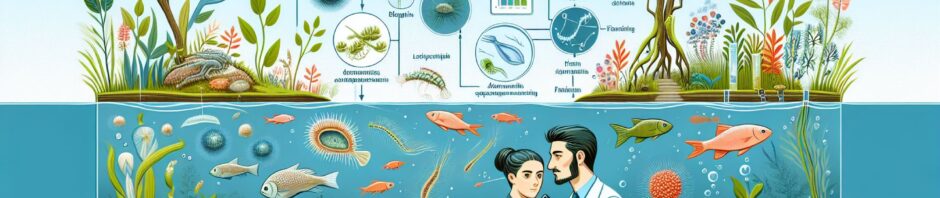
Daphnia, often referred to as water fleas, are a group of small, mostly freshwater crustaceans belonging to the order Cladocera. These minuscule creatures are more than just fish food; they play a crucial role in the health and stability of aquatic ecosystems. Moreover, Daphnia serve as vital organisms in the field of environmental assessment, particularly in biomonitoring and toxicity testing. In this article, we will delve into the life of Daphnia, their ecological importance, and how they help scientists assess the health of our water bodies.
What are Daphnia?
Daphnia are part of the broader group of organisms known as zooplankton, which is essentially plankton consisting of small animals. These aquatic invertebrates can be found in a variety of freshwater bodies ranging from ponds, lakes, to slow-flowing rivers. They are known for their filter-feeding habits, relying on their ability to strain tiny particles, such as algae and bacteria, from the water to sustain themselves.
The Life Cycle of Daphnia
The life cycle of Daphnia is fascinating and complex. They are capable of both asexual reproduction (parthenogenesis) and sexual reproduction. During favorable conditions, Daphnia reproduce asexually, with females producing clones of themselves. However, when circumstances become tough, typically due to temperature fluctuations, scarcity of food, or accumulation of waste products, Daphnia reproduce sexually. During this phase, they produce a resistant form of eggs known as ephippia, which allow the species to survive harsh conditions and re-emerge once the environment becomes more hospitable.
Ecological Importance
Daphnia are vital players in aquatic ecosystems. They serve as key organisms in the food web, acting as prey for a variety of fish and invertebrate predators. Daphnia’s feeding habits also make them important in controlling algal populations, thus preventing algal blooms that can lead to eutrophication—a process that can significantly decrease water quality by depleting dissolved oxygen levels.
Trophic Levels and Food Web Dynamics
Within trophic levels and food web dynamics, Daphnia primarily occupy the role of primary consumers, feeding directly on primary producers like phytoplankton and passing on the energy they ingest to higher trophic levels. By doing so, Daphnia help maintain the natural balance of ecosystems and influence nutrient cycling.
Population and Behavior Responses
Daphnia population dynamics are influenced by a number of factors including predation, availability of food, and environmental conditions. Predator-prey interactions can significantly impact the size of Daphnia populations. For instance, the presence of fish can cause Daphnia to exhibit behavioral changes, such as migrating into deep waters during the day to avoid predation, only returning to the surface at night to feed.
Temperature effects cannot be overstated when discussing Daphnia. Being ectothermic organisms, their metabolism, growth, and reproductive rates are directly affected by ambient temperatures. Warmer temperatures generally increase Daphnia’s metabolic and reproductive rates up to an optimum point, beyond which survival can become compromised.
Daphnia’s Role in Biomonitoring and Toxicity Testing
Environmental assessment is an essential part of managing and protecting freshwaters for both human use and biodiversity conservation. Daphnia have emerged as ideal models in ecotoxicology studies and environmental assessment due to their sensitivity to various chemical pollutants, and their ease of cultivation and short life cycle.
Biomonitoring and Water Quality Indicators
Biomonitoring is the use of living organisms to assess the quality of the environment. Daphnia, as a component of zooplankton, are excellent bioindicators due to their rapid response to changes in water quality. Their behavior, physiology, and population dynamics can provide early warning signals of ecological stress caused by pollutants and other environmental changes.
Toxicity Testing in Ecotoxicology
In toxicity testing, Daphnia are frequently used to measure the impact of chemical pollutants on biological systems. This involves exposing Daphnia to different concentrations of a particular chemical and observing the effects on their survival, growth, and reproduction. The results from these tests contribute to understanding the potential risks of chemical compounds to aquatic ecosystems and form the basis for setting regulatory limits on pollutant discharges.
Evolutionary Adaptations of Daphnia
Daphnia exhibit a range of evolutionary adaptations that enable them to survive and thrive in their aquatic habitats. For instance, some species have developed the ability to produce protective carapaces or spines to reduce predation risk. Genetic variation within Daphnia populations also allows for a rapid adaptive response to environmental changes, which is essential for their survival given the often fluctuating conditions of freshwater habitats.
Conclusion
Daphnia may be small, but their contribution to freshwater ecosystems and our understanding of environmental health is immeasurable. Their role as filter feeders, participants in nutrient cycling, and their position in the food web make them integral to aquatic life. Furthermore, as pivotal components in biomonitoring and toxicity testing, Daphnia help scientists and environmental managers safeguard our water resources.
Given the importance of Daphnia in various aspects of ecology and environmental science, continued research and conservation of their habitats are vital for maintaining the ecological balance and health of freshwater environments.
Sources
- Ebert, D. (2005). “Ecology, Epidemiology, and Evolution of Parasitism in Daphnia”. Bethesda (MD): National Library of Medicine (US), National Center for Biotechnology Information. https://www.ncbi.nlm.nih.gov/books/NBK2042/
- “Daphnia as an emerging model for toxicological genomics.” Shaw, J.R., Colbourne, J.K., Davey, J.C. et al. Adv Genet 64, 163–215 (2008). https://pubmed.ncbi.nlm.nih.gov/19161822/
- Lampert, W. (2011). “Daphnia: Model Herbivore, Predator and Prey”. Pol J Ecol., 59(4), 581-593. https://www.researchgate.net/publication/235921996_Daphnia_Model_Herbivore_Predator_and_Prey