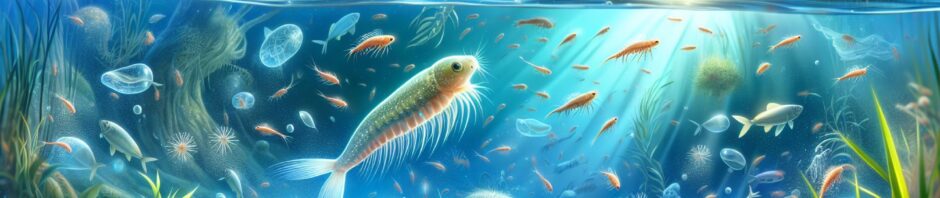
Daphnia, often referred to as “water fleas,” are small freshwater crustaceans that play a crucial role in the ecosystem. They are a central component of the food web dynamics and are instrumental in biomonitoring efforts aimed at assessing water quality. This fascinating group of organisms offers insights into a variety of scientific subjects, including ecotoxicology, population dynamics, and evolutionary adaptations. In this comprehensive article, we will explore the life of Daphnia, their significance in aquatic ecosystems, and how they help scientists and researchers keep track of environmental health.
Understanding Daphnia: Lifters of the Aquatic Veil
Daphnia belong to the order Cladocera and are an essential part of the zooplankton community. As filter feeders, they consume algae, bacteria, and organic matter, clearing the water and reducing turbidity. They are often used as bioindicators because their population growth, health, and reproduction are directly affected by changes in water quality.
Taxonomic Position and Morphology
Cladocera are characterized by their carapace, a sort of shell that covers their body. In Daphnia, this carapace is transparent, allowing a clear view of their internal organs. They have a distinct compound eye, and their heartbeats can be easily observed. Their antennae serve as the primary mode of locomotion, propelling them through the water in a hopping motion — an action that has earned them their nickname.
Life Cycle and Reproduction
The life cycle of Daphnia involves both asexual reproduction (parthenogenesis) and, under certain circumstances, sexual reproduction. During favorable conditions, females reproduce asexually, producing clones that share their genetic makeup. Sexual reproduction is triggered by environmental stressors or changes in season, leading to the production of ephippia — resistant structures that safeguard the species’ genetic material until conditions improve.
Ecosystem Role: From Food to Filter
In aquatic ecosystems, Daphnia serve as prey for various predators, including fish and insect larvae, representing a vital intermediate trophic level. Their role as filter feeders also contributes to algal bloom control and nutrient cycling, as they efficiently recycle nutrients and reduce the likelihood of eutrophication.
Biomonitoring and Water Quality
Biomonitoring with Daphnia provides a dynamic approach to assessing the ecological integrity of freshwater habitats. Being sensitive to a range of environmental factors such as dissolved oxygen levels, temperature effects, and the presence of chemical pollutants, they act as living sensors alerting us to ecosystem changes.
Rapid Responses to Environmental Stresses
Daphnia show acute behavioral responses to various stimuli, making them suitable for toxicity testing. In laboratories, researchers expose them to different concentrations of pollutants, observing their survival, reproduction, and behavior to determine safe levels for organisms in the wild.
Indicators of Eutrophication and Algal Blooms
Nutrient loading in aquatic environments often leads to eutrophication, a state where high nutrient concentrations trigger excessive algal growth. Daphnia populations can reflect the extent of these events. Their decline could signal an imbalance, while their presence in sustainable numbers often indicates a healthier system.
Population Dynamics: Parthenogenesis and Predation
Parthenogenesis is central to the rapid population growth seen in Daphnia. This mode of reproduction allows for swift colonization and exploitation of available food resources. On the flip side, they exhibit complex predator-prey interactions. Detecting predators in their vicinity can lead to life history changes such as the production of larger broods or alterations in behavior to avoid predation.
Adaptive Strategies for Survival
Daphnia exhibit fascinating evolutionary adaptations to counter environmental stress. The transparency of their body can be a defense mechanism, making them less visible to predators. Furthermore, they can develop physical structures like helmets and spines in the presence of predator cues, making them a more problematic meal to consume.
Trophic Levels Impact: Feeding Fish and Beyond
At the heart of food web dynamics, Daphnia link the primary producers, such as algae, to higher trophic levels, including fish. The health of Daphnia populations can significantly influence the growth and abundance of fish, affecting other parts of the food web indirectly.
The Influence of Temperature and Dissolved Oxygen
Temperature and dissolved oxygen are vital factors that influence Daphnia’s lifespan, reproduction, and distribution. Warmer temperatures generally accelerate their metabolism, leading to increased feeding and reproduction rates. However, extreme temperatures or low dissolved oxygen levels can have adverse effects, marking the significance of climate change impacts on these organisms.
Research Implications and Ecotoxicology
Daphnia have become essential model organisms in ecotoxicology studies due to their sensitivity to contaminants. Research on Daphnia can unearth how chemical pollutants interact with aquatic organisms and affect their survival and reproduction. By extension, studies on Daphnia contribute to better environmental assessment and policy-making directed at conserving aquatic ecosystems.
Future Prospects for Daphnia
As the effects of anthropogenic activities on the environment grow, the role of Daphnia in biomonitoring is set to become even more critical. Their rapid response rate and the ease of observing their life history traits in a controlled setting make them an invaluable resource for ongoing and future environmental research.
Conclusion
Daphnia, the tiny but mighty powerhouses of the water, serve multiple pivotal roles in maintaining the health of freshwater ecosystems. As filter feeders, they contribute to water clarity and algal control. As a crucial food source for numerous fish species, they support local fisheries and recreational activities. And as indicators of environmental change, they provide invaluable data to scientists monitoring ecosystem health.
Sources
Here are a few sources for further exploration of the fascinating world of Daphnia and their impact on aquatic ecosystems:
- “Daphnia: Model Herbivore, Predator and Prey” by W. Lampert – This source offers an insightful review of Daphnia’s roles in aquatic food webs and their interactions with other organisms.
- “Ecological and Evolutionary Implications of Food Subsidies from Humans” by D. M. Post et al. – This article discusses how human-derived nutrients affect aquatic organisms and the trophic levels they are part of, including Daphnia.
- “The Use of Daphnia To Monitor Trace Substances in Bodies of Water” by L. Heckmann – This resource provides an overview of using Daphnia for biomonitoring and the methods used in toxicity testing.
The continued study and protection of these creatures are imperative for safeguarding our freshwater resources, understanding the vast interconnectedness of the food web, and ultimately, ensuring the continued health and balance of aquatic ecosystems worldwide.