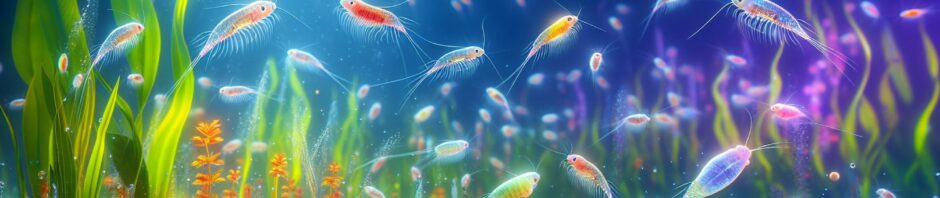
Water is the source of life on Earth, pivotal for the survival of all species, including humans. As such, ensuring its quality is not just a matter of environmental concern, but one of public health, agriculture, and industry. Amidst a plethora of methods to assess water health, one of the most biologically relevant and insightful strategies involves a minute but mighty organism—Daphnia, often referred to as the ‘water flea.’ This article unfolds the significance of Daphnia in ecotoxicology, an interdisciplinary field focusing on the potential effects of toxic substances on the ecosystem.
The Life in a Drop: Introduction to Daphnia
Daphnia belong to the order Cladocera, a group of small, predominantly freshwater crustaceans. They are part of a more extensive community of aquatic invertebrates that play a crucial role in the functioning of aquatic ecosystems. Recognized by their jerky, hopping motion through the water, which their common name ‘water flea’ alludes to, Daphnia species are more than just a food source for fish and other aquatic predators. They stand out as excellent water quality indicators and are instrumental in ecotoxicology studies.
A Repertoire of Survival: Daphnia’s Life Cycle and Reproductive Strategies
The life cycle of Daphnia is fascinating and complex. They exhibit a reproductive strategy known as cyclical parthenogenesis. Under favorable conditions, Daphnia reproduce asexually through parthenogenesis where females produce genetically identical offspring. However, when environmental conditions become stressful or unfavorable, they shift to sexual reproduction, ensuring genetic diversity. The result of this sexual reproduction is a resistant egg, encased in a structure called an ephippium, which can endure harsh conditions and repopulate once the environment becomes hospitable again.
On the Frontlines of Ecotoxicology
Ecotoxicology is the study of how toxic chemicals affect biological organisms and the ecosystem. It combines ecology, toxicology, physiology, molecular biology, and environmental chemistry to predict and assess the impacts of pollutants. Daphnia species have become a cornerstone in this field. They are sensitive to changes in water quality, making them ideal organisms for bioassessment and toxicity testing.
Sources Used in Ecotoxicology:
- Environmental assessment: Researchers use Daphnia to monitor the ecological impact of chemical pollutants, assessing the health of aquatic environments.
- Toxicity testing: By exposing Daphnia to various concentrations of chemicals, scientists can determine lethal doses and effects on reproduction, growth, and behavior, which are used to derive safe levels for those chemicals in the environment.
- Biomonitoring: Daphnia’s sensitivity to changes in water quality positions them as bioindicators. Regular monitoring of Daphnia populations can help detect early signs of ecosystem stress.
Why Daphnia? Advantages in Environmental and Water Quality Monitoring
There are several reasons why Daphnia are excellent models for environmental monitoring:
- Sensitivity: Daphnia are sensitive to a wide range of environmental stressors, including chemical pollutants, habitat changes, and climate-related factors like temperature.
- Rapid Life Cycle: They have a quick and easy-to-observe life cycle, which means effects of pollutants can be seen in a short period.
- Ease of Culturing: Daphnia can be maintained in the laboratory with relative ease, which is convenient for long-term studies.
- Cost Effectiveness: Studying Daphnia is less expensive compared to other toxicological test organisms, making them an economically viable option for regular monitoring.
Decoding Daphnia’s Responses: Unraveling Impacts on Ecology and Evolution
The study of Daphnia goes beyond immediate responses to pollutants. Researchers also look at behavioral responses and evolutionary adaptations as these organisms cope with environmental pressures.
Behavioral Responses:
Daphnia show discernible changes in behavior when exposed to toxins. These can range from altered swimming patterns to changes in feeding habits. By quantifying these changes, researchers can gain insights into how pollutants affect aquatic organisms at a micro-scale.
Evolutionary Adaptations:
Persistent exposure to pollutants may lead to evolutionary changes in Daphnia populations. Scientists explore how these adaptations influence population dynamics, and how they may eventually be passed down through generations, altering ecological interactions.
Water Quality Indicators: The Sentinel Role of Daphnia
The role of Daphnia as water quality indicators cannot be overstated. Not only are they affected by pollutants, but their populations can influence and be influenced by:
- Algal Blooms and Eutrophication: Daphnia feed on algae, and their populations can regulate the occurrence of harmful algal blooms, a process tightly linked to water quality.
- Nutrient Cycling: They contribute to the cycling of nutrients, which is essential for maintaining the health of aquatic ecosystems.
- Dissolved Oxygen Levels: Their feeding activities can indirectly affect levels of dissolved oxygen, critical for the survival of many aquatic organisms.
Challenges and Limitations in the Use of Daphnia
While Daphnia offer many advantages for water quality assessment and ecotoxicology research, there are challenges:
- Variance among Species: Different species of Daphnia may respond differently to the same pollutants, complicating interpretations of results.
- Extrapolating to Other Species: Results from Daphnia studies may not always accurately predict effects on other species, including humans.
- Laboratory vs. Field Conditions: Daphnia’s responses in controlled laboratory conditions might not always reflect their behavior in natural ecosystems, which are more complex and variable.
Integrating Research on Daphnia into Wider Ecological Contexts
Understanding the myriad ways in which Daphnia interact with their environment provides unparalleled potential for research that spans multiple trophic levels and aspects of aquatic ecosystems:
- Trophic Levels: Investigating how Daphnia fit into the food web and affect other trophic levels offers insights into food web dynamics.
- Population Dynamics: Studying how environmental factors influence Daphnia population dynamics sheds light on broader ecological patterns.
- Predator-Prey Interactions: Exploring Daphnia’s relationships with its predators can illuminate intricate aspects of aquatic ecosystem functioning.
- Temperature Effects: Research into how temperature changes, particularly due to climate change, affect Daphnia populations can forecast broader ecological impacts.
In conclusion, Daphnia serve as a crucial link in the aquatic ecosystem, but their value extends far beyond their ecological role. Through their use in ecotoxicology and water quality assessment, these tiny creatures can provide comprehensive insights into the health of aquatic environments and inform strategies for conservation and restoration. Their ease of study and sensitivity to environmental change underscore the importance of Daphnia in environmental monitoring and ecological research.
Despite their small size, Daphnia are mighty in their significance, offering a window into the enduring and intricate interplay between biology and the environment. It is through continued research and monitoring that we can ensure the health of our aquatic ecosystems and, by extension, the well-being of all species that rely on them, including ourselves.
References
- Lampert, W. (2011). Daphnia: Development of a Model Organism in Ecology and Evolution. International Ecology Institute.
2.