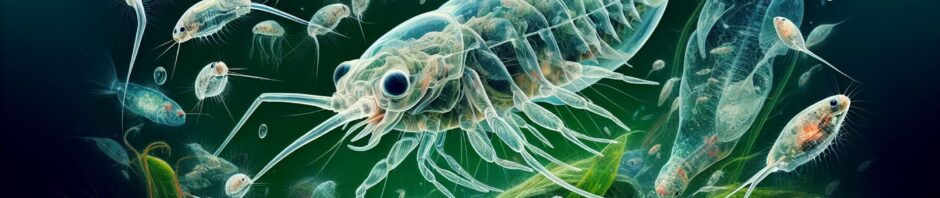
Daphnias, commonly known as “water fleas,” are small, translucent freshwater crustaceans that occupy a critical niche within aquatic ecosystems. They are a vital component of the food web, serving both as a food source for larger organisms and as effective filter feeders that help maintain the clarity and quality of the water they inhabit. This article dives deep into the complex and fascinating world of Daphnia, exploring their ecological importance, lifecycle, behaviors, and the challenges they face in changing environments.
Introduction
The world of freshwater invertebrates is vast and varied, but among it, Daphnia holds a special place for both scientists and environmental enthusiasts. These tiny creatures, barely visible to the naked eye, are considered sentinels of ecological health and play a pivotal role in the dynamics of aquatic environments.
Daphnia, a genus within the class Cladocera, has been used extensively in scientific research due to its sensitivity to environmental changes. Understanding Daphnia is instrumental in fields such as ecotoxicology, environmental assessment, and biomonitoring. They are not only fundamental to nutrient cycling in freshwater ecosystems but also serve as indicators of water quality.
Taxonomy and Morphology
Daphnia belongs to the Phylum Arthropoda, Subphylum Crustacea, Class Branchiopoda, Order Cladocera. They have a distinct body structure, wherein their carapace (a shield-like shell) covers most of their body, leaving their head exposed. Inside this carapace, the appendages are responsible for swimming and filter feeding. Most species are less than 5 mm in length, making them a microscopic but mighty force within their habitats.
Ecological Significance
Role in the Food Web
As members of the zooplankton community, Daphnia occupies a crucial position in trophic levels. They feed on algae and bacteria (being filter feeders) and in turn, are preyed upon by fish, insects, and other aquatic invertebrates. This places them squarely in the middle of the food web where fluctuations in their population can have cascading effects throughout the ecosystem.
Biomonitoring and Water Quality Indicators
Daphnia’s sensitivity to changes in their environment makes them perfect biological indicators. Scientists use them to gauge the health of aquatic ecosystems through biomonitoring. They respond to various stressors, including chemical pollutants, dissolved oxygen levels, temperature, and the presence of heavy metals. A decline in Daphnia populations often signals an underlying problem that could affect the entire aquatic system.
Nutrient Cycling and Algal Blooms
As filter feeders, Daphnia consume large quantities of algae, which helps prevent the onset of harmful algal blooms that can lead to eutrophication. Their waste products also contribute to nutrient cycling, making them a critical factor in maintaining the equilibrium of freshwater habitats.
Life Cycle and Reproduction
Lifecycle Phases
Daphnia undergo a complex life cycle that includes both asexual and sexual reproduction. A typical life cycle begins with the asexual phase, where females reproduce clonally through parthenogenesis, giving rise to genetically identical offspring. This allows for rapid population increases under favorable conditions.
Sexual Reproduction and Ephippia
Under stressful environmental conditions, such as changes in temperature or food scarcity, Daphnia can switch to sexual reproduction. During this phase, males are produced, and sexual reproduction can take place, leading to the production of ephippia—protective cases that enclose dormant embryos capable of withstanding harsh conditions. These ephippia can remain viable for extended periods, ensuring the survival of the species during unfavorable times.
Predator-Prey Interactions
Predation significantly influences Daphnia’s population dynamics and evolutionary adaptations. Their predators include small fish, insect larvae, and other planktonic organisms. Daphnia has developed behavioral responses and morphological changes like the production of protective spines or changes in size to evade predation. These adaptations highlight the dynamic predator-prey interactions that drive evolutionary processes in aquatic environments.
Environmental Assessments and Challenges
Toxicity Testing and Ecotoxicology
Due to their environmental sensitivity, Daphnia is commonly used in toxicity testing. Such tests help determine the impacts of various substances on living organisms and are crucial for assessing the ecological risks posed by chemical pollutants. The test results can inform regulations and guidelines for environmental protection.
Climate Change and Environmental Stressors
Climate change poses a significant challenge to Daphnia populations. Temperature fluctuations can influence their reproductive strategies and survival rates, while changes in precipitation patterns can affect the water chemistry of their habitats. Additionally, increased anthropogenic activities introduce pollutants and alter the natural state of aquatic ecosystems, thereby affecting Daphnia and the intricate balance they help maintain.
Conclusion
Daphnia might be inconspicuous in size, but their impact is colossal. They are not only a key species in the aquatic food web but also serve as a barometer for the health of freshwater ecosystems. Whether it’s their role in nutrient cycling, their intricate reproductive strategies, or their use in scientific research, Daphnia continues to captivate scientists and environmentalists alike.
Recognizing their importance is crucial for conservation efforts and for ensuring the resilience of aquatic ecosystems in the face of ever-growing environmental challenges. Sustained research and protective measures are necessary to preserve these vital organisms and the ecosystems they support.
Sources
-
Ebert, D. (2005). Ecology, Epidemiology, and Evolution of Parasitism in Daphnia. Bethesda (MD): National Library of Medicine (US), National Center for Biotechnology Information; 2005-. Available from: https://www.ncbi.nlm.nih.gov/books/NBK2042/
-
Lampert, W. (2011). Daphnia: Development of a Model Organism in Ecology and Evolution. Oldendorf/Luhe: International Ecology Institute.
-
United States Environmental Protection Agency. (2019). Best Practices for Continuous Monitoring of Temperature and Flow in Wadeable Streams. Retrieved from https://www.epa.gov/sites/default/files/2019-08/documents/best-practices-for-continuous-monitoring-of-temperature-and-flow-in-wadeable-streams.pdf
From the delicate balance of the food web dynamics to the pressing issues of environmental assessment, the presence and health of Daphnia populations offer essential insights that we must continue to explore and protect.