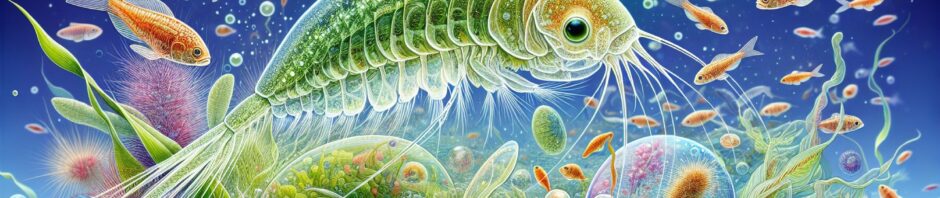
Daphnia, commonly known as water fleas, are small, planktonic crustaceans that can be found in a variety of freshwater environments. These tiny organisms may not initially strike as an exciting subject of study, but their role in aquatic ecosystems, their unique biological characteristics, and their utility in scientific research make them fascinating creatures that are worthy of a closer look.
Understanding Daphnia: A Brief Overview
Daphnia belong to the order Cladocera, and they are a crucial component of the freshwater food web. With their transparent carapace and often less than 5 millimeters in length, they may seem insignificant at a glance. However, Daphnia play an outsized role as filter feeders that consume algae and bacteria, thus contributing to nutrient cycling and water clarity in their habitats.
Life Cycle and Reproduction
One of the most intriguing aspects of Daphnia biology is their reproductive strategy. They predominantly reproduce asexually through parthenogenesis, where females give birth to genetically identical daughters. This mode of reproduction allows for rapid population growth when conditions are favorable.
However, when the environment becomes stressful due to factors like scarcity of food, overcrowding, or changes in temperature, Daphnia can switch to sexual reproduction. This strategy ensures genetic diversity and produces ephippia—resistant eggs that can withstand harsh conditions and lie dormant for years. The switch between reproductive modes is a fascinating area of research in evolutionary adaptations and population dynamics.
Daphnia as Ecotoxicological Indicators
In the field of ecotoxicology, Daphnia serve as sentinel species for water quality indicators and toxicity testing. Their sensitivity to various chemical pollutants and behavioral responses to environmental stressors make them ideal for biomonitoring aquatic environments.
The Role in Aquatic Food Webs
Daphnia are a key food source for many fish and invertebrate predators. Their position in the middle of trophic levels and their ability to respond quickly to changes in algal food supply make them significant in understanding food web dynamics and predator-prey interactions.
Delving Deeper into Daphnia’s Ecology and Significance
Daphnia and Algal Blooms
The relationship between Daphnia and algal blooms is a classic example of how these organisms can impact water quality. Through their filter-feeding behavior, Daphnia can reduce the intensity of algal blooms, which, if left unchecked, can lead to eutrophication—a process where water bodies become overly enriched with nutrients, leading to excessive plant growth and depleted dissolved oxygen levels.
Eutrophication not only affects the visual aesthetic of water bodies but also has far-reaching impacts on the health of aquatic ecosystems. Daphnia’s ability to control algae populations is thus a natural defense against this environmental issue.
Daphnia in Environmental Assessments
Researchers and environmental managers employ Daphnia in environmental assessments to test the effects of chemical pollutants on aquatic life. They measure various endpoints, such as survival, reproduction, and growth, to assess the impacts of contaminants present in water samples.
Impact of Temperature and Dissolved Oxygen
Temperature and dissolved oxygen are pivotal factors that influence Daphnia’s survival and reproduction. Temperature affects metabolic rates and the availability of oxygen in water. These organisms require well-oxygenated environments; thus, changes in these parameters due to natural variability or anthropogenic influence can have significant effects on Daphnia populations.
Evolutionary Adaptations and Behavioral Responses
Daphnia’s evolutionary adaptations are key to their survival. They have developed various techniques to escape predators, such as vertical migration and changes in body shape or size. Additionally, their ability to alter reproductive strategies in response to environmental changes is another aspect of their adaptive responses.
Daphnia in Scientific Research
Beyond their ecological importance, Daphnia have become a model organism in various fields of scientific research, including genetics, physiology, and evolutionary biology. The complete sequencing of the Daphnia pulex genome has opened doors to understanding genetic responses to environmental challenges.
The Human Impact: Protecting Daphnia and Their Habitats
Human activities inevitably pose threats to Daphnia and the health of freshwater systems. Pollution, habitat destruction, and climate change are major concerns. By understanding the crucial role played by these organisms, we can implement conservation strategies to preserve their habitats and the biodiversity they support.
Conservation and Restoration Efforts
Efforts to conserve Daphnia populations involve protecting wetlands, reducing nutrient pollution from agricultural runoff, and controlling invasive species. Restoration of damaged aquatic habitats is also essential to ensure the survival of Daphnia and other aquatic invertebrates.
The Future of Daphnia Research
Continued research on Daphnia will deepen our understanding of their ecology and help predict how aquatic ecosystems will respond to environmental changes. By studying these remarkable organisms, we can develop more effective conservation and management tactics to safeguard our freshwater resources for future generations.
Conclusion
Daphnia are much more than just tiny specks in the water—they are a linchpin in aquatic ecosystems, a valuable tool for scientific research, and a bellwether for the health of our freshwater environments. As we continue to uncover the secrets of their biology and the intricacies of their ecological roles, our appreciation for these unassuming organisms grows, as does our responsibility to ensure their preservation.
Sources
For further exploration of Daphnia and their profound impact on aquatic ecosystems and scientific research:
- “Daphnia: Model organism for ecology and evolution” by John K. Colbourne et al., published in the journal Current Biology (Link to Article)
- “The Eutrophication of Lakes” by Robert E. Hecky and Peter Kilham, published in Scientific American (Link to Article)
- “The genome of the model organism Daphnia pulexy” by Ewen Callaway, published in Nature News (Link to Article)
By studying Daphnia, we learn invaluable lessons about the interconnectedness of life and the delicate balance needed to sustain our planet’s precious water resources.