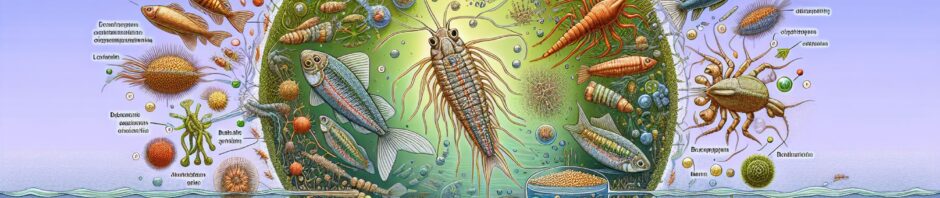
One of the most fascinating and vital organisms in freshwater habitats may be something most people have never even heard of: Daphnia. Commonly known as “water fleas,” these small, often microscopic crustaceans are a major component of aquatic ecosystems. They play a crucial role in the health of these environments and serve as indicators of water quality and as subjects in toxicity testing. In this deep dive into the world of Daphnia, we will explore their lifecycle, ecological importance, contribution to ecotoxicology, and their responses to environmental pressures.
Understanding Daphnia: An Overview
Though they are not as well-known as their larger crustacean cousins like crabs and lobsters, Daphnia are just as important. Found ubiquitously in freshwater bodies ranging from ponds to lakes, these tiny crustaceans belong to the class Cladocera and are a type of zooplankton. They are key players in their habitats, acting as filter feeders that consume algae and bacteria, thus helping to maintain the water quality.
Life Cycle: Adaptability and Reproduction
Daphnia have a fascinating life cycle that allows them to thrive in various conditions. They primarily reproduce asexually through parthenogenesis, where females give birth to clones of themselves, enabling fast population growth. However, when environmental stressors become acute or as winter approaches, Daphnia switch to sexual reproduction, producing resting eggs encased in a structure called an ephippium. These eggs can withstand harsh conditions and hatch when the environment becomes conducive again, ensuring the species’ survival.
Ecological Importance: From Food Webs to Nutrient Cycling
In their role as filter feeders, Daphnia consume large amounts of microscopic algae and bacteria, which are primary producers within the aquatic food chain. By doing so, they regulate algal populations, preventing harmful algal blooms that can lead to eutrophication – an excess of nutrients in water bodies that can be detrimental to aquatic life. Moreover, as a primary consumer, Daphnia are a significant source of nutrition for higher trophic levels, such as fish, thus maintaining the balance of the food web.
Their role does not end there. Through their excretions, they contribute to nutrient cycling, releasing important elements like nitrogen and phosphorus back into the ecosystem, which in turn supports plant and algal growth.
Daphnia’s Role in Biomonitoring and Ecotoxicology
Biomonitoring: Gauging Water Quality
Given their sensitivity to changes in their environment, Daphnia are used as water quality indicators. Researchers monitor populations of Daphnia and their health as a measure of the water body’s overall condition. This practice, known as biomonitoring, can offer early warning signs of ecological damage due to contaminants, such as heavy metals or pesticides, before lasting harm occurs.
Ecotoxicology: Assessing Chemical Pollutants
In ecotoxicology, which studies the impacts of toxic substances on ecosystems, Daphnia are a standard organism for toxicity testing. The Daphnia acute toxicity test is a common procedure used to evaluate the potential effects of chemical pollutants. By exposing them to various concentrations of chemicals and observing their behavioral and reproductive responses, researchers can infer the toxicity of substances and their possible hazard to the environment.
Water Quality Indicators: Predictive Power
The efficacy of using Daphnia as bioindicators is rooted in their acute responses to changes in water quality. For instance, decreases in Daphnia populations may suggest a decrease in dissolved oxygen or an increase in the presence of harmful chemicals. Moreover, they respond visibly to pollutants through behaviors like increased heart rate, altered movement patterns, and reproductive changes, rendering them excellent indicators of sub-lethal levels of pollution.
Environmental Factors Affecting Daphnia
Temperature Effects: A Delicate Balance
Temperature fluctuations can significantly affect the metabolic rate and reproductive success of Daphnia. If temperatures become too high, Daphnia may experience heightened metabolic stress, leading to reduced lifespans and reproductive output. Conversely, if temperatures dip too low, their reproductive rates may slow down, potentially disrupting the population dynamics and affecting the wider food web.
Chemical Pollutants: Behavioral and Evolutionary Responses
When exposed to chemical pollutants, Daphnia exhibit various behavioral responses. These can include changes in their swimming patterns and rates or an altered capacity to filter feed, which in turn can impact their survival and the structure of the community they belong to. Over generations, Daphnia populations can show evolutionary adaptations to these chemicals, potentially leading to increased tolerance or resistance.
Predatory Prey Interactions: Coping Mechanisms
Daphnia also face natural challenges, such as predation by fish and invertebrates. They exhibit adaptive behaviors, such as diel vertical migration, where they descend into deeper, darker waters during the day to avoid predators and ascend at night to feed. Additionally, they can develop physical defenses like spines and helmets in response to chemical cues from predators.
Conservation and Research: Future Challenges and Opportunities
The Importance of Protecting Daphnia Populations
Given their role as a cornerstone species in aquatic ecosystems, protecting Daphnia populations is crucial for maintaining biodiversity and water quality. Conservation efforts must focus on mitigating the adverse impacts of human activities, such as pollution and climate change, which threaten these essential organisms and the services they provide.
Advanced Research: Unraveling More Secrets
Research on Daphnia extends well beyond their role as environmental indicators. Scientists are unraveling the genetic and evolutionary mechanisms that allow them to adapt so readily to changing environments. Daphnia could provide insights into how organisms respond to environmental pressures and might even predict how ecosystems will adapt to global changes.
Conclusion
Daphnia may be tiny, but their impact on aquatic ecosystems is immense. As filter feeders, they contribute to water quality and participate actively in nutrient cycling and food web dynamics. As subjects in biomonitoring and ecotoxicology, they provide crucial insights into the health of aquatic environments and the impacts of pollutants. The ongoing research into their life cycles, reproductive strategies, and responses to environmental stressors is not only fascinating from a biological standpoint but also essential for preserving the delicate balance of the world’s freshwater habitats.
Protecting Daphnia and other similar keystone species is vital in ensuring the stability of these ecosystems for the future. By understanding and valuing the important role that these creatures play, we can take steps to secure the health and biodiversity of our planet’s vital freshwater systems.
Sources:
- Ebert, D. (2005). Ecology, Epidemiology, and Evolution of Parasitism in Daphnia. Bethesda, MD: National Library of Medicine (US), National Center for Biotechnology Information. https://www.ncbi.nlm.nih.gov/books/NBK2036/
- Lampert, W. (1987). Laboratory studies on zooplankton-cyanobacteria interactions. New Zealand Journal of Marine and Freshwater Research. https://www.tandfonline