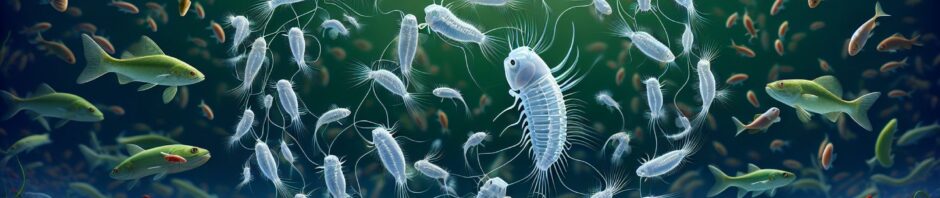
Ecological balance is a delicate thing, often invisible to the naked eye, yet paramount to the health of our planet. In the vast expanse of the world’s freshwater habitats, minute creatures like Daphnia play a monumental role in maintaining this balance. To understand how these tiny organisms impact aquatic ecosystems, it’s essential to explore their biology, behaviors, and the intricate relationships they maintain within their environment.
Understanding Daphnia: The Tiny Titans of Freshwater
Daphnia, colloquially known as water fleas, are small, predominantly freshwater crustaceans belonging to the order Cladocera. They can be found in various environments ranging from acidic swamps to alkaline lakes. Cladocerans are not only a fundamental component of the zooplankton community but also serve as an essential food source for fish and other aquatic animals.
The Life Cycle and Reproductive Strategies
The life cycle of Daphnia epitomizes adaptability and efficiency. They exhibit a fascinating reproductive strategy known as cyclical parthenogenesis, where they primarily reproduce asexually through parthenogenesis when conditions are favorable. In this process, females produce genetically identical daughters without the need for fertilization. However, when environmental stressors such as a decline in food availability or changes in temperature occur, Daphnia may switch to sexual reproduction. This transition results in the production of tough resting eggs encased within protective structures called ephippia, ensuring the survival of offspring amidst harsh conditions.
Daphnia and Trophic Levels: A Pivot in the Food Web
Daphnia are filter feeders, efficiently straining particles from the water, including bacteria, algae, and detritus. They occupy a pivotal position in the trophic levels of freshwater ecosystems, serving as a crucial link between primary producers like phytoplankton and higher trophic level consumers such as fish. By converting microscopic algae into a form that larger organisms can consume, they play a vital role in driving the dynamics of the food web.
The Sentinel Role of Daphnia in Biomonitoring and Water Quality Indicators
Given their sensitivity to changes in their environment, Daphnia make excellent bioindicators for assessing water quality and ecosystem health. Scientists utilize various bioassays with Daphnia to measure the impact of chemical pollutants, with their behavioral and physiological responses providing insight into the toxicity levels of the water body.
Environmental Assessment and Ecotoxicology
In ecotoxicology, researchers expose Daphnia to different concentrations of contaminants to determine the substance’s lethal concentrations (LC50) and effective concentrations (EC50) for various endpoints. These tests offer valuable information for environmental assessment and the establishment of regulatory guidelines for water quality.
Daphnia in Toxicity Testing: Unveiling the Effects of Chemical Pollutants
Toxicity testing with Daphnia is a crucial facet of ecotoxicology. These tests help evaluate the impact of a broad range of substances, including pesticides, heavy metals, and emerging contaminants like microplastics and pharmaceuticals. The response of Daphnia to these pollutants—be it through their heart rate, reproduction, or survival—sheds light on the potential risks these chemicals pose to the aquatic environment.
The Effects of Environmental Factors on Daphnia Population Dynamics
Daphnia populations are highly dynamic and susceptible to various environmental factors. Understanding these interactions is vital for comprehending the broader ecosystem impacts.
Temperature Effects
Temperature is a primary environmental driver influencing the biological functions of Daphnia, including growth, reproduction, and metabolism. Rising water temperatures due to climate change can alter these processes, thereby impacting Daphnia population dynamics and, consequently, the entire freshwater ecosystem.
The Link Between Nutrient Cycling and Daphnia Activity
Daphnia‘s ability to consume vast quantities of phytoplankton makes them central players in nutrient cycling within freshwater ecosystems. Through their feeding activities, they help regulate algal populations, thereby controlling nutrient turnover and influencing the levels of dissolved oxygen in the water.
Algal Blooms, Eutrophication, and the Role of Daphnia
Eutrophication, the process where water bodies become overly enriched with nutrients, often leads to harmful algal blooms. It can cause a drastic shift in the oxygen dynamics of an aquatic system, ultimately affecting the communities dependent on it. Daphnia can suppress the onset of algal blooms by grazing on algae. However, they can also suffer in the event of extreme blooms that create anoxic conditions or produce toxic compounds.
Predator-Prey Interactions and the Evolutionary Dance
Daphnia have evolved various adaptations to deal with predation, including changes in size, transparency, and the development of protective helmets and spines. Their behavioral responses, such as diel vertical migration, where they travel to deeper, darker waters during the day to avoid visual predators and ascend at night to feed, demonstrate a complex set of interactions that affect population and community ecology.
Daphnia Feeding Fish: A Symbiotic Relationship
Fish predation is a considerable pressure on Daphnia populations, yet Daphnia serve as a primary food source for many fish species, forming a cyclical dependency. Understanding this predator-prey relationship is crucial for managing fisheries and maintaining balanced aquatic ecosystems.
Conclusion: The Ripple Effect of Tiny Creatures
The examination of Daphnia serves as a testament to the profound influence microscopic organisms can have on our world. As water quality indicators, a central link in the food web, and key players in nutrient cycling and population dynamics, they underscore the complexity of aquatic ecosystems. Conserving these ecosystems requires a deep appreciation of creatures like Daphnia and their interactions within the grand tapestry of life.
Further Reading and Key Sources
- “The Biology of Daphnia (Cladocera): Implications for Population Dynamics and Control of Water Quality” – This comprehensive resource delves into the physiological and ecological aspects of Daphnia and their integral role in freshwater environments.
- “Ecotoxicology and Environmental Safety” – A journal providing detailed studies on the effects of environmental pollutants on the behavior and survival of organisms like Daphnia, with implications for ecotoxicological risk assessment.
- “Freshwater Ecology: Concepts and Environmental Applications” – A foundational text that covers the principles of freshwater ecology, including the role of Daphnia in aquatic ecosystems and their significance in bioassessment and environmental management strategies.
The story of Daphnia is just one chapter in the narrative of life on Earth, but it is one that highlights the interconnectedness of all life forms. Their survival and thriving are inexorably linked to the health of the environments they inhabit, reminding us that the stewardship of our waterways is not just about preserving the scenic beauty we can see, but also safeguarding the hidden worlds beneath the surface.