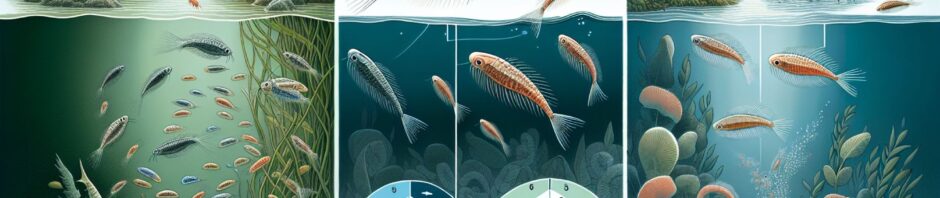
Aquatic ecosystems are complex environments where a myriad of organisms, from the smallest microbe to the largest predators, coexist and interact to sustain life through intricate food webs. At first glance, species like Daphnia, tiny freshwater crustaceans often overlooked, may seem inconsequential. However, their role in these ecosystems is anything but minor. In this article, we’ll explore the fascinating life of Daphnia, their functions in aquatic environments, and how they are central to scientific research in ecotoxicology and water quality assessments.
Introduction to Daphnia
Daphnia, commonly known as water fleas, are small planktonic crustaceans found in various aquatic habitats, including lakes, ponds, and even temporary pools. They belong to the order Cladocera and are key components of freshwater ecosystems. One of the most distinctive features of Daphnia is their transparent, often teardrop-shaped body, which allows for a clear view of their internal organs.
Despite their diminutive size, typically measuring only 0.2-5mm in length, Daphnia have a significant impact on the health and dynamics of aquatic environments. Their roles in these scenes are numerous, encompassing aspects such as nutrient cycling, food web dynamics, and population dynamics.
Life Cycle and Reproduction
The life cycle of Daphnia displays remarkable features, including their reproductive strategy known as parthenogenesis [1]. During favorable conditions, female Daphnia reproduce asexually, giving birth to genetically identical daughters. This method allows for rapid population expansion, which can be beneficial for thriving in transient environments.
However, when conditions become stressful due to factors such as food scarcity, crowding, or changes in temperature, Daphnia can switch to sexual reproduction. This results in the production of resting eggs, often encased in a protective structure called an ephippium. These eggs can withstand extreme conditions and remain dormant for extended periods until conditions become favorable again, ensuring the persistence of the species.
Feeding and Nutrition
As filter feeders, Daphnia play an essential role in aquatic systems by consuming tiny particles suspended in the water, primarily algae, but also bacteria and detritus [2]. By doing so, they regulate the populations of these microorganisms and contribute to the clarity and quality of the water in their habitat.
Their filtering capacity also impacts the nutrient cycling within the ecosystem. Daphnia excrete waste that becomes available for other organisms, and through their diet, they can transfer nutrients up the food chain to higher trophic levels, such as fish, that feed on them.
Daphnia in Food Webs and Trophic Levels
Within food webs, Daphnia occupy an intermediate trophic level. They serve as a crucial link between primary producers, like phytoplankton, and secondary consumers, including small fish and insect larvae. Predators of Daphnia not only rely on them for sustenance but also for essential nutrients like omega-3 fatty acids, which are crucial for the healthy development of these higher organisms.
The population dynamics of Daphnia can greatly influence the structure of food webs. Fluctuations in their numbers can cascade through the ecosystem, affecting the abundance and diversity of species at various trophic levels, pointing to the intricate balance within aquatic environments.
Daphnia and Biomonitoring
One of the most valuable uses of Daphnia is in the field of biomonitoring. Due to their sensitivity to changes in water quality and chemical pollutants, they are widely employed as biological indicators in water quality assessments [3]. Monitoring the health, behavior, and survival of Daphnia populations can provide scientists with an understanding of the presence and effects of pollutants in the water body.
Additionally, Daphnia are central to toxicity testing, which is crucial for ecotoxicology research. Standardized tests with Daphnia can reveal the toxicological profiles of various substances and their potential impacts on aquatic ecosystems.
Environmental Challenges and Response
Daphnia populations are responsive to environmental stressors such as changes in temperature, dissolved oxygen levels, and the presence of chemical pollutants. Their behavioral responses can include changes in swimming patterns and feeding rates, while evolutionary adaptations might manifest over longer periods as genetic changes that confer resistance or tolerance to specific stressors.
Human-induced environmental changes, like eutrophication caused by excessive nutrients from agricultural runoff leading to algal blooms, can affect Daphnia populations both positively, through increased food availability, and negatively, by creating hypoxic conditions that are detrimental to their survival.
Conclusion
Although small in size, Daphnia are mighty in their influence on aquatic ecosystems and their importance to scientific research. They are not only fundamental to maintaining balanced aquatic environments but are also invaluable in our quest to monitor and protect water quality. Understanding and preserving these little crustaceans is critical to safeguarding the health of the aquatic habitats upon which so much life depends.
As we continue to explore and appreciate the complexities of aquatic ecosystems, the significance of Daphnia and their multifaceted roles cannot be overstated. They remind us that every organism, no matter how small, plays a part in the tapestry of life, contributing indispensably to the ecosystems that sustain us all.
References
-
Ebert, D. (2005). Ecology, Epidemiology, and Evolution of Parasitism in Daphnia. National Center for Biotechnology Information (NCBI).
https://www.ncbi.nlm.nih.gov/books/NBK2042/ -
Lampert, W. (1987). “Feeding and nutrition in Daphnia.” Memorie dell’Istituto Italiano di Idrobiologia 45: 143-192.
-
Blaise, C., & Férard, J. (2005). Small-scale freshwater toxicity investigations. Vol. 1 – Toxicity test methods. Springer.
https://link.springer.com/book/10.1007/1-4020-3120-3