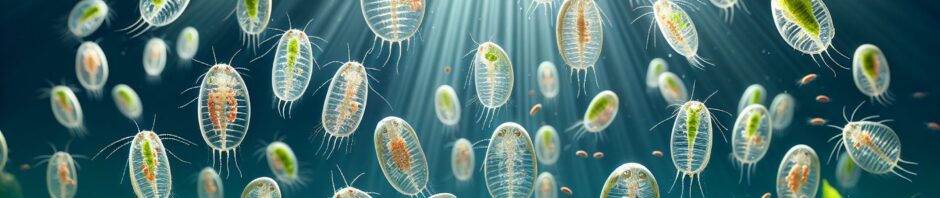
One of the unsung heroes of freshwater ecosystems, Daphnia, or water fleas, play a crucial role in maintaining the health and balance of their environment. Belonging to the Cladocera (a suborder of crustaceans), Daphnia rank among the most common organisms found across the world’s freshwater habitats [^1^]. Daphnia are highly adaptable, capable of surviving and thriving in most aquatic conditions, but that’s not the only reason scientists and ecologists pay close attention to these fascinating creatures. Their phenomenal reproductive capacity, sensitivity to environmental changes, and position in the food web make them significant for scientific research and environmental biomonitoring.
Daphnia’s Role in Aquatic Ecosystems
Daphnia play a key role in aquatic food web dynamics and nutrient cycling. As filter feeders, they consume algae, bacteria, and other microscopic organisms, converting these into biomass that larger organisms such as fish and amphibians can feed on [^2^]. This vital process helps maintain the health and biodiversity of aquatic ecosystems.
Aside from their vital role in food web dynamics, Daphnia also contribute to preventing algal blooms. By consuming excess algae, they help regulate nutrient levels, thereby keeping the water system balanced and preventing situations of eutrophication that may lead to detrimental environmental impacts.
Life Cycle and Reproduction
Perhaps one of the most captivating facets of Daphnia is their dual reproductive strategy, exhibiting both asexual (parthenogenesis) and sexual reproduction. Generally, they reproduce asexually under favorable conditions, generating clones of themselves. However, when environmental conditions become tough (e.g., scarcity of food, overcrowding, or changes in temperature), they switch to sexual reproduction. The outcome is the production of ephippia, resistant eggs with a protective shell, capable of surviving severe conditions for many years. This fascinating adaptation lends Daphnia enormous resilience to changing environmental conditions.
Daphnia for Research and Biomonitoring
Beyond their ecological roles, Daphnia serve as useful tools for scientific research and biomonitoring, because of their sensitivity to water quality and environmental changes. They are often used as bioindicators or subject organisms in toxicity testing, helping assess the health of a water body and the impact of pollutants or other alterations in the aquatic environment.
The effect of pollutants is discernable on Daphnia’s behavior, reproduction rate, and overall population dynamics. By observing these parameters, scientists can not only determine the presence of harmful substances but also gain insights into their potential effects on other organisms within the same ecosystem.
Conclusion
The humble water flea, Daphnia, plays a far more significant role than most realize. With an influence that extends beyond their diminutive size, they serve as powerful regulators of aquatic health and biodiversity. They provide valuable insights into the biological effects of environmental changes, providing us with crucial data to make informed environmental decisions.
The world of Daphnia emphasizes the fundamental interconnection of all life on Earth. Every organism, no matter how small, plays a role in shaping the environment around us. We need to establish a greater understanding of these minute yet mighty creatures and their importance in sustaining our freshwater havens.
[^1^]: Daphnia – an overview | ScienceDirect Topics
[^2^]: Life of Daphnia: overview — Daphnia: An Aquatic Model System for Ecology, Evolution, and Human Health
[^3^]: Biomonitoring the Health of Coastal Waters Using Daphnia magna