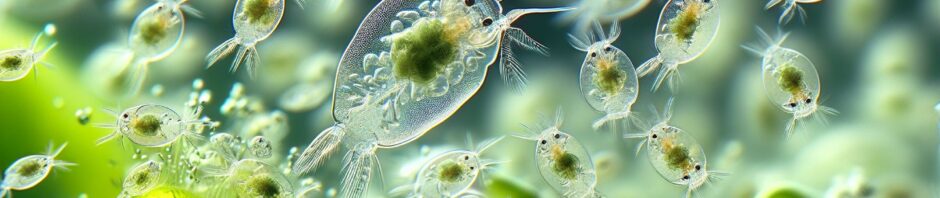
Have you ever paused to consider the vast, intricate wonders that exist within a single drop of pond water? It’s easy to overlook the minute organisms that call these freshwater environments home, but among them, a particular group stands out due to their ecological significance and quite fascinating attributes: the Daphnia.
Daphnia, more popularly known as “water fleas,” are a type of small planktonic crustaceans found primarily in freshwater environments. Here we delve into their fascinating life cycle, essential ecological roles, contribution to water quality indicators, and unique evolutionary adaptations.
Life is but a Drop of Water: The Daphnia Life Cycle
Daphnia boast a rather unique life cycle, featuring both sexual and asexual reproduction. Asexually reproducing Daphnia – also called parthenogenesis – create genetic clones of themselves, permitting them to increase their numbers rapidly when conditions are favorable[^1^].
However, when environmental stressors such as decreasing food supply or approaching winter are sensed, Daphnia switch to sexual reproduction. The resultant fertilized eggs produce resting stages known as ephippia, which can withstand unfavorable conditions for extended periods, and hatch when conditions improve[^2^]. This survival strategy is an amazing adaptation to unpredictable environmental changes.
The Key Players: Daphnia’s Ecological Role
While they may seem inconsequential due to their small size, Daphnia play a crucial role in freshwater food webs. These organisms serve as primary consumers, dutifully converting plant material into a form that can be utilized by higher trophic levels, such as fish. Additionally, Daphnia contribute to nutrient cycling in aquatic environments by consuming algae and excreting nutrients. In fact, these tiny organisms can modulate algal blooms and even affect water clarity[^3^].
On the flip side, Daphnia also serve as a primary food source for various aquatic predators, thus playing a significant role in predator-prey dynamics. Their population dynamics – which can rapidly fluctuate due to variable reproduction rates and predation – noticeably impact freshwater ecological balance.
Natural Water Filters: Daphnia and Water Quality
Yet another hat that Daphnia wears is of a biomonitor – an organism that helps assess environmental health. The concept, aptly called biomonitoring, utilizes Daphnia’s sensitivity to changes in water quality, specifically the presence of chemical pollutants. Toxicity testing on Daphnia can provide quick and reliable information about the presence of harmful substances in the water[^4^]. Hence, Daphnia contribute significantly to ecotoxicology – the study of pollutants’ impacts on ecological systems.
Moreover, the amount of dissolved oxygen, which Daphnia need for survival, and temperature effects, significantly affecting their metabolism and reproductive rates, are fundamental aspects of water quality. Changes in these parameters can influence Daphnia populations, with repercussions for the entire ecosystem.
Daphnia’s Evolutionary Adaptations: Tiny but Mighty
Despite their susceptibility to environmental changes, Daphnia are not entirely defenceless. They exhibit a range of evolutionary adaptations to deal with predation. When predator chemical cues are detected, some Daphnia species can grow protective helmets or spines, making them less appealing or harder to eat. This is a fantastic example of behavioral responses from these seemingly primitive organisms[^5^].
Conclusion
In the face of the earth’s vast biodiversity, the humble Daphnia may seem unremarkable at first. Still, closer examination reveals a creature of immense ecological importance and surprising evolutionary adaptability. As sentinels of water quality and architects of freshwater ecosystems, Daphnia are truly tiny titans deserving of our admiration and respect.
References
[^1^]: Daphnia Life Cycle | Ask A Biologist
[^2^]: The Daphnia Genus | Water Flea
[^3^]: The Role of Daphnia in Aquatic Ecosystems: A Review