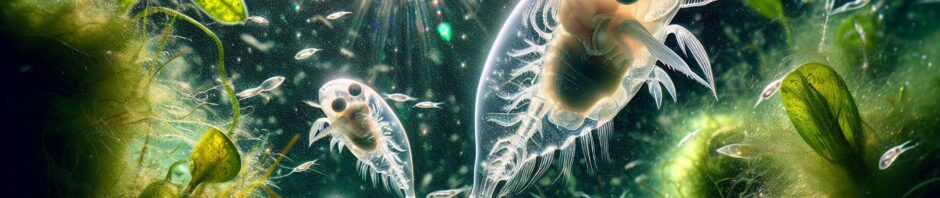
Hello, dear readers! Today, we are delving into the fabulous world of a tiny yet awe-inspiring aquatic creature, Daphnia. To the naked eye, they may merely appear to be little dots swimming in the water, but under the microscope, these ‘water fleas’, as they are commonly known, reveal an entirely new world of complexity and fascination.
The Basics of Daphnia
Firstly what are these creatures? Daphnia are minute, usually planktonic, crustaceans found in freshwater bodies. They are part of Cladocera, an order of small crustaceans often called ‘water fleas’ due to their saltatory swimming style[^1^]. These adorable beings are relevant not only to their habitat but also to us, contributing enormously to our understanding of ecology, evolution, and environmental science.
Life as a Daphnia
Daphnia exhibits a fascinating life cycle, alternating between asexual (parthenogenesis) and sexual reproduction based on environmental conditions. Under favorable conditions, they reproduce asexually, producing clone daughters without the need for males. However, when conditions become stressful, like food scarcity, changes in temperature, overpopulation, they switch to sexual reproduction. Resultantly, they produce ‘ephippia’ or resting eggs that can survive harsh conditions even for decades[^2^].
Masters in Adaptation
They exhibit a high degree of phenotypic plasticity, meaning that they can change their physical appearance in response to their environment. For example, under the threat of a predator, some species develop protective headgear to keep the predator at bay. These ‘helmets’ have shown to deter potential predators by either making them too big to eat or by making it problematic for the predator to focus on them properly for a feeding attack[^2^].
This rapid response to threats demonstrates the incredible ability of Daphnia to evolve and adapt under environmental pressures, a feature making them interesting subjects in the field of evolutionary biology.
The Ecological Significance
To put it simply, Daphnia is a cornerstone of aquatic ecosystems. They sit in the middle of the food web – gobbling algae (primary producers) on the one hand and serving as fish food on the other. By acting as filter feeders, they help regulate algal populations and prevent algal blooms.
Beyond this, with their unrelenting appetite for algae, they keep the water clean and clear, which allows sunlight to penetrate the water column, benefitting other organisms and maintaining biodiversity in the ecosystem[^3^].
Daphnia’s Biological Superpowers
Their clear exoskeleton makes them a model organism for biological research. It allows for non-invasive monitoring of their physiology including heart function, enabling various toxicity and pharmacological studies[^3^].
Moreover, their sensitivity towards environmental changes makes them a potent tool for bio-monitoring. They provide valuable indicators of water quality and help assess the impact of chemical pollutants. Thus, they are regularly used in ecotoxicology for studying the impacts of pollutants on ecosystems. This application makes them vitally important in facilitating improvements in environmental conditions.
Final Thoughts
Undoubtedly, these seemingly simple organisms hold a tremendous amount of wonders. From their unbelievable ability to morph their bodies according to the environment to their significant contributions towards keeping aquatic ecosystems ordered, Daphnia sure are small packages with big impacts. Being used as model systems, they allow us to understand the web of life intricately and deeply, and teach us how a species can profoundly impact its environment.
We hope this article managed to enlightify and add a sense of wonder to your knowledge about Daphnia, these charismatic micro-crusaders of the aquatic ecosystem.
[^1^]: Wikipedia: Daphnia
[^2^]: Stanford University: Water Fleas on the Defensive
[^3^]: Ebert, D. (2005). Ecology, Epidemiology, and Evolution of Parasitism in Daphnia [Internet]. Bethesda (MD): National Library of Medicine (US), National Center for Biotechnology Information. Available from: NCBI Bookshelf