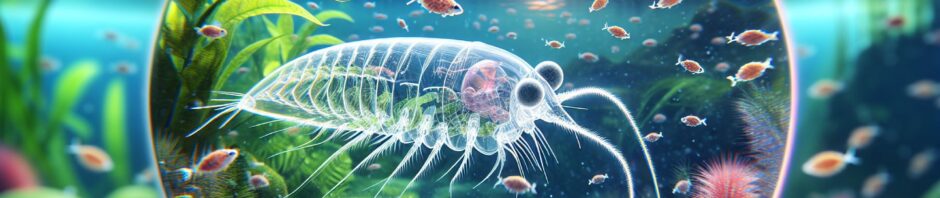
Greetings aspiring micro-ecologists! If you’re someone who’s fascinated by the microscopic marvels lurking in the undersurface world of your local pond, then you’ve stumbled upon the right article. Today’s topic? The delightful Daphnia!
I want to introduce you to these intricate beings–the fascinating freshwater crustaceans known for their scientific utility and their significant role in aquatic ecosystems. Hold onto your microscopes, because you’re about to embark on an exploratory journey into the world of Daphnia.
What is Daphnia?
Daphnia, belonging to the suborder Cladocera, is colloquially known as the “water flea.” Despite the nickname, don’t be misled: Daphnia are no true fleas. These small, mostly translucent organisms are aquatic invertebrates that occupy freshwater bodies worldwide [1].
Daphnia’s scientific charm lies in their intricacies and their evolutionary adaptations. First, their mostly transparent bodies make them an ideal model organism for scientific study, including but not limited to eco-toxicology and studying population dynamics. Second, Daphnia’s complex reproductive strategy and resilient biological arsenal allow them to flourish across various environmental settings.
Daphnia Reproduction: A Blend of the Best
Daphnia reproduction is a blend of parthenogenesis (a form of asexual reproduction) and sexual reproduction. During favorable conditions, like warm temperatures and abundant food, females clone themselves by producing parthenogenically derived daughters. However, when conditions become stressful, sexual reproduction comes into play, producing hardy eggs, known as ephippia, able to withstand harsh conditions [2].
Daphnia and Trophic Levels
Understanding trophic levels in ecology is critical; the phenomenon refers to the position that an organism occupies within the food web. Well, within freshwater ecosystems, Daphnia are primary consumers – filter feeders to be specific. They nourish themselves primarily by consuming phytoplankton (microscopic algae and plants).
This makes Daphnia a linchpin in the aquatic chain, bridging the gap between the primary producers (plants) and secondary consumers like fish. The absence of Daphnia can severely disrupt the balance of aquatic ecology, leading to repercussions like algal blooms and eutrophication [3].
Daphnia – The Biomonitoring Superstar
One responsibility inherently carried by Daphnia is biomonitoring water bodies, or, in simpler terms, acting as living water quality indicators. Fluctuations in Daphnia populations can often be indicative of changes in water conditions, whether it be changes in temperature, oxygenation, or even exposure to chemical pollutants.
Their hearty nature and fast reproductive system create an ideal scenario for scientists to track the effects of various environmental changes and toxicants. Monitoring Daphnia behavioural responses can significantly aid in environmental assessments and determining the health of aquatic ecosystems.
Conclusion
In the world of aquatic ecosystems, Daphnia are the unsung heroes — the actors behind the scenes that significantly contribute to maintaining a functional and thriving environment. These miniature marvels are more than just fodder for fish or annoying pests for swimming enthusiasts. They are intriguing examples of evolutionary resilience, avid biomonitoring agents, and crucial cogs in the aquatic food web.
So the next time you see that little speck of activity in your local pond or aquarium, ponder for a moment on its microscopic magnificence. After all, beholding a Daphnia is akin to glimpsing a streamlined, efficient universe in miniature.