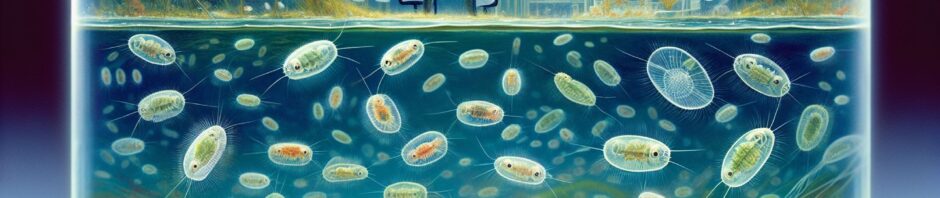
Daphnia, often referred to as “water fleas,” are small, mostly microscopic, freshwater crustaceans that play a crucial role in aquatic ecosystems and scientific research. These tiny organisms are part of the Cladocera family and serve as a vital link in the food web while also being used as biomonitoring agents for water quality and toxicity testing. They are no mere specks in the water; Daphnia hold a fascinating complexity in their life cycles, ecological functions, and the ways in which they respond to environmental changes. This article delves into the world of Daphnia, exploring their biology, ecological importance, and significance in scientific research.
The Biology of Daphnia: A Window into Aquatic Life
Daphnia are key members of the zooplankton community – planktonic organisms that drift in water bodies. As filter feeders, they consume algae, bacteria, and other microscopic detritus, maintaining the balance of microbial populations and ensuring clear waterways.
Morphology and Life Cycle
Daphnia have a distinct appearance, with a transparent, typically oval carapace that allows scientists to observe their inner workings in real-time, including their beating heart. They range from 0.2 to 5 mm in size and feature large compound eyes, an antenna for locomotion, and a ventral opening where water is drawn in for filter feeding. Daphnia can reproduce both sexually and through parthenogenesis, a form of asexual reproduction common in stable environments, allowing rapid population growth.
The production of ephippia – dormant eggs encased in a protective covering – is another fascinating aspect of their reproduction, ensuring the survival of populations through unfavorable conditions. These eggs can remain viable for years before hatching when conditions improve.
Behavioral Responses and Evolutionary Adaptations
Daphnia exhibit remarkable behavioral responses to environmental variations, such as changes in predator presence, temperature, and food supply. These responses are not merely reactionary but are indicative of the species’ long-term evolutionary adaptations. For instance, some Daphnia species develop physical defenses like spikes when exposed to chemical cues from predators.
Ecological Importance of Daphnia
In aquatic ecosystems, Daphnia are influential at multiple trophic levels. Their grazing on algae and bacteria helps prevent algal blooms and eutrophication, a process where water bodies become overly enriched with nutrients, leading to excessive plant growth and depleted oxygen levels.
Role in the Food Web
Daphnia stand as a primary food source for fish and other aquatic predators. They are crucial in transferring energy from the primary producers (algae and bacteria) to higher trophic levels, thereby sustaining the food web.
Nutrient Cycling and Dissolved Oxygen
Their feeding activities contribute significantly to nutrient cycling, breaking down and redistributing nutrients for other organisms’ use. Moreover, by consuming algae, Daphnia plays a role in maintaining healthy levels of dissolved oxygen, crucial for the survival of fish and other aquatic life forms.
Daphnia and Biomonitoring
Given their rapid response to environmental changes, Daphnia are widely used as indicators for water quality and the presence of chemical pollutants. Their health and behavior can reveal the presence of toxic substances and overall ecosystem health.
Toxicity Testing and Ecotoxicology
Researchers utilize Daphnia in standardized toxicity tests to evaluate the effects of chemical pollutants. These tests inform ecotoxicology, the field that studies the impact of toxic chemicals on biological organisms and ecosystems.
Environmental Assessment
Daphnia’s sensitivity to various pollutants makes them a practical choice for ongoing environmental assessment and regulatory practices aimed at safeguarding water quality and preventing contamination.
Challenges and Conservation
Despite their resilience, Daphnia populations face threats from environmental changes, such as habitat loss, climate change, and pollution. The preservation of Daphnia and their habitats is vital, not only for maintaining ecological balance but also for the continuation of the vital research they support.
Conclusion
Daphnia may be small, but they have a considerable impact on freshwater ecosystems and scientific studies. Their presence is an indicator of healthy water, and they offer a window into the subtle intricacies of aquatic life. By understanding and protecting Daphnia, we ensure the stability of freshwater habitats and the continued advancement of scientific research and environmental management.
References:
- Ebert, D. (2005). Ecology, Epidemiology, and Evolution of Parasitism in Daphnia. Bethesda (MD): National Library of Medicine (US), National Center for Biotechnology Information.
- Lampert, W. (2011). Daphnia: Development of a Model Organism in Ecology and Evolution. Oldendorf/Luhe, Germany: International Ecology Institute.
- U.S. Environmental Protection Agency. (2002). Short-term Methods for Estimating the Chronic Toxicity of Effluents and Receiving Waters to Freshwater Organisms (4th ed.). Washington, DC: U.S. Environmental Protection Agency, Office of Water.