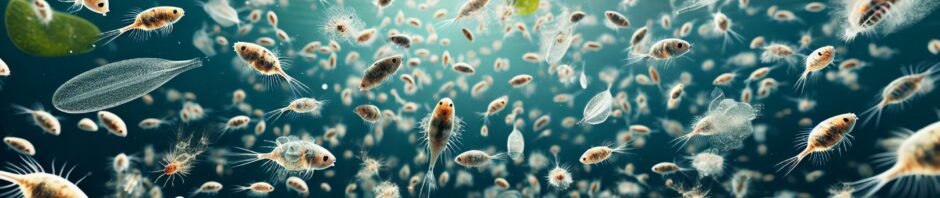
Daphnia, a small planktonic crustacean commonly found in freshwater environments, is more than just a simple organism; it plays a fundamental role in feeding fish, recycling nutrients, and even signaling environmental changes. But why should we care about these tiny aquatic invertebrates?
In this comprehensive article, we will explore the fascinating world of daphnia, examining their life cycle, ecological significance, and how they contribute to biomonitoring and water quality assessment. By the end of this reading, you’ll understand why these creatures are vital to both their habitat and to scientists around the globe.
What Are Daphnia?
Daphnia, also known as water fleas, belong to the order Cladocera. They are a key species in freshwater ecosystems due to their role as filter feeders and their position in the food web. Feeding primarily on algae and bacteria, they help maintain water clarity and quality. Their bodies are usually transparent, and they have a characteristic jerky swimming motion, which is where their colloquial name “water fleas” originates.
The Life Cycle and Reproduction
Daphnia display a fascinating life cycle that includes both asexual reproduction, known as parthenogenesis, and sexual reproduction. During favorable conditions, typically in spring and summer, females reproduce asexually, giving birth to clones of themselves in a matter of days.
However, when conditions become harsh, such as changes in temperature, food scarcity, or the buildup of waste products, daphnia switch to sexual reproduction. They produce males and, subsequently, eggs that require fertilization. These eggs are often encased in a tough protective shell called ephippia, which enables them to survive through difficult conditions until the environment becomes suitable again for growth.
Ecological Importance
Daphnia plays a significant role in aquatic ecosystems:
- Food Source: They are an essential link in the food web, serving as a primary food source for many fish and invertebrate species.
- Trophic Levels: As filter feeders, they graze on phytoplankton, effectively transferring energy from primary producers to higher trophic levels, including fish.
- Nutrient Cycling: Their waste contributes to the nutrient cycling in aquatic environments, particularly phosphorus and nitrogen, which are crucial for plant growth.
- Algal Blooms Control: By consuming algae, daphnia can help prevent or mitigate harmful algal blooms, which can lead to eutrophication and deoxygenation in water bodies.
Biomonitoring and Water Quality Indicators
Daphnia are highly sensitive to changes in their environment, particularly to the presence of chemical pollutants. This sensitivity makes them excellent bioindicators for assessing water quality and the impact of environmental stressors on aquatic ecosystems, a field known as ecotoxicology.
Scientists use a variety of toxicity tests with daphnia to gauge the health of water systems. Acute toxicity tests determine the concentration of a substance that causes harm to a certain percentage of the tested population within a short period, usually 24 to 48 hours. Chronic toxicity tests, on the other hand, observe the effects of lower concentrations of a substance over a more extended period, looking at effects on reproduction or long-term survival.
The Role in Environmental Assessment
Daphnia’s responses to pollutants can indicate potential problems before they have a chance to cause significant harm to the entire ecosystem. Their behavioral responses, such as changes in swimming patterns or feeding rates, can be early warning signs of toxicity. Thus, they are crucial for environmental assessment and decision-making processes aimed to protect aquatic life and ensure the sustainability of freshwater resources.
Evolutionary Adaptations
Despite their size, daphnia have evolved several fascinating adaptations that allow them to survive and thrive within their ecosystems:
- Temperature Effects: Daphnia can adapt to different temperatures, and as poikilotherms, their metabolic rates and growth are influenced by the ambient temperature.
- Predator-Prey Interactions: They exhibit changes in size and morphology in response to the presence of predators, a tactic that can reduce their vulnerability.
- Chemical Sensing: Daphnia can detect and respond to chemical cues released by predators or injured conspecifics, altering their behavior to decrease predation risk.
- Ephippia: The production of ephippia during harsh conditions is an evolutionary adaptation that enables daphnia to endure periods that would otherwise threaten their survival.
Conservation and Challenges
Although daphnia possess strong adaptive capabilities, they still face significant challenges primarily due to human activities:
- Chemical Pollutants: Industrial waste, agricultural runoff, and other sources of pollution can introduce harmful chemicals into water bodies, affecting daphnia populations.
- Eutrophication: Excess nutrients from human sources can lead to eutrophication, causing rapid algae growth and depleting dissolved oxygen, negatively impacting daphnia.
- Climate Change: Shifts in temperature and precipitation patterns due to global climate change can potentially disrupt the habitats and life cycles of daphnia.
Conclusion
Daphnia may be small, but their impact on freshwater ecosystems and our understanding of environmental health is immense. By studying and protecting these planktonic organisms, we gain insight into the intricacies of aquatic ecosystems, enabling us to better evaluate and improve water quality and the sustainability of these vital habitats.
Conservation of daphnia and their habitats must be a priority in environmental management policies. Their role as filter feeders, their importance in the food web, and their utility in biomonitoring make them indispensable to both the health of aquatic environments and the tools we use to monitor and protect them.
Sources
To further broaden your understanding of Daphnia and their role in aquatic ecosystems, here are some sources where you can read more:
-
Dodson, S. I. et al. (2020). “Introduction to Limnology”. McGraw-Hill Education. This textbook provides comprehensive information on limnology, the study of inland waters, and includes detailed sections on planktonic organisms like daphnia.
-
Semyalo, R., et al. (2011). “Daphnia: A ‘Model Organism’ for Studying the Effects of Pollutants on Aquatic Health”. Freshwater Biology 56(6): 1079–1097. This research paper discusses the use of daphnia as bioindicators in the study of aquatic health and the effects of pollutants.
-
Ebert, D. (2005). “Ecology, Epidemiology, and Evolution of Parasitism in Daphnia”. National Center for Biotechnology Information (NCBI), Bethesda (MD). This online book provides insights into the ecological, epidemiological, and evolutionary aspects of parasitism in daphnia, indicative of their wider role in ecosystems.
By appreciating the interconnectedness of life within aquatic environments and recognizing the role of species like daphnia, we can foster a more sustainable relationship with the natural world.