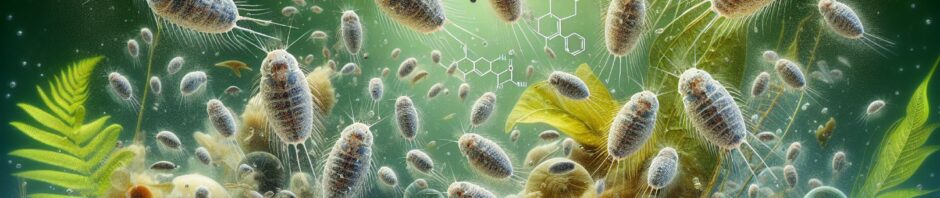
Water quality is a matter of life and death – not just for humans, but for the entire web of life that depends on aquatic environments. Nestled within this complex web are the seldom appreciated yet ecologically critical Daphnia, commonly known as water fleas. These small, often invisible freshwater crustaceans in the order Cladocera play outsized roles in aquatic ecosystems, and their unique biological traits make them vital in the field of ecotoxicology. In this comprehensive exploration, we’ll dive into the world of Daphnia, examining their life cycle, ecological functions, and utility in environmental assessments.
Unveiling Daphnia: A Primer on Freshwater Crusaders
Daphnia, which belong to a group known as planktonic organisms, are key players in freshwater habitats. Contrary to their common name, they aren’t insects or fleas at all, but rather aquatic invertebrates that range from 0.2 to 5.0 mm in size. Their transparent exoskeleton makes them nearly invisible to the naked eye but reveals a beating heart and dynamic inner workings under microscopic examination.
Life Cycle and Reproductive Marvels
Daphnia exhibit a fascinating life cycle that includes both parthenogenetic (asexual) and sexual reproduction. Most of the year, females reproduce asexually, producing clones that are genetically identical to themselves. However, when environmental conditions become stressful, such as changes in temperature or food scarcity, Daphnia switch to sexual reproduction. This process involves the production of males and results in the formation of hardy resting eggs known as ephippia, which can withstand harsh conditions and hatch when the environment becomes more favorable.
Actors in Trophic Levels and Food Web Dynamics
These filter feeders consume algae, bacteria, and other small particles, positioning them as primary consumers in aquatic food webs. Through their feeding habits, Daphnia directly control algal populations, reducing the risk of harmful algal blooms and eutrophication. They are also an essential food source for a variety of fish and other predators, making them integral to maintaining the balance within trophic levels.
Beyond Feeding: The Sentinel Role of Daphnia
Daphnia do not only contribute to nutrient cycling and food web dynamics; their sensitivity to changes in their environment has rendered them vital bioindicators in biomonitoring. This is the process whereby living organisms are used to assess the health of an ecosystem, particularly water quality indicators.
Pioneers in Biomonitoring and Water Quality Indicators
In the practice of environmental assessment, Daphnia are used to gauge the presence and impact of chemical pollutants. Due to their short life spans and high reproductive rates, they are instrumental in toxicity testing. The response of Daphnia populations to various contaminants can provide quick indication of water quality and ecosystem health.
A Heartbeat for Ecotoxicology
Ecotoxicology, the study of the effects of toxic chemicals on biological organisms and their environments, has relied on Daphnia as model organisms. The responses of these organisms, from behavioral changes to alterations in population dynamics, help science measure the impact of pollutants at the individual and community levels.
Behavioral Responses and Evolutionary Adaptations
Exposure to pollutants can cause Daphnia to exhibit behavioral responses such as increased heart rate, reduced feeding, and changes in mobility. Over time, these responses can lead to evolutionary adaptations that allow some populations of Daphnia to survive in contaminated waters.
Contributions to Chemical Pollutant Research
Research on Daphnia has provided critical insights into the biological effects of a range of chemical pollutants, from heavy metals to emerging contaminants like pharmaceuticals. This has profound implications for environmental policies and the development of water treatment technologies.
Challenges and Environmental Stressors Influencing Daphnia Populations
Like all living organisms, Daphnia populations are influenced by a multitude of environmental factors, and their well-being is a mirror to the condition of their aquatic habitats.
Temperature Effects and Dissolved Oxygen
Temperature and dissolved oxygen are two abiotic factors that significantly affect aquatic biota. As ectotherms, Daphnia’s metabolic rates are influenced by the temperature of their environment. Moreover, dissolved oxygen levels are critical for their survival, as hypoxic conditions can lead to mass mortality events in Daphnia populations.
Impact of Nutrient Cycling and Eutrophication
Nutrient inputs, such as those from agricultural runoffs that increase nitrogen and phosphorus concentrations, can lead to eutrophication. While initially this may lead to a surge in food sources for Daphnia, the resultant algal blooms can eventually diminish water quality and oxygen levels, creating an inhospitable environment for these filter feeders.
Daphnia as a Keystone Species in Aquatic Ecosystems
The term ‘keystone species’ is used to describe a species that has a disproportionately large impact on its environment relative to its abundance. Daphnia fit this description perfectly due to their central role in nutrient cycling, their function as a food source, and their ability to moderate algal growth.
Influence on Predator-Prey Interactions and Ecosystem Resilience
Through their feeding habits and their vulnerability as prey, Daphnia indirectly affect predator-prey dynamics and thus the resilience of aquatic ecosystems to environmental changes. Their presence and abundance are often a bellwether of ecosystem health.
A Tiny Titan in a Vast World: The Significance of Daphnia
In conclusion, Daphnia are far more than tiny specks in our lakes and ponds. They are crucial regulators of freshwater ecosystems, sentinels that alert us to changes in water quality, and invaluable allies in the field of ecotoxicology. They exemplify the intricate connections within aquatic environments and the consequences of anthropogenic actions on even the smallest scales of life.
As research into the effects of pollutants on aquatic invertebrates continues to evolve, these planktonic organisms offer hope and guidance not only for scientists and policymakers but for anyone concerned with preserving the integrity of our freshwater resources. The story of Daphnia demonstrates that even the smallest creatures can hold key roles in the vast tapestry of life, underscoring our responsibility to protect and sustain the complex ecosystems to which they, and ultimately we, belong.
References:
- Lampert, W. (2011). Daphnia: Development of a Model Organism in Ecology and Evolution. Excellence in Ecology, 21.
- Ebert D. (2005). Ecology, Epidemiology, and Evolution of Parasitism in Daphnia. National Center for Biotechnology Information (US).
- Dodson, S. I., & Frey, D. G. (1991). Cladocera and other Branchiopoda. In Ecology and Classification of North American Freshwater Invertebrates (pp. 723-786).
Note: This article is written for informational purposes and should be complemented with further research and expert consultation.