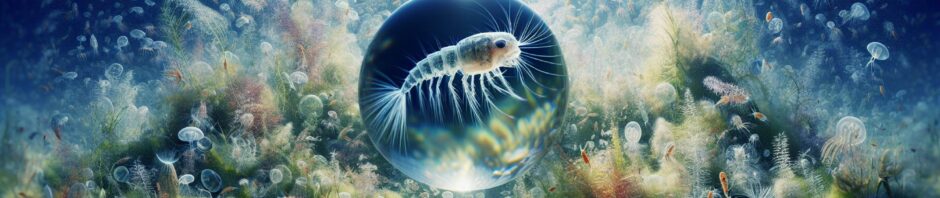
Daphnia, often overlooked by casual observers, plays an essential role in both the ecological framework of aquatic habitats and the field of environmental science. Commonly known as water fleas owing to their jerky swimming movements, these freshwater crustaceans are a key species in freshwater environments. They are also widely utilized in biomonitoring and ecotoxicology pertaining to the health of aquatic ecosystems. Let’s delve into the world of Daphnia, exploring its life cycle, ecological role, and its significance in environmental assessment.
The Life and Times of Daphnia
Daphnia is a member of the Cladocera, an order of small crustaceans found in a variety of freshwater environments, from ponds to lakes and streams. Despite their small size, typically ranging from 0.2 to 5 mm, these organisms have a significant influence on their ecosystems.
Life Cycle and Reproduction
Daphnia display a fascinating life cycle that includes both asexual (parthenogenesis) and sexual reproduction stages. During favorable conditions, females reproduce asexually, giving birth to clones that are genetically identical to themselves. This mode of reproduction allows for rapid population growth.
However, when environmental conditions deteriorate due to factors like food scarcity, crowding, or the approach of winter, Daphnia switches to sexual reproduction. Females produce males, and mating ensues, which leads to the creation of tough, resilient resting eggs known as ephippia. These eggs can resist harsh conditions and hatch when the environment becomes tenable again, ensuring the continuity of the Daphnia population (Colbourne et al. 2011).
Ecological Role and Trophic Levels
As filter feeders, Daphnia consume algae and other microscopic organic material. They are a vital component of the aquatic food web, lying at the interface between primary producers (like phytoplankton) and secondary consumers, including fish and other larger aquatic organisms. This places Daphnia in a critical position within trophic levels, where their population dynamics directly influence food web dynamics, from nutrient cycling to predator-prey interactions.
Daphnia and Biomonitoring
Water Quality Indicators
Daphnia’s sensitivity to environmental changes makes them excellent water quality indicators. Through their behavior, fecundity, and mortality, signs of stress can signal the presence of harmful substances or poor water conditions. Changes in Daphnia populations often precede more observable issues like algal blooms or decreases in fish populations, providing an early warning system for ecosystem health.
Toxicity Testing and Ecotoxicology
In labs across the globe, Daphnia serves as a model organism for toxicity testing and ecotoxicological studies. Standardized tests, such as the Daphnia acute toxicity test, evaluate the impact of chemical pollutants on aquatic life. The outcomes of these tests are crucial for environmental regulations and assessing the ecological risks of new and existing chemicals.
Toxicity tests can measure the effects of various contaminants, including heavy metals, pesticides, and industrial waste products, on Daphnia’s survival, growth, and reproduction. These studies help in understanding how chemicals affect aquatic organisms and ecosystems at larger scales (ASTM E729-96).
The Role of Daphnia in Ecological Research
Studying Environmental Assessment
Research involving Daphnia provides valuable insights into environmental assessment practices. By examining the responses of these organisms to changes in their habitat, scientists can gauge the broader implications for aquatic ecosystems. This includes understanding how factors such as nutrient levels, dissolved oxygen, and temperature effects impact the health of freshwater bodies.
Eutrophication and Its Consequences
Eutrophication, the over-enrichment of water with nutrients, often leads to excessive algal growth and subsequent oxygen depletion. Daphnia, as a consumer of algae, is initially favored by this process. Yet, as oxygen levels decrease and algal blooms decay, these freshwater crustaceans suffer, mirroring the declining health of the entire aquatic ecosystem.
This decline affects other species that rely on dissolved oxygen, demonstrating the interconnectivity of life within these environments. Furthermore, Daphnia’s role in keeping algal populations in check showcases how imbalances can have cascading effects throughout ecosystems (Smith and Schindler 2009).
Natural Indicators of Climate Change
Long-term studies of Daphnia populations have provided clues about the effects of climate change on aquatic ecosystems. As temperature plays a significant role in determining the metabolic rate, growth, and reproduction of Daphnia, tracking these populations can offer insights into how rising global temperatures alter freshwater habitats.
Predator-Prey Interactions
Beyond their use in environmental assessment, Daphnia has also contributed to our understanding of predator-prey dynamics. Traits like size, coloration, and even diurnal vertical migration have been observed as evolutionary adaptations to predation pressure.
In conclusion, Daphnia’s role in aquatic ecosystems and scientific research underlines how these tiny organisms offer a window into the intricate networks that sustain life in freshwater habitats. Their cyclical life strategies, key position in food webs, and susceptibility to environmental changes make Daphnia an indispensable tool for assessing and ensuring the health of our planet’s life-supporting waters.