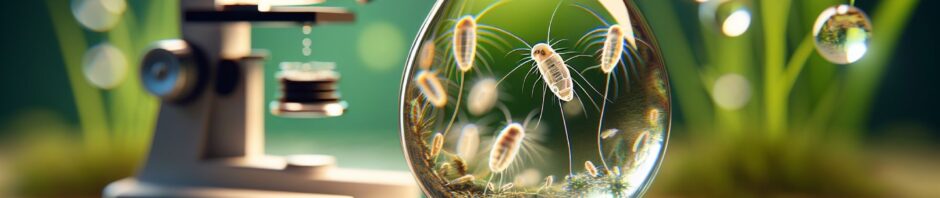
Daphnia, those tiny, seemingly insignificant specks floating around in freshwater habitats, might not be the most glamorous creatures, but their significance in the web of aquatic life is monumental. So why should we care about these minuscule organisms? Let’s dive into the world of Daphnia, discovering the crucial roles they play in environmental assessment, the dynamics of food webs, and the overall functioning of aquatic ecosystems.
Understanding Daphnia: Nature’s Aquatic Invertebrates
Daphnia, commonly known as water fleas, are small planktonic crustaceans found in various freshwater environments. Falling under the category of Cladocera, they are not true fleas but bear this nickname due to their jerky, flea-like swimming motions. Daphnia play an essential role in freshwater habitats as they are key indicators of water quality and serve as the central link in the food web of aquatic ecosystems.
Anatomy and Life Cycle of Daphnia
Daphnia are transparent, making them excellent subjects for scientific study, as their internal processes are easily observed under a microscope. Their life cycle is fascinating, involving both asexual reproduction (parthenogenesis) and sexual reproduction, depending on the environmental conditions. When conditions are favorable, Daphnia reproduce asexually, with females producing genetically identical offspring. However, when conditions become harsh, they switch to sexual reproduction, creating ephippial eggs that can withstand adverse conditions.
Daphnia undergo direct development, where the young are essentially miniature versions of adults, and lack a larval stage. This rapid life cycle, coupled with high reproductive rates, allows Daphnia populations to respond quickly to changes in their environment.
The Role of Daphnia in Aquatic Ecosystems
As filter feeders, Daphnia are prodigious consumers of algae and bacteria, thereby playing a major role in maintaining the clarity and quality of freshwater systems. By devouring vast amounts of microscopic plants and detritus, they help regulate algal blooms, which can be detrimental to aquatic environments by consuming dissolved oxygen and blocking sunlight. This filtering activity not only benefits the direct water quality but also has cascading effects on other trophic levels within the aquatic food web.
Being a central food source for a variety of fish species and invertebrate predators, Daphnia are integral to the health of aquatic ecosystems. Their role in the food web dynamic is a fine balance – they must consume enough to maintain their populations while also reproducing rapidly enough to support higher trophic levels. Any disturbance in this balance can affect fish populations and, consequently, the entire aquatic ecosystem.
Moreover, their sensitivity to changes in water quality makes them excellent biological indicators. Scientists and environmental managers routinely use Daphnia species for biomonitoring and toxicity testing, observing how they respond to different environmental stressors like chemical pollutants, temperature shifts, and dissolved oxygen levels. These responses can uncover critical information needed for sustainable management of freshwater resources.
Ecotoxicology and Environmental Assessment
Ecotoxicology is the study of the effects of toxic chemicals on biological organisms, particularly within the context of their ecosystems. Daphnia are widely used in ecotoxicological studies to assess the potential impact of chemicals on aquatic environments. By exposing Daphnia to various chemical substances and observing their survival, growth, and reproduction, researchers can gauge the potential risks these chemicals pose to the environment.
The use of Daphnia in environmental assessments is invaluable. They serve as early warning systems for the presence of harmful substances in water bodies. For instance, a decline in Daphnia populations could signal the presence of harmful pollutants before more severe damage occurs, allowing for quicker remediation actions.
Challenges and Conservation
Despite their robust nature, Daphnia populations can be threatened by various environmental challenges. Eutrophication, caused by the excessive input of nutrients (like nitrogen and phosphorus) from agricultural runoff or sewage discharge, can lead to dense algal blooms. While Daphnia can initially thrive on the increased food supply, the eventual die-off of algae consumes large amounts of oxygen, creating dead zones where Daphnia and other aquatic life cannot survive.
The effects of climate change are also imposing new stresses on Daphnia populations. Temperature changes can influence the timing and dynamics of their life cycles, potentially disrupting their roles in the food web and causing ripple effects throughout aquatic ecosystems.
Moreover, the introduction of invasive species and habitat destruction pose continued threats to Daphnia and the delicate balance they help maintain in freshwater environments. Therefore, conservation efforts aimed at preserving aquatic biodiversity often focus on protecting the quality and integrity of freshwater habitats – which indirectly benefit Daphnia populations.
Conclusion
Daphnia may be small in size, but their impact on freshwater ecosystems is substantial. These microscopic powerhouses are much more than just food for fish; they are indispensable components of the aquatic world. By understanding the complex roles Daphnia play in the environment and recognizing their potential as indicators of ecosystem health, we can better appreciate their significance and work towards preserving the delicate balance of life in freshwater habitats.
The study of Daphnia, and aquatic invertebrates in general, invites us to look beyond the surface and recognize the interconnectedness of all living things, no matter how small. It teaches us that even the tiniest organisms are crucial to the health and functionality of our planet’s diverse ecosystems.
Sources
- Ebert, D. (2005). Ecology, Epidemiology, and Evolution of Parasitism in Daphnia. National Center for Biotechnology Information (NCBI). https://www.ncbi.nlm.nih.gov/books/NBK2042/
- Lampert, W. (1987). Laboratory Studies on Zooplankton-Cyanobacteria Interactions. New Zealand Journal of Marine and Freshwater Research, 21(3), 483–490.
- United States Environmental Protection Agency (EPA). (2020). Biological Indicators of Watershed Health: Daphnia. https://www.epa.gov/bioindicators/biological-indicators-watershed-health-daphnia