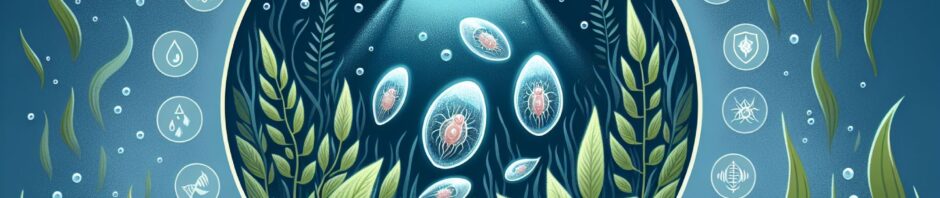
Daphnia, a genus of small planktonic crustaceans, are less than 5 millimeters in length but play a colossal role in freshwater ecosystems. These minuscule organisms, often called “water fleas,” are an indispensable part of the food web and an essential component in understanding and maintaining water quality. This article delves deep into the world of Daphnia, exploring their biology, ecological importance, and how they serve as bioindicators for environmental assessment and toxicity testing.
Overview of Daphnia
Daphnia belongs to the order Cladocera and are a type of zooplankton found in a variety of freshwater environments around the world. Their common name, water fleas, refers to their jerky swimming style, reminiscent of the movement of fleas. The most common species of Daphnia include Daphnia pulex, Daphnia magna, and Daphnia cucullata.
Daphnia’s Distinctive Features and Life Cycle
Daphnia have a carapace, a shell-like structure that covers the majority of their bodies, which is not entirely closed and allows for the extension of their head and large antennae. These antennae are not only used for movement but also serve as sensors for detecting their immediate environment.
Daphnia are renowned for their intriguing life cycle, which involves a mix of both sexual and asexual reproduction, called parthenogenesis. For most of the year, Daphnia populations are female-dominated, and these females reproduce asexually to quickly expand the population. When conditions become challenging, such as during seasonal changes or scarcity of resources, sexual reproduction is triggered, resulting in the production of dormant eggs encased in resilient structures called ephippia. These ephippia can withstand harsh conditions and hatch when the environment becomes favorable again.
Daphnia as Filter Feeders: A Pillar of Aquatic Ecosystems
As filter feeders, Daphnia consume algae, bacteria, and other small particles suspended in the water. By doing so, they serve as a natural cleaning system, helping to maintain the clarity and quality of the water. Their feeding habits also play a pivotal role in nutrient cycling within aquatic systems, transforming nutrients into a form that is more accessible to other organisms higher up in the trophic levels.
Daphnia’s Role in the Food Web and their Predatory Threats
Daphnia are situated at a critical juncture in the food web dynamics, serving as prey for a multitude of animals such as fish, amphibians, and insects while they themselves feed on microscopic organisms. This position makes their population dynamics vibrant and an important indicator of the health of freshwater ecosystems.
Unfortunately, Daphnia are also vulnerable to various predator-prey interactions. Various fish species target them as a primary source of food, and their populations can be heavily influenced by the presence of these predators. Daphnia have evolved several behavioral responses and evolutionary adaptations, such as changes in size, shape, and swimming patterns, in an attempt to evade predation.
Daphnia in Environmental Assessment and Ecotoxicology
Water Quality Indicators and Biomonitoring
One of the standout roles of Daphnia in environmental science is their use as water quality indicators and in biomonitoring. Due to their sensitivity to changes in the aquatic environment, Daphnia serve as a biological early warning system for poor water health. Changes in their behavior, reproduction, life cycle, and population dynamics can signal the presence of chemical pollutants, temperature effects, and dissolved oxygen levels.
In biomonitoring, Daphnia are monitored for behavioral changes that indicate water pollution. Their simplicity of culture in the laboratory and rapid response to pollutants make them an ideal organism for ongoing water quality assessment programs.
Toxicity Testing and the Effects of Chemical Pollutants
Toxicity testing with Daphnia plays a critical role in ecotoxicology – the study of how toxic chemicals affect biological organisms and ecosystems. These tests help in understanding the impact of industrial chemicals, agricultural runoffs, pharmaceuticals, and other potential contaminants. In such tests, different concentrations of chemicals are administered to Daphnia, and their responses, such as immobility rate or reproduction success, are observed and quantified. These tests provide essential data for setting environmental regulatory standards and evaluating eco-friendly practices.
The Impact of Environmental Stressors on Daphnia
Daphnia are very responsive to changes in the environment, and their populations can be significantly affected by factors such as algal blooms and eutrophication. Algal blooms, often a result of excess nutrients in the water from pollution, can alter the food quality for Daphnia and lead to increased mortality or decreased reproductive rates. Eutrophication, the over-enrichment of water bodies with nutrients, can have similar detrimental effects on Daphnia populations by disrupting the balance of aquatic ecosystems.
The temperature of the water can also dramatically influence Daphnia, as they are ectothermic organisms whose body temperature is dependent on the surrounding water temperature. Rising global temperatures and climate change could potentially alter their reproductive timing, distribution, and metabolic rates, with cascading effects throughout the ecosystems they inhabit.
Evolutionary Adaptations of Daphnia
Over time, Daphnia have evolved various adaptive mechanisms to cope with environmental stressors. For instance, they exhibit diel vertical migration, in which they move from the depths during the day to avoid predators and ascend during the night to feed. Daphnia have also developed tolerance to certain contaminants and can exhibit rapid evolutionary changes in response to selective pressures in their environment.
Conclusion
Daphnia are more than just a part of the aquatic food web; they are a window into the health of our freshwater ecosystems. Through the study and monitoring of these tiny organisms, we can gain insights into environmental changes, pollution levels, and the overall balance of our aquatic habitats. As relatively easy and inexpensive “bioindicators,” Daphnia help inform scientists, environmentalists, and policy-makers in managing water quality and addressing environmental challenges.
Their resilience, combined with their sensitivity to environmental stressors, underlines the importance of Daphnia in scientific research and environmental conservation. The small world of Daphnia is a microcosm reflecting the broader health of our planet’s precious water resources, and as such, it deserves our attention and continued study.
Sources
-
Ebert, D. (2005). “Ecology, Epidemiology, and Evolution of Parasitism in Daphnia.” Bethesda (MD): National Center for Biotechnology Information (US).
Available from: https://www.ncbi.nlm.nih.gov/books/NBK2042/ -
Lampert, W. (2011). “Daphnia: Development of a Model Organism in Ecology and Evolution.” Oecologia, 161(1), 1-4.
DOI: 10.1007/s00442-010-1746-0 -
Pérez-López, M., & Conde-Porcuna, J. M. (2005). “The Role of Daphnia magna in the Phosphorus and Nitrogen Cycles in a Shallow and Eutrophic Lake.” Aquatic Ecology, 39(4), 417-426