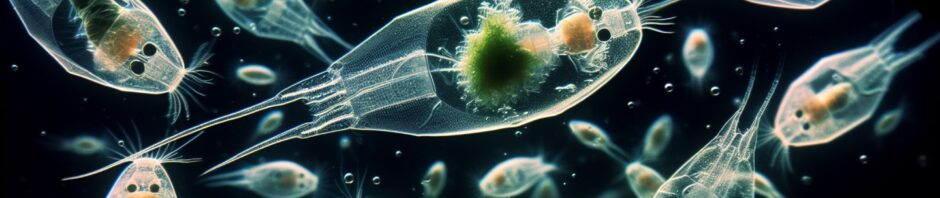
Daphnia, also known as water fleas, are small, planktonic crustaceans typically found in a variety of aquatic habitats. Predominantly known for populating fresh and brackish water bodies, these tiny creatures play a larger role in nature than one might assume from their deceptively minute size. This article aims to shed light on Daphnia, their importance, and their crucial role within our aquatic ecosystems.
Understanding Daphnia
Daphnia belong to the family Cladocera within the subclass Branchiopoda which includes around 200 known species[^1^]. They are acuminate in form, often compared to a kidney bean and have a transparent exoskeleton, giving them a ghostly appearance. The average Daphnia measures only around 0.2-3.0 millimeters in length, but despite their small size, they exhibit a complicated and fascinating behavioral pattern.
Possessing a solitary eye, Daphnia are capable of seeing polarized light and possess a level of visual acuity unique within the invertebrate realm[^2^]. They use their antennas for movement, oscillating them to propel themselves through the water. Daphnia feed on algae, bacteria, and various microscopic organic materials in the water body, operating as filter feeders[^3^].
Reproduction and Life Cycle
The reproductive strategy of Daphnia is a blend of asexual and sexual reproduction, with the more common method being asexual parthenogenesis. Particular climatic and seasonal changes trigger sexual reproduction, resulting in the production of ephippia - resistant capsules containing resting eggs, that can withstand unfavorable environmental conditions until the necessary stimuli for hatching is present[^4^].
Daphnia – An Indicator of Aquatic Health
Daphnia are considered sentinel species in the realm of ecotoxicology due to their sensitivity to environmental changes and pollutants. Changes in Daphnia populations, behavior, and physiology are often indicative of alterations in the quality and health of the water bodies they inhabit[^5^]. This sensitivity towards environmental changes, combined with their ubiquitous distribution and importance within aquatic food chains, positions Daphnia as prime candidates for bio-monitoring and toxicity testing of water bodies[^6^].
The Daphnia Food Web
Positioned at an early trophic level in the aquatic ecosystem, Daphnia play an essential role in the regulation of the food web dynamics. They link primary producers (phytoplankton) and consumers, by acting as primary consumers, feeding on phytoplankton or detritus and in turn providing nutrition for secondary predators such as small fish and insects[^7^]. Hence, any significant shift in Daphnia population could lead to destabilization of the entire aquatic ecosystem.
Daphnia and Control of Algal Blooms
Daphnia play a crucial role in maintaining the balance of the ecosystem by controlling the population of algae in the water bodies. Algal blooms can cause eutrophication, a phenomenon that results in oxygen depletion in the water, leading to the death of other aquatic organisms[^8^]. However, Daphnia, feeding on algae, help to manage their population, thereby curbing algal blooms and maintaining a healthier aquatic environment.
Concluding Thoughts
Drawing a picture larger than their minuscule size suggests, Daphnia’s contribution to our aquatic ecosystems sustainment is immense. They are not merely ‘water fleas’, but custodians of water health, sentinels of change, and crucial linchpins in the aquatic food web.
By understanding Daphnia better, we can gain invaluable insights into aquatic ecosystems and benefit from fostering their populations in our water bodies. They indeed are the unsung heroes of our aquatic world.
References
[^1^]: Daphnia: An overview
[^2^]: Visual Ecology of Daphnia
[^3^]: Feeding Habits of Daphnia
[^4^]: Daphnia, a model organism for ecology and evolution
[^5^]: Bioindicators: Types, Development, and Use in Ecological Assessment and Research
[^6^]: The Role of Daphnia in Aquatic Toxicity Testing
[^7^]: Daphnia a keystone herbivore
[^8^]: Eutrophication: Causes, Consequences, and Controls in Aquatic Ecosystems