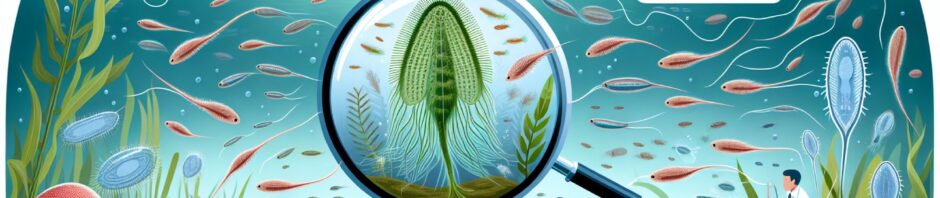
Daphnia, also known as water fleas, are small, often transparent freshwater crustaceans that play a significant role in aquatic ecosystems. They belong to the order Cladocera and are pivotal organisms in understanding various ecological processes such as food web dynamics, nutrient cycling, and biomonitoring of water quality. This article delves into the world of Daphnia, exploring their life cycle, behavior, adaptations, and their vital role in ecotoxicology.
Introduction to Daphnia
Daphnia are planktonic crustaceans and a type of zooplankton that float in the water column of various freshwater environments. They range from 0.2 to 5 millimeters in size and are known for their rapid population growth and ability to reproduce asexually through parthenogenesis, although they can also engage in sexual reproduction.
The Life Cycle of Daphnia
Daphnia exhibit a fascinating life cycle that includes both asexual and sexual reproduction phases. Under favorable conditions, they reproduce through parthenogenesis, where females produce genetically identical offspring without fertilization. During times of stress or at the end of the growing season, Daphnia switch to sexual reproduction, leading to the creation of resistant eggs known as ephippia, which can withstand harsh environmental conditions.
Feeding Habits and Ecological Role
As filter feeders, Daphnia strain tiny particles such as algae, bacteria, and detritus from the water. They play a critical role in food web dynamics and nutrient cycling within aquatic ecosystems. Serving as a food source for various predators, including fish and insects, Daphnia form a bridge between primary producers and higher trophic levels.
Daphnia’s Role in Biomonitoring
Daphnia are sensitive to various environmental factors, including chemical pollutants, temperature changes, and oxygen levels. As a result, they are widely used in biomonitoring to assess the health and water quality of aquatic systems. Observations of their population dynamics and behavioral responses can indicate the presence of toxic substances and the overall ecological balance.
Water Quality Indicators
The presence and population health of Daphnia serve as an indicator of water quality. A decline in population or abnormal behavior in these organisms often signals the presence of harmful pollutants or environmental stressors.
Ecotoxicology and Toxicity Testing
In ecotoxicology, Daphnia are commonly used for toxicity tests to determine the impact of chemical substances on aquatic organisms. The standard acute toxicity test observes the effect of a chemical on Daphnia over a 48-hour period, providing valuable data for environmental risk assessments.
The Impact of Environmental Factors on Daphnia
Daphnia are influenced by a range of environmental factors including nutrient levels, temperature, dissolved oxygen, and the presence of predators and competitors. Understand these interactions is crucial for the management of aquatic environments and for predicting ecosystem responses to changes.
Algal Blooms and Eutrophication
Nutrient-rich environments often lead to algal blooms, presenting both a food resource and a potential threat to Daphnia populations. When algae die and decompose, they consume dissolved oxygen, potentially leading to hypoxic conditions that are detrimental to Daphnia and other aquatic life. Daphnia’s grazing on algae can, therefore, help mitigate the effects of eutrophication by controlling algal growth.
Temperature Effects and Dissolved Oxygen
Temperature has a direct impact on the metabolism and reproductive rates of Daphnia. As temperature increases, metabolic rates rise, requiring more oxygen, which can lead to challenges in oxygen-depleted waters. Furthermore, temperature influences the size of Daphnia populations and the timing of their reproductive cycles.
Evolutionary Adaptations and Behavioral Responses
Daphnia have developed a range of adaptations in response to their environment. These adaptations include changes in body size, color, and the development of defensive structures to evade predators. Additionally, behavioral responses like vertical migration within the water column help them avoid predators during the day and access food resources at night.
Predator-Prey Interactions
Predator-prey interactions play a significant role in shaping Daphnia populations. Daphnia have evolved to detect chemical cues from predators, allowing them to engage in behaviors that reduce their risk of predation, such as reduced movement, deeper habitat selection, and the development of protective helmets or spines.
Conclusion
Daphnia are integral to the health of aquatic ecosystems and have become essential tools in biomonitoring and ecotoxicology. Their rapid response to environmental changes makes them excellent indicators for water quality and the effects of pollution. By understanding the nuances of Daphnia’s life cycle, behavior, and interactions, we can better manage and protect our freshwater resources.
References
- Lampert, W. (2011). Daphnia: Development of a Model Organism in Ecology and Evolution. Excellence in Ecology, Book 21. International Ecology Institute.
- Dodson, S. I., & Frey, D. G. (1991). Cladocera and other Branchiopoda. In Thorp, J. H., & Covich, A. P. (Eds.), Ecology and Classification of North American Freshwater Invertebrates (pp. 723-786). Academic Press.
- Colbourne, J. K., Pfrender, M. E., Gilbert, D., & Thomas, W. K. (2011). The ecoresponsive genome of Daphnia pulex. Science, 331(6017), 555-561. DOI: 10.1126/science.1197761
By exploring the intricate world of these tiny creatures and recognizing their contributions and responses to environmental changes, we can develop more informed conservation strategies and achieve a deeper appreciation for the interconnectedness of life in aquatic realms.