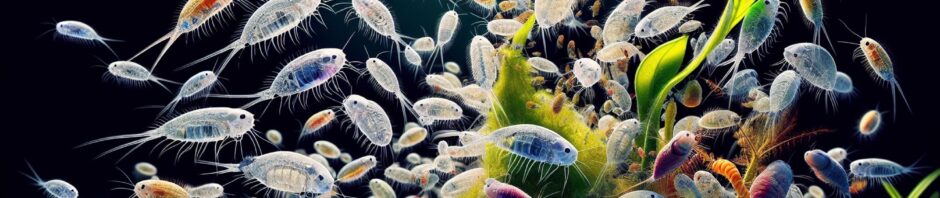
The tiny creatures often overlooked in the vast tapestry of Earth’s biodiversity are sometimes the most crucial indicators of the health and stability of their ecosystems. Among these, Daphnia, a genus of small freshwater crustaceans, plays a significant role in aquatic habitats. Commonly known as “water fleas,” these organisms are not just essential components of the food web but also act as biomonitoring agents, helping scientists and researchers to gauge the well-being of aquatic environments.
This article will delve deep into the world of Daphnia, exploring its biology, ecological importance, and the pivotal role it plays in toxicity testing and environmental assessment.
What is Daphnia?
Daphnia spp. belong to the class Cladocera and are predominantly found in freshwater bodies such as ponds, streams, and lakes. They are a key component of zooplankton—floating or weakly swimming organisms that are a fundamental part of aquatic food webs.
Biological Characteristics
Daphnia can range from 0.2 to 5 mm in size and are distinguished by their transparent carapace (shell). They have a distinct set of appendages that aid in locomotion and filter feeding. One of the most fascinating aspects of Daphnia biology is their ability to reproduce asexually by parthenogenesis or sexually, producing resting eggs known as ephippia. This dual reproductive strategy allows them to quickly adapt to changing environments.
Ecological Significance
Role in Food Webs
As filter feeders, Daphnia consume algae and bacteria, thereby playing a critical role in controlling algal blooms and maintaining water clarity. Their grazing activity is a fundamental process in nutrient cycling and can influence dissolved oxygen levels in water bodies.
Trophic Levels and Population Dynamics
Daphnia are primary consumers, bridging the trophic levels between primary producers like phytoplankton and higher predators, including fish. Their population dynamics are influenced by a variety of biotic and abiotic factors such as temperature, presence of predators, and nutrient availability. These dynamics can have profound impacts on food web structure and ecosystem stability.
Biomonitoring and Water Quality Indicators
Because of their sensitivity to environmental changes and pollutants, Daphnia species are widely used as indicators of water quality and in biomonitoring studies. Changes in their behavior, reproduction, or survival rates can signify the presence of toxic substances and help in the assessment of the ecological impacts of chemical pollutants.
Daphnia in Toxicity Testing and Ecotoxicology
Toxicity testing is a crucial component of environmental science, and Daphnia species are one of the preferred organisms for this purpose. Due to their quick life cycle and responsiveness to chemical changes in their environment, Daphnia can provide scientists with valuable data on the short and long-term effects of pollutants on aquatic ecosystems.
Standardized Tests
The acute toxicity test with Daphnia is a standardized procedure used worldwide to determine the toxic concentration of substances in water that causes 50% mortality (LC50) within a specified period, typically 24 or 48 hours.
Sublethal Responses and Behavioral Evaluations
Sublethal testing involves observing changes in behavior, reproduction, growth rates, and other biological functions in response to various concentrations of pollutants. Such studies offer insights into the risks associated with sublethal exposures to wildlife and ecosystems.
Biomarkers and Genetic Responses
At a molecular level, Daphnia can express biomarkers that indicate exposure to certain chemicals. Studies may include analyzing gene expression patterns and evolutionary adaptations to identify which pollutants are present in their environment and the possible long-term effects on populations.
Daphnia’s Contribution to Science and Research
Beyond ecological monitoring, Daphnia has become an important model organism in scientific research. Its transparent body allows for direct observation of physiological processes, and its well-mapped genome provides opportunities to understand the relationships between genetic makeup and environmental responses.
Evolutionary Adaptations and Ecological Research
Daphnia’s relatively rapid generational turnover and its capability to produce a genetically identical offspring line make it an excellent subject for study in evolutionary biology and ecological research.
Climate Change and Environmental Pressure
Researchers also use Daphnia to study the effects of climate change on aquatic ecosystems. The impact of variables such as temperature fluctuations on their life cycle and population provides insights into how broader environmental changes could reshape aquatic communities.
Concluding Thoughts
The intertwining themes of prey-predator interactions, nutrient cycling, behavior, and adaptability underscore the versatility and importance of Daphnia in understanding freshwater ecosystems. By studying these small but significant creatures, we learn more about the intricate web of life and how to protect and preserve it.
In an era marked by environmental challenges, the sentinel Daphnia acts as both a witness and a warning. Ensuring the health of these minute guardians is tantamount to safeguarding our natural water resources for future generations.
Sources
- Lampert, W. (2011). Daphnia: Development of a Model Organism in Ecology and Evolution. Excellence in Ecology, 21. International Ecology Institute.
- United States Environmental Protection Agency. (2002). Short-term methods for estimating the chronic toxicity of effluents and receiving waters to freshwater organisms (4th ed.). EPA-821-R-02-013.
- Colbourne, J. K., Pfrender, M. E., Gilbert, D., & Et Al. (2011). The Ecoresponsive Genome of Daphnia pulex. Science, 331(6017), 555-561. DOI: 10.1126/science.1197761