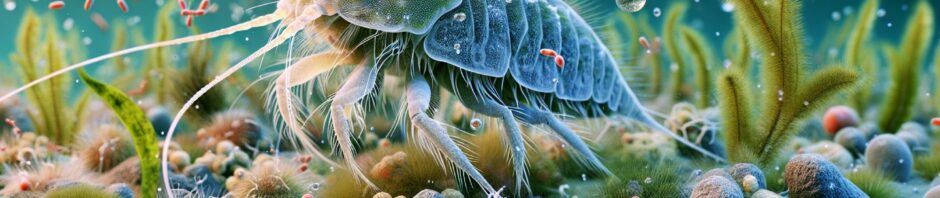
Daphnia, often referred to as water fleas, are tiny freshwater crustaceans that play a pivotal role in the health and functioning of aquatic ecosystems. These microscopic inhabitants are not just crucial to the food web as a source of nourishment for fish and other predators, but they also serve as sentinels for water quality and environmental change. In this in-depth exploration, we’ll unravel the complexities of Daphnia’s life cycle, ecological importance, and why scientists often turn to these organisms when assessing the impacts of environmental stressors on aquatic life.
Understanding Daphnia: The Basics
Daphnia belong to the group Cladocera, which is a subclass of small crustaceans found in various aquatic habitats, including ponds, lakes, and rivers. Given their prevalence and ecological significance, they are among the most studied of all aquatic invertebrates. A single Daphnia can be as small as 0.2 millimeters or as large as 5 millimeters, making them visible to the naked eye as tiny specks darting through the water.
Although small, Daphnia have complex biological features. They possess a carapace – a sort of shell that encloses their body, excluding the head. Their heart is visible through their transparent bodies, often seen as a rapidly pulsing dot. One of the most fascinating aspects of Daphnia biology is their use of filter-feeding appendages to sieve tiny particles from the water, which includes algae, bacteria, and detritus, for nutrition.
Daphnia’s Place in the Food Web
As filter feeders, Daphnia are integral to planktonic food webs. They form a connection between primary producers (like algae) and higher trophic levels, such as fish, that feed on these freshwater crustaceans. This position in the food chain makes them essential in nutrient cycling and controlling algal populations, which can, in turn, influence water clarity and the balance of aquatic ecosystems.
Life Cycle and Reproductive Strategies
Daphnia exhibit a fascinating life cycle with two distinct reproductive strategies: parthenogenesis and sexual reproduction. During favorable conditions, Daphnia reproduce asexually through parthenogenesis, where females produce genetically identical offspring without the need for males. This mode of reproduction allows for rapid population growth, which is often observed in the spring and summer months.
However, when environmental conditions deteriorate or seasons change, Daphnia switch to sexual reproduction. They produce males and generate sexually-produced eggs that are encased in protective structures known as ephippia. These ephippia can withstand harsh conditions and will hatch into new Daphnia once conditions become favorable again. This dual strategy enables Daphnia to maximize their reproductive success throughout varying environmental conditions.
The Role of Daphnia in Biomonitoring and Ecotoxicology
Daphnia play a crucial role in biomonitoring efforts, where they are used as bioindicators to assess water quality and the presence of chemical pollutants. Their sensitivity to changes in water chemistry, such as variations in pH, dissolved oxygen, and the presence of toxicants, makes them excellent early warning indicators for ecological disturbances.
In ecotoxicology, Daphnia are commonly used for toxicity testing, where they help evaluate the lethality or sub-lethal effects of various chemical substances on living organisms. Testing protocols often include observing Daphnia’s survival, reproduction, growth, or behavioral responses under controlled laboratory conditions after exposure to specific pollutants.
Responding to Environmental Stresses and Adaptations
Daphnia populations are subject to a variety of environmental stresses, from predator-prey interactions to changing temperatures and oxygen levels. Fish and invertebrate predation can significantly affect Daphnia population dynamics, leading to the development of evolutionary adaptations such as faster swimming or changes in size and coloration to avoid detection.
Temperature is also a critical factor influencing Daphnia’s life processes. Warmer waters can speed up their metabolism, growth, and rate of reproduction, while colder temperatures typically slow down these functions. Additionally, temperature changes can impact the dissolved oxygen in water, which is essential for Daphnia’s respiration.
Daphnia and Eutrophication: A Delicate Balance
One of the significant water quality issues where Daphnia are deeply involved is eutrophication, a process driven by excess nutrients in aquatic systems that lead to algal blooms. Although Daphnia feed on algae, in eutrophic conditions, algal concentrations may become so high that they reduce water clarity and negatively impact Daphnia’s habitat. Conversely, healthy populations of Daphnia can help control algal growth and mitigate the effects of eutrophication through their filter-feeding action.
Conclusion
Daphnia may be small, but their impact on freshwater environments is enormous. Their presence and health serve as a mirror reflecting the condition of aquatic ecosystems. By studying Daphnia and their responses to environmental challenges, scientists can gain valuable insights into ecosystem health, water quality, and the impacts of human activity on natural water bodies.
Sources
- Lampert, Winfried. “Daphnia: Model Herbivore, Predator and Prey.” PLoS ONE, vol. 4, no. 12, 2009, p. e8271. https://doi.org/10.1371/journal.pone.0008271
- European Centre for Ecotoxicology and Toxicology of Chemicals. “Daphnia sp., Acute Immobilization Test and Reproduction Test.” Guideline on Testing Procedures for Pesticides, 1996, Brussels. http://www.ecetoc.org
- Cáceres, Carla E., and Alan J. Tessier. “How Long to Rest: The Ecology of Optimal Dormancy and Environmental Constraint.” Ecology, vol. 81, no. 3, 2000, pp. 798–807. https://doi.org/10.1890/0012-9658(2000)081[0798:HLTRTE]2.0.CO;2