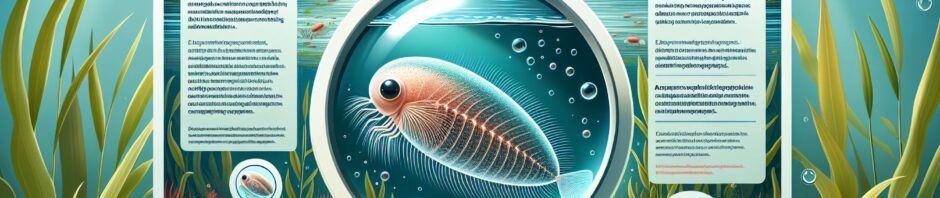
The invisible workers that guard the health of our planet’s waters often go unnoticed. Yet, these tiny warriors play a crucial role in protecting and maintaining the fragile balance of aquatic ecosystems. Among them stands Daphnia, a genus of small, planktonic crustaceans, often nicknamed “water fleas.” Although seemingly insignificant at first glance, Daphnia are powerful indicators of water quality and are vital in biomonitoring and ecotoxicology. This article delves into how Daphnia function as sentinels in our water bodies, how they can be used in toxicity testing, and why their role is essential in environmental assessment.
Understanding Daphnia and Their Habitat
Daphnia belong to the order Cladocera and are a pivotal part of aquatic invertebrate communities found in freshwaters around the world. They are planktonic organisms — that is, they live in the water column and are subject to the whims of currents and waves. As filter feeders, Daphnia sieve minute particles from the water, such as algae, bacteria, and detritus, for their nutrition.
By feasting on these particles, Daphnia play a significant role in nutrient cycling and can influence the trophic levels within aquatic food webs. Their populations can bloom under favorable conditions, making them an abundant food source for higher organisms like fish.
The Role of Daphnia in Biomonitoring
Biomonitoring is the scientific technique of using organisms or their responses to monitor changes in the environment, particularly regarding the presence of pollutants or the overall health of ecosystems. Daphnia are widely recognized as bioindicators because of their:
-
Sensitivity to Chemicals: Certain species of Daphnia are highly sensitive to the presence of toxic substances.
-
Reproductive Rate: Daphnia can reproduce asexually through parthenogenesis or sexually, which leads to the production of resilient resting eggs called ephippia. This versatile life cycle allows their populations to respond rapidly to environmental changes.
-
Transparent Body: The near-transparent bodies of Daphnia make it easier for researchers to observe internal processes such as heartbeat, digestion, and the presence of embryos, making them ideal for toxicity testing.
-
Behavioral Responses: Daphnia exhibit notable behavioral changes when exposed to various stressors, which can be quantified and analyzed for rapid ecotoxicological assessments.
Daphnia in Toxicity Testing
Rigorous methodologies have been developed to measure the effects of chemical pollutants on Daphnia. Standardized tests often involve exposing certain Daphnia species, like Daphnia magna, to different concentrations of a chemical over a set period. Scientists then record survival rates, reproduction levels, and any aberrations in behavior or morphology.
The results from these tests are utilized to deduce the potential impact of chemical compounds on aquatic organisms and ecosystems. Since Daphnia are at the base of many freshwater food webs, their health is indicative of the overall condition of the environment.
Assessing the Impact of Pollutants
Chemical contaminants that commonly infiltrate water bodies include pesticides, heavy metals, and industrial run-off. Daphnia’s responses to these pollutants can reveal the acute and chronic toxicity levels of such compounds.
Acute Toxicity
Acute toxicity testing measures the immediate effects of a substance after a short exposure, usually 24 to 48 hours. High mortality rates in Daphnia would suggest a significant lethal threat posed by the pollutant.
Chronic Toxicity
Chronic toxicity tests evaluate the long-term effects after prolonged exposure, potentially spanning the full life cycle of the Daphnia. These tests can reveal the subtler impacts on health, growth, and reproductive success.
Environmental Assessments and Monitoring Programs
Incorporating Daphnia into broader environmental assessment programs can offer invaluable data for researchers and policymakers. Regular monitoring programs can detect shifts in Daphnia populations, which could signal alterations in water quality due to eutrophication, algal blooms, or the influx of new pollutants.
Eutrophication and Daphnia
Eutrophication is the process through which water bodies become overly enriched with nutrients, mainly due to runoff from fertilizers or sewage discharge. While initially leading to an increase in Daphnia populations by boosting their food supply, severe eutrophication can result in algal blooms that deplete dissolved oxygen levels, creating hypoxic conditions that can decimate Daphnia communities and disrupt the aquatic food web.
Algal Blooms and Daphnia Dynamics
Algal blooms not only affect oxygen levels in the water but can also produce substances harmful to Daphnia and other aquatic life. By monitoring Daphnia health and population dynamics, scientists can indirectly gauge the impact of algal blooms on an ecosystem’s health.
Daphnia as Early Warning Systems
Because of their sensitivity, Daphnia populations can provide an early warning of declining water quality. Thus, they are sometimes used in in situ biomonitoring, where live organisms are maintained in test chambers within the water body, allowing real-time monitoring of the water’s effect on the organisms.
Challenges and Future Directions
While Daphnia are incredibly useful for biomonitoring and toxicity testing, there are challenges to their use. For instance, different species of Daphnia can vary in their sensitivity to pollutants, sometimes necessitating species-specific tests. Additionally, translating laboratory results to real-world conditions can be complex, and other environmental factors, including temperature effects and predator-prey interactions, must be accounted for.
The future of biomonitoring could see the development of more sophisticated tests that capture the range of stressors present in aquatic environments, as well as the implementation of ‘omics technologies. Genomic, transcriptomic, proteomic, and metabolomic approaches can provide deeper insights into how Daphnia and other bioindicators respond to environmental stress at the molecular level.
Conclusion
Daphnia may be diminutive, but their role in our aquatic ecosystems is anything but. As biomonitoring agents, they provide critical information on the health and quality of our waterways, acting as sentinels that can alert us to invisible chemical dangers. Continual research and conservation efforts are essential to ensure that these tiny guardians continue to thrive — for their benefit and ours.
Sources
-
Lampert, W. (2011). Daphnia: Development of a Model Organism in Ecology and Evolution. International Ecology Institute.
-
U.S. Environmental Protection Agency. (2002). Short-Term Methods for Estimating the Chronic Toxicity of Effluents and Receiving Waters to Freshwater Organisms, including Daphnia magna. EPA-821-R-02-013.
-
Colbourne, J. K., Pfrender, M. E., Gilbert, D., Thomas, W. K. et al. (2011). The ecoresponsive genome of Daphnia pulex. Science, 331(6017), 555-561. doi:10.1126/science.1197761