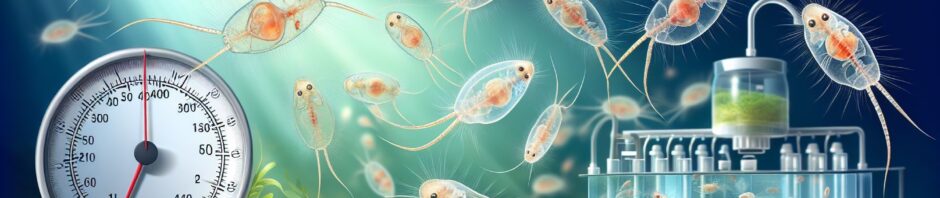
When we consider the health and quality of freshwater ecosystems, we rarely think about the tiny creatures that play a critical role in maintaining a balanced aquatic environment. Among these, Daphnia, also known as water fleas, stand out as not just an integral part of the food web but also as reliable indicators of water quality and the impacts of toxins. In this comprehensive look at Daphnia’s role as water quality indicators, we will delve into their biology, importance in toxicity testing, and how they serve as a model organism in ecotoxicology and environmental assessments.
Understanding Daphnia: Biology and Life Cycle
Daphnia, which fall under the classification of Cladocera, are small, mostly transparent crustaceans inhabiting a variety of freshwater environments such as ponds, lakes, and streams. They are planktonic organisms, meaning that they drift in the water column, and are pivotal filter feeders within their ecosystems.
Life Cycle
Daphnia exhibit a fascinating life cycle, which includes both asexual (parthenogenesis) and sexual reproduction. During favorable conditions, Daphnia populations thrive through parthenogenesis, where females produce genetically identical offspring without the need for male fertilization. However, as conditions worsen or seasons change, they switch to sexual reproduction to produce ephippia—resting eggs encased in a protective shell that ensures the survival of the species through harsh periods. These ephippia can remain dormant for extended periods and hatch when conditions improve.
Daphnia as Water Quality Indicators
Daphnia’s sensitivity to various physical, chemical, and biological factors makes them excellent water quality indicators. They respond to changes in levels of dissolved oxygen, the presence of chemical pollutants, temperature variations, and algal blooms, making them a living measure of environmental conditions.
Biomonitoring and Toxicity Testing
Biomonitoring involves using living organisms to assess the quality of an environment, and Daphnia play a crucial role in this process. They are commonly used in toxicity testing protocols to evaluate the effects of chemical pollutants on aquatic life. Acute toxicity tests with Daphnia involve exposing the organisms to different concentrations of a substance to determine the lethal dose. In chronic toxicity tests, researchers observe sub-lethal effects such as changes in reproduction rates, growth, or behavior over extended periods.
Daphnia’s responses can be quantified and extrapolated to predict how pollutants might affect larger, more complex ecosystems. As such, testing guidelines have been formalized, like those outlined by the Environmental Protection Agency (EPA) and the Organization for Economic Co-operation and Development (OECD).
Ecotoxicology
In ecotoxicology, scientists study the effects of toxic substances on ecological systems. Daphnia are widely used in this field due to their reproductive strategy, ease of culturing, and their position in the food web as primary consumers. Research involving Daphnia can shed light on the mechanisms through which pollutants exert their effects and how these impacts can transfer up the trophic levels to affect the entire food web.
Environmental Assessment and Ecosystem Health
The health of Daphnia populations can provide early warnings about the ecological stability of freshwater systems. These assessments often consider a range of factors, including nutrient cycling, the occurrence of algal blooms, eutrophication events, and predator-prey interactions.
Eutrophication
Eutrophication, the enrichment of water bodies with nutrients (primarily phosphorus and nitrogen), can lead to excessive algal growth. While Daphnia are effective in controlling algal populations through their feeding habits, overwhelming algal blooms can deplete dissolved oxygen levels, causing die-offs of Daphnia and other aquatic organisms. Monitoring Daphnia populations can thus give insights into the onset and progression of eutrophication.
Food Web Dynamics
As primary consumers, Daphnia are a crucial link between primary producers (like algae) and higher trophic levels, including fish. Their population dynamics can influence and reflect overall food web health. Daphnia also play a role in nutrient cycling, breaking down and redistributing nutrients as they feed and reproduce.
Evolutionary Adaptations and Behavioral Responses
The study of Daphnia also provides valuable information on evolutionary adaptations and behavioral responses to environmental stressors. For instance, specific Daphnia species have adapted to survive in environments with fluctuating temperatures or low oxygen levels. By understanding these adaptations, scientists can predict how Daphnia and similar organisms might respond to climate change or habitat alterations.
Challenges and Future Directions
Despite their utility, relying solely on Daphnia in environmental assessments has limitations. Different species and even different clones within a species can vary in their sensitivity to pollutants, which complicates the interpretation of biomonitoring data. Moreover, laboratory conditions often do not fully mimic the complexities of natural environments.
Conclusion
Daphnia are more than just a food source for fish; they provide valuable insights into the health of freshwater ecosystems. As indicators in biomonitoring and tools in toxicity testing, they serve as bio-sentinels for aquatic environments. Understanding and preserving these tiny indicators is key to maintaining the delicate balance of our freshwater resources.
Sources:
-
[1] U.S. Environmental Protection Agency (EPA):
https://www.epa.gov/ -
[2] Organization for Economic Co-operation and Development (OECD) Guidelines for the Testing of Chemicals:
http://www.oecd.org/chemicalsafety/testing/oecdguidelinesforthetestingofchemicals.htm -
[3] Ecotoxicology and Environmental Safety journal – Research on Daphnia species responses to environmental stressors:
https://www.journals.elsevier.com/ecotoxicology-and-environmental-safety