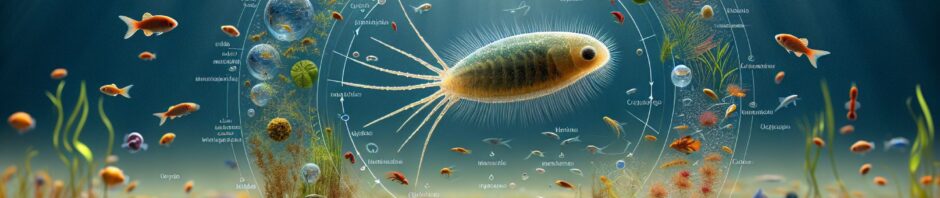
Aquatic ecosystems are complex and intricate webs of life that depend on a balance of biological and chemical interactions. Among the myriad forms of life that make up these ecosystems, one group of organisms often goes unnoticed despite its critical importance: the humble Daphnia, also known as water fleas. Daphnia are tiny freshwater crustaceans that play key roles in nutrient cycling, food web dynamics, and water quality indicators. In this in-depth exploration, we will dive into the world of Daphnia, examining their biology, ecological significance, and the challenges they face in our changing environment.
Understanding Daphnia: The Miniature Titans of Freshwater Ecosystems
Belonging to the class Cladocera, Daphnia are a group of small planktonic organisms with a chitinous exoskeleton and a characteristic jerky swimming motion powered by their antennae. They are prevalent in a wide range of aquatic habitats, including lakes, ponds, and even temporary pools.
The Life Cycle and Reproduction of Daphnia
Daphnia has a fascinating life cycle that combines both asexual and sexual reproduction. The majority of their life cycle is dominated by parthenogenesis, a form of asexual reproduction where females produce clones of themselves in rapid succession. This allows their populations to explode under favorable conditions, quickly taking advantage of available resources.
However, when environmental triggers such as food scarcity, crowding, or temperature changes are detected, Daphnia switch to sexual reproduction. They produce resting eggs encased in a protective structure called ephippia, which can withstand harsh conditions and lie dormant for years. These eggs hatch when conditions improve, ensuring the continuity of the Daphnia population.
Daphnia as Filter Feeders and Their Role in the Food Web
As filter feeders, Daphnia consume particles in the water column, including algae, bacteria, and detritus. Their large, leaf-like appendages create a current that draws in food particles, which are then trapped and ingested. By grazing on algae, they help to control algal blooms and maintain water clarity. Their feeding habits position them as primary consumers in the trophic levels, making them an integral component of the food web where they serve as a major food source for higher trophic levels, particularly fish.
The Ecological Significance of Daphnia in Aquatic Ecosystems
Daphnia’s Contribution to Nutrient Cycling and Water Quality
Daphnia play a vital role in nutrient cycling—the process by which nutrients are moved and transformed within an ecosystem. By consuming phytoplankton and mineralizing organic matter, they release nutrients back into the water column in forms available to other organisms, such as plants and bacteria, thereby sustaining productive limnological processes.
Moreover, Daphnia is used as bioindicators — organisms that provide information on the health of an ecosystem. Their sensitivity to changes in water quality makes them ideal subjects for biomonitoring. Changes in their populations can indicate the presence of chemical pollutants or shifts in water quality, such as alterations in pH levels, dissolved oxygen, or the onset of eutrophication.
The Impact of Environmental Stressors on Daphnia Populations
Daphnia populations are influenced by environmental stressors such as temperature, the presence of chemical pollutants, and predator-prey interactions. Temperature effects on Daphnia are twofold: they influence the rate of metabolic processes and the solubility of oxygen in water. High temperatures can create stress for Daphnia by lowering dissolved oxygen levels and increasing the metabolic demand.
Chemical pollutants pose a significant threat to Daphnia. Toxicity testing often uses Daphnia to evaluate the effects of various substances on aquatic organisms. Their transparent bodies allow for easy observation of internal reactions to pollutants, making them invaluable in ecotoxicology studies.
Predator-prey interactions, meanwhile, shape the population dynamics of Daphnia. They are preyed upon by a wide range of organisms, including fish and aquatic insects. Behavioral responses to predators include vertical migration, where Daphnia descend to deeper, darker waters during the day to avoid visual predators and return to the surface at night to feed.
Challenges Facing Daphnia: The Canary in the Coal Mine of Freshwater Ecosystems
The Effects of Eutrophication and Algal Blooms on Daphnia
Eutrophication, the process by which a body of water becomes overly enriched with nutrients, leading to excessive growth of algae, can have a drastic impact on Daphnia populations. While a modest increase in algae might seem like a boon for filter feeders, the subsequent algal blooms can reduce water quality and oxygen levels, making the habitat unsuitable for Daphnia and other aquatic life.
Daphnia’s Evolutionary Adaptations to Environmental Changes
Daphnia have developed various evolutionary adaptations to cope with environmental changes. These adaptations include changes in body size, reproduction rates, and the timing of life stages. For example, in response to predation pressure, some Daphnia species have evolved to grow helmets and spines, which reduce their vulnerability to being eaten.
The Role of Daphnia in Aquatic Research and Environmental Assessment
Due to their ecological importance and sensitivity to environmental changes, Daphnia are widely used in aquatic research and environmental assessment. Scientists use them to study food web dynamics, population dynamics, and the effects of environmental stressors on freshwater ecosystems.
Daphnia in Toxicity Testing and Ecotoxicology
Daphnia are a cornerstone of toxicity testing protocols worldwide, used to assess the potential harmful effects of chemical substances on aquatic environments. Ecotoxicological research with Daphnia helps to inform regulations and standards for water quality and pollutant discharge.
Biomonitoring and the Use of Daphnia as Water Quality Indicators
As bioindicators, Daphnia populations are monitored to detect early signs of environmental degradation. This information helps to guide management decisions and conservation efforts aimed at maintaining or restoring the health of aquatic ecosystems.
Conclusion
The tiny creatures known as Daphnia are far more than just food for fish. They are integral players in the balance of aquatic ecosystems, acting as filter feeders, nutrient cyclers, and water quality indicators. As sentinel species, their health reflects the well-being of their aquatic environments, and studying them offers invaluable insights into the complexities of these ecosystems. Despite their size, Daphnia’s impact on the aquatic world is immense, and their role cannot be overstated—as the proverbial canaries in the coal mine, their well-being is a bellwether for our precious water resources.
Sources
- [Ebert, D. (2005). Ecology, Epidemiology, and Evolution of Parasitism in Daphnia][1]. Bethesda (MD): National Library of Medicine (US), National Center for Biotechnology Information.
- [Lampert, W. (2011). Daphnia: Development of a Model Organism in Ecology and Evolution. Excellence in Ecology, Book 21. International Ecology Institute, Oldendorf/Luhe, Germany.][2]
- [U.S. Environmental Protection Agency. (2002). _Short-term Methods for Estimating the