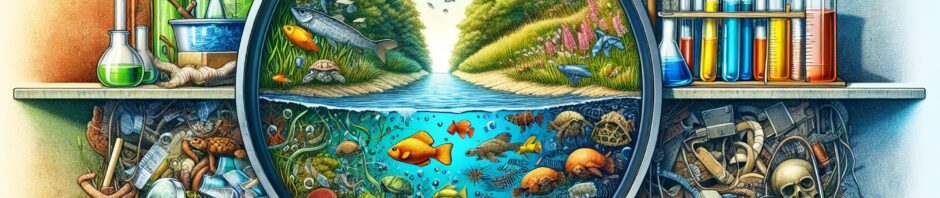
Ecotoxicology, a multidisciplinary field that lives in the sweet spot between ecology and toxicology, capped with elements of chemistry, physics, biology, genetics, and even statistics, has gained substantial interest over the past few decades. With the escalating deterioration of the planet due to industrial waste, chemical pollutants, and climate change among other anthropogenic activities, ecotoxicology offers a potent tool for environmental assessment and mitigation approaches.
What is Ecotoxicology?
The term ‘Ecotoxicology’ is derived from three Greek words: “Oikos” meaning home, “toxikos” meaning poison, and “logos” meaning study. Hence, ecotoxicology can be defined as the study of harmful effects caused by natural or synthetic pollutants to the organisms and the whole ecosystems within their designated habitat[^1^]. It incorporates studying the movement of these harmful pollutants in the environment and their effects on the ecosystem.
Link to Aquatic Ecosystems
Aquatic ecosystems, including freshwater and marine spaces, are both dynamic providers to, and reflectors of, Earth’s health. One of the remarkable facets of these water bodies is their rich biodiversity that includes a wide range of organisms from microscopic planktonic organisms to large mammals like whales. However, these ecosystems are significantly impacted by the detrimental effects of pollutants, manifested through changes in the population dynamics of species, alterations in food web dynamics, and potential ecosystem degradation if left unchecked.
Species like Daphnia (a genus of small, planktonic, freshwater crustaceans, also known as water fleas), Zooplankton, and Cladocera are central to the aquatic food webs. These tiny filter feeders constitute significant links of the lower trophic levels and are involved in nutrient cycling, transferring energy from primary producers (like algae and phytoplankton) to higher trophic levels.
Daphnia: A Biomonitoring Powerhouse
Daphnia species are the workhorses of ecotoxicology in aquatic research^[^2^]. With a lifecycle mostly consisting of rapid parthenogenesis, they exceptionally thrive in freshwater environments and have interesting dynamics such as ephippia production, which introduces sexual reproduction under adverse conditions for survival.
Their sensitivity to environmental changes, coupled with their quick response to alterations in water quality, makes Daphnia ideal candidates for biomonitoring. Changes in daphnia behavior, morphological abnormalities, and patterns of population decline or surge indicate shifts in environmental conditions. Examination of such behavioral responses not only provides insight into the immediate survival strategies of this species but also offers meaningful information about potential long-term evolutionary adaptations of organisms generally.
Chemical Pollutants and Ecotoxicology
A detailed study of ecotoxicology can offer intriguing insights into predator-prey interactions, dissolved oxygen levels in water bodies, and the temperature effects on different species. One of the main challenges faced by aquatic ecosystems is the introduction of chemical pollutants into the water bodies. Such pollutants can be direct industrial discharges or agricultural runoff comprising heavy metals, pesticides, herbicides, and more. These chemicals inevitably are absorbed by primary consumers like Daphnia, which are then transferred along the food chain. High concentrations can lead to morphological changes, decreased reproduction rates, and eventually higher mortality rates.
This bioaccumulation and biomagnification of chemical pollutants have severe consequences not just on individual organisms but the entire ecosystem, dramatically modifying the food web dynamics and even leading to species extinction in extreme cases. It also influences algal blooms and eutrophication processes, further unsettling the fragile aquatic balance.
The Way Ahead
Through toxicity testing, monitoring, and analysis of data obtained, ecotoxicology provides an overall picture of an ecosystem’s health. Understanding this can be instrumental in forming regulatory policies, determining pollutant upper limits, formulating strategies for pollutant reduction, and carrying out effective restoration projects in affected areas.
However, the field of ecotoxicology is still evolving with several challenges to overcome. As we continue to study these intricate relations in our environment, the information gathered will shape our approach towards managing ecosystems and, ultimately, our fight against climate change. The need to protect the Earth’s biodiversity and sustain our natural resources signifies the importance of ecotoxicology, marking it as an extraordinary area of research not just for today’s scientists but also for future generations.
Sources
[^1^]: Newman M.C., 2010. Fundamentals of Ecotoxicology: The Science of Pollution, 3rd Edition. CRC Press, Boca Raton, FL, USA
[^2^]: Beketov, Mikhail A., and Matthias Liess. “Ecotoxicology and macroecology—time for integration.” Environmental pollution 152.2 (2008): 205-214.
[^3^]: Giesy, John P., and Keith R. Solomon. 2014. Ecotoxicology. Vol. 3. Elsevier.