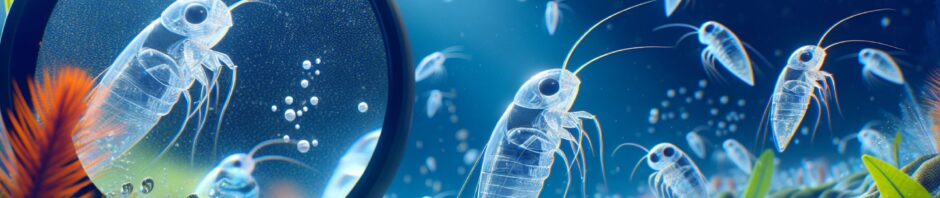
Daphnia, often referred to as water fleas, are small, planktonic crustaceans that play a critical role in freshwater ecosystems. Beyond their ecological significance, Daphnia are also widely recognized as bioindicators for environmental assessments. This article delves into the world of Daphnia, exploring their life cycle, the importance of their ecological roles, and their use in scientific research for toxicity testing and environmental monitoring.
Introduction to Daphnia
Daphnia are part of the order Cladocera and are one of the most common members of freshwater zooplankton. Typically, these aquatic invertebrates are less than 5 millimeters in length, transparent, and have a distinctive, kidney-shaped or oval carapace. As filter feeders, they play a significant role in clearing waters of algae and bacteria, thereby maintaining the balance and clarity of the freshwater ecosystems they inhabit.
Life Cycle and Reproductive Strategies
The life cycle of Daphnia is fascinating due to their ability to reproduce both asexually and sexually. Asexual reproduction, or parthenogenesis, is their primary mode of reproduction during favorable environmental conditions. Female Daphnia produce genetically identical offspring without the need for males. However, when conditions become stressful, such as changes in temperature, food scarcity, or build-up of waste products, Daphnia switch to sexual reproduction, producing both male and female offspring.
Sexual reproduction leads to the formation of ephippia, durable protective cases that contain dormant but genetically diverse embryos. These resting eggs can withstand harsh conditions, including freezing and drying, and they can remain viable for years until favorable conditions return, at which point they hatch into a new Daphnia generation.
Ecosystem Benefits and Trophic Levels
As a key component of aquatic ecosystems, Daphnia occupy a crucial position known as trophic levels. They consume primary producers like algae and pass the energy along the food web as prey to larger aquatic predators, such as fish. This interconnection makes their population dynamics vital for the stability of freshwater communities.
Biomonitoring and Water Quality Indicators
Because of their sensitivity to changes in their environment, Daphnia are excellent water quality indicators. They respond quickly to alterations in water chemistry, which makes them useful for biomonitoring. Scientists use fluctuations in Daphnia populations and their behavioral responses to assess the health of aquatic ecosystems and to identify the presence of chemical pollutants or factors leading to eutrophication.
Importance in Toxicity Testing and Ecotoxicology
Daphnia have become a standard organism for toxicity testing in the field of ecotoxicology. This is primarily due to their rapid life cycle, ease of cultivation in the laboratory, and their sensitivity to a broad range of environmental contaminants, including pesticides, heavy metals, and organic pollutants. Observing the impact of these substances on Daphnia helps scientists predict potential risks to the environment and human health.
Predator-Prey Interactions and Behavioral Responses
In their natural habitat, Daphnia engage in complex predator-prey interactions. To evade predators, they’ve developed a range of behavioral responses and evolutionary adaptations, such as diel vertical migration (DVM), where they move to deeper waters during the day to avoid visual predators and return to the surface at night to feed.
Algal Blooms and Nutrient Cycling
Daphnia are instrumental in controlling algal blooms because they feed on phytoplankton. In doing so, they contribute to nutrient cycling within aquatic environments. However, when there is an overload of nutrients due to runoff from agriculture or other human activities, Daphnia may not be able to keep up with the excessive algal growth, resulting in the harmful effects of eutrophication, like hypoxic conditions due to depleted dissolved oxygen levels.
Impacts of Temperature and Environmental Change
Temperature effects can significantly alter the physiology and population dynamics of Daphnia. As ectothermic organisms, rising temperatures due to climate change could impact their reproduction rate, development, and survival. These changes, in turn, affect their interactions within the food web and could have far-reaching consequences for freshwater ecosystems.
Conclusion
Daphnia are far more than just water fleas; they are key players in maintaining freshwater ecosystem health and indicators for environmental quality. Their use in scientific research continues to reveal new insights into the impacts of environmental stressors, improving our understanding of aquatic environments and informing conservation efforts.
Sources
- Lampert, W. (2011). Daphnia: Development of a Model Organism in Ecology and Evolution. International Ecology Institute.
- Environmental Protection Agency. (2012). Methods for Measuring the Acute Toxicity of Effluents and Receiving Waters to Freshwater and Marine Organisms. EPA.
- Gliwicz, Z. M. (2003). Between Hazards of Starvation and Risk of Predation: The Ecology of Offshore Animals. Excellence in Ecology Series. Sutton, MA: International Ecology Institute.
By exploring the life and role of Daphnia, it becomes apparent that these minute creatures are instrumental to aquatic life and our understanding of ecosystem health. As research progresses, the significance of Daphnia in scientific and environmental contexts will undoubtedly continue to evolve and provide more valuable insights.