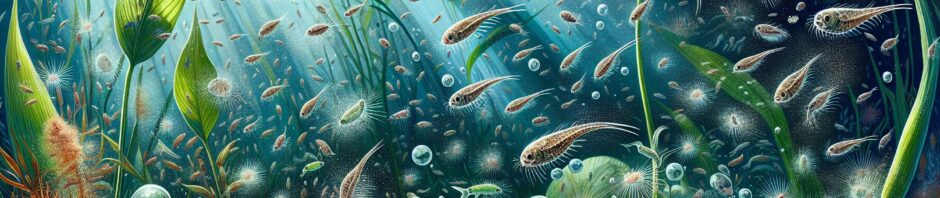
Daphnia, often known as water fleas because of their tiny size and jumpy motion, may seem inconsequential in the grandeur of the animal kingdom. Still, they play an essential role in the functioning of freshwater ecosystems. These tiny crustaceans, despite their diminutive size, are giants when it comes to maintaining the health of our aquatic ecosystems. Let’s dive deeper into the life and significance of these fascinating organisms.
About Daphnia
Daphnia belongs to the Cladocera family, a group of small water crustaceans commonly found in fresh and brackish water. They are filter feeders, meaning they sieve tiny food particles from the water. This process not only helps them obtain nutrition but also plays a vital role in purifying the water[^1^].
Life Cycle and Reproduction
Daphnia primarily reproduce through parthenogenesis-a form of asexual reproduction where females produce offspring without fertilization. This rapid reproduction allows them to quickly establish populations. Still, under certain conditions, they can switch to sexual reproduction, producing resting eggs (ephippia) that can endure harsh environmental conditions[^2^].
Role in Aquatic Ecosystems
Daphnia is a critical component of aquatic food web dynamics. As primary consumers, they feed on phytoplankton and algae, thereby controlling algal blooms. They then serve as a food source for small fish and insects, transferring the energy up the trophic levels[^3^].
Their role extends beyond being a link in the food chain. Daphnia helps in nutrient cycling by feeding on decaying matter and reintroducing the nutrients into the ecosystem.
Daphnia and Biomonitoring
Daphnia’s sensitivity to changes in water quality makes them an essential organism for biomonitoring. Scientists often use them to assess the presence of chemical pollutants, toxicity levels, and the overall health of the water body.
Whether it’s testing the effects of chemical contaminants or assessing dissolved oxygen levels, Daphnia’s visible and quantifiable responses have made them the ‘lab rats’ of ecotoxicology[^4^].
Evolutionary Adaptations and Behavioral Responses
Over the years, Daphnia has developed several evolutionary adaptations to survive. For instance, in response to predation threats, some Daphnia species have evolved with protective features such as long spines.
Temperature also affects Daphna. They typically have shorter life spans but higher reproduction rates in warmer conditions. In contrast, colder temperatures lead to longer life spans but slower reproduction[^3^].
Daphnia and the Future
Due to their crucial roles in the environment and scientific research, maintaining healthy Daphnia populations is essential. They are an integral part of freshwater ecosystems, and their health directly affects our water quality.
In an age of increasing environmental pollution and climate change, Daphnia serve as a sensitive indicator of water health, capturing changes often overlooked by conventional measures.
They remind us of the intricacies and interconnections of ecosystems and underline the importance of conserving even the smallest organisms for the health of the planet.
As we strive for a sustainable future, there is much we can learn from these tiny titans of the water realm. From their remarkable resilience to their unsung role in maintaining water health, Daphnia truly are the unsung heroes of our freshwater ecosystems.
[^1^]: Understanding the Water Flea “Daphnia”
[^2^]: Life Cycle of Daphnia
[^3^]: The Ecosystem Roles of Daphnia
[^4^]: Daphnia: An Aquatic Model System for Ecotoxicology