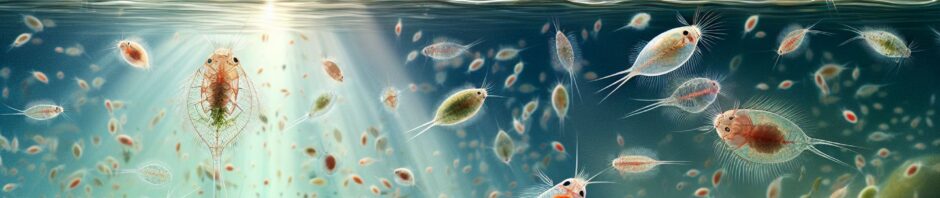
In the vast and dynamic world of aquatic ecosystems, a group of small freshwater crustaceans known as Daphnia play a crucial role. Though they may not initially capture our attention like larger, more charismatic fauna, these minuscule organisms provide invaluable insights into the health and function of water bodies, from the smallest ponds to the largest lakes. Daphnia are often referred to as ‘water fleas’ because of their jerky swimming movements and their ubiquitous presence in fresh waters around the globe.
In this comprehensive exploration, we’ll delve into the life of Daphnia—covering their biology, ecological importance, and the critical role they play in environmental monitoring and research.
Biology and Life Cycle of Daphnia
Daphnia belong to the order Cladocera and are a type of zooplankton, which encompasses small aquatic organisms that drift in water currents. They are exceptionally well-studied due to their short life cycles, reproductive versatility, and sensitivity to environmental changes.
The Physical Profile of Daphnia
Typically less than 5 mm in length, Daphnia have a distinct exoskeleton or carapace, which is transparent and encloses most of their body, making internal organs visible under a microscope. This characteristic has made them an excellent subject for scientific study, especially in the field of physiology and toxicology.
Reproductive Capabilities
Daphnia exhibit a reproductive strategy known as parthenogenesis, where females produce genetically identical offspring without fertilization for most of the year. This mode of asexual reproduction allows populations to grow rapidly when conditions are favorable. When environmental conditions deteriorate, Daphnia can switch to sexual reproduction, producing resistant resting eggs (ephippia), which can withstand harsh conditions and hatch when conditions become hospitable again.
Development and Life Span
The life cycle of Daphnia is incredibly fast-paced, with some species maturing within a week and living only for a few months. Their development and population dynamics closely reflect the environment they live in, thus providing a near real-time snapshot of ecological changes.
Ecological Importance of Daphnia
Daphnia serve vital functions in aquatic ecosystems, acting at various trophic levels, and influencing food web dynamics.
Role in Trophic Levels
As filter feeders, Daphnia consume algae and other small particulates suspended in the water, effectively cleaning the water and controlling algal populations. In turn, they are a primary food source for a variety of fish and other aquatic predators, bridging the gap between primary producers (like algae) and higher trophic levels.
Impact on Water Clarity and Quality
By grazing on phytoplankton, Daphnia help maintain water clarity. This not only aesthetically improves water bodies but also has profound effects on light penetration and hence, the photosynthetic activity within a given water body.
Nutrient Cycling and Dissolved Oxygen Levels
Daphnia contribute to nutrient cycling by processing organic matter and releasing nutrients back into the water in bioavailable forms. Moreover, by consuming large quantities of algae, Daphnia play a part in regulating dissolved oxygen levels in the water, as algal overgrowth can lead to eutrophication and depleted oxygen levels, damaging the aquatic environment.
Daphnia in Environmental Monitoring and Research
Due to their sensitivity to changes in water quality, Daphnia are widely used as bioindicators for environmental assessments and ecotoxicological studies.
Biomonitoring and Water Quality Indicators
The sensitivity of Daphnia to various pollutants, such as chemicals and heavy metals, makes them useful in biomonitoring. Changes in Daphnia populations can indicate the presence of harmful substances and help assess the ecological impact of pollutants on aquatic ecosystems.
Toxicity Testing and Ecotoxicology
Daphnia are a staple in laboratory toxicity testing due to their rapid life cycles and ease of cultivation. They are used to evaluate the toxic effects of chemical compounds on aquatic life. Standardized tests, such as the Daphnia acute toxicity test, help in determining the concentration at which a chemical becomes lethal to these organisms.
Behavioral Responses and Evolutionary Adaptations
Daphnia exhibit a range of behavioral responses to environmental changes, such as vertical migration in response to light changes or predator presence. These responses are useful indicators of ecosystem health and can inform researchers about the adaptation strategies Daphnia use to survive.
Challenges Faced by Daphnia Populations
Daphnia, much like other aquatic invertebrates, are affected by human activities and environmental changes. Issues such as eutrophication due to agricultural runoff, climate change, and the introduction of invasive species pose challenges to Daphnia populations and, by extension, the ecosystems they inhabit.
Effects of Eutrophication and Algal Blooms
Excess nutrients from fertilizer and sewage can lead to algal blooms, which often result in oxygen depletion and can create dead zones where aquatic life cannot survive. While Daphnia can initially benefit from increased algal food sources, the subsequent loss of habitat quality can lead to population crashes.
Climate Change and Temperature Effects
As ectothermic organisms, Daphnia are subject to the direct effects of temperature on their physiology and life cycle. Warmer temperatures can increase their metabolic rates and reproduction, but also elevate the risk of predation and disease outbreaks.
Conservation Efforts and Future Research
To conserve Daphnia populations and the health of aquatic ecosystems, it’s vital to control pollution levels, manage land use wisely, and mitigate the impacts of climate change through comprehensive environmental policies and practices. Future research into Daphnia can provide essential clues into biodiversity conservation, population dynamics, and the impacts of humans on the natural world.
Key Takeaways from the Life of Daphnia
- Daphnia showcase a fascinating blend of biological complexity and ecological significance despite their small size.
- Their roles as filter feeders, nutrient cyclers, and indicators of water quality make them indispensable to aquatic ecosystems and scientific research.
- Daphnia populations are sensitive to various forms of environmental stress, their health being reflective of larger ecological and conservation challenges.
By appreciating these tiny freshwater crustaceans, we can gain a deeper understanding of aquatic environments and the intricate web of interactions that sustain them. The study of Daphnia is not just about a single group of organisms, but about the health and future of our planet’s valuable freshwater resources.
Sources
- Lampert, W. (2011). Daphnia: Development of a Model Organism in Ecology and Evolution. Excellence Cluster. doi:10.1007/978-3-322-80316-1
- Ebert, D. (2005). Ecology, Epidemiology, and Evolution of Parasitism in Daphnia. National Center for Biotechnology Information (NCBI) Bookshelf.
- U.S. Environmental Protection Agency. (2002). Short-term Methods for Estimating the Chronic Toxicity of Effluents and Receiving Waters to Freshwater Organisms. EPA-821-R-02-013.