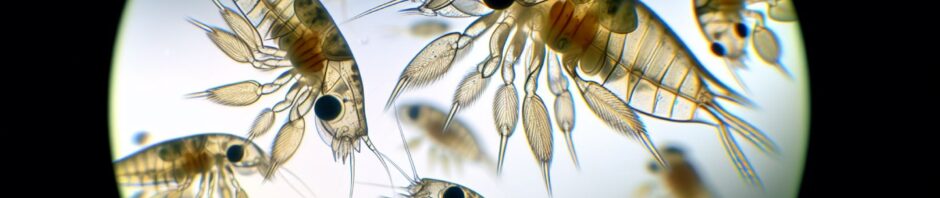
Freshwater ecosystems are crucial to the survival of a wide array of species, including humans. They provide essential services such as drinking water, irrigation for agriculture, and habitats for biodiversity. However, these vital resources are under constant threat from various factors like pollution, climate change, and habitat destruction. To safeguard these freshwater systems, scientists turn to bioindicators—organisms that signal the health of an ecosystem through their presence, absence, or well-being. Among the most effective of these biological sentinels are Daphnia, tiny freshwater crustaceans that play a pivotal role in the ecosystem. In this article, we delve into the fascinating world of Daphnia and explore how these creatures help monitor and maintain the quality of our aquatic resources.
Understanding Daphnia: A Comprehensive Overview
Daphnia, commonly known as water fleas, are a diverse group of planktonic organisms found in freshwater habitats around the world. As a genus, Daphnia is a member of the Cladocera family and serves as an integral part of aquatic food webs. Despite their minute size, Daphnia have a significant impact on their environment, making them an instrumental subject for research in various fields such as ecology, ecotoxicology, and environmental assessment.
Life Cycle and Reproduction
Daphnia display a fascinating life cycle marked by their ability to reproduce via parthenogenesis or sexual reproduction, depending on environmental conditions. Most of the time, Daphnia populations consist predominantly of females that reproduce asexually, quickly populating a body of water without the need for male fertilization. However, when environmental factors become stressful, such as food scarcity or changes in temperature, Daphnia switch to sexual reproduction. This mode of reproduction results in the production of ephippia—resistant resting eggs that can endure harsh conditions and serve as a means of dispersal.
Trophic Levels and Food Web Dynamics
At the base of many freshwater food webs, Daphnia primarily function as filter feeders, efficiently consuming small particles such as bacteria, algae, and detritus. By feeding on these primary producers and decomposers, Daphnia convert the energy obtained from sunlight and nutrients into a form accessible to higher trophic levels—including fish and other aquatic predators. This positions Daphnia as a crucial link in nutrient cycling and food web dynamics within aquatic ecosystems.
Role as Biomonitoring Agents
Due to their sensitivity to changes in water quality, Daphnia are widely used as water quality indicators in biomonitoring studies. Researchers often measure responses such as survival, reproduction, and behavioral changes to assess the health of an aquatic environment. These responses can indicate the presence of chemical pollutants, dissolved oxygen levels, temperature effects, and other environmental stressors. As such, Daphnia serve as a practical and cost-effective tool for environmental assessment and regulatory toxicity testing.
The Sentinel Role: Daphnia and Water Quality
Monitoring the health of freshwater systems is of paramount importance to ensure that the water remains safe for consumption and supports diverse life forms. Daphnia’s role in this regard cannot be overstated. Given their rapid response to pollutants and habitat changes, they are often the first to show signs of distress, functioning as living indicators for potential environmental problems.
Sensitivity to Chemical Pollutants
Daphnia are particularly sensitive to a wide range of chemical pollutants found in aquatic environments, such as pesticides, heavy metals, and pharmaceuticals. Their clear exoskeleton makes it possible to observe physiological changes directly under a microscope, and their short life cycles allow scientists to analyze multiple generations within a reasonable timeframe. Ecotoxicological tests with Daphnia often involve examining the acute and chronic effects of substances on survival rates, reproduction capabilities, and growth patterns.
Responses to Eutrophication and Algal Blooms
Eutrophication, the enrichment of water bodies with nutrients, often leads to algal blooms which can be detrimental to freshwater ecosystems. Daphnia populations can both mitigate and be affected by these phenomena. When Daphnia populations are high, they can help keep algal growth in check by consuming the excess algae. Conversely, certain types of algal blooms produce toxins that can harm Daphnia, thereby reducing their populations and further exacerbating the problem.
Behavioral Responses and Evolutionary Adaptations
Environmental stressors not only affect Daphnia on a physiological level but also prompt behavioral responses and drive evolutionary adaptations. For instance, Daphnia have been shown to exhibit avoidance behaviors in the presence of predators or pollutants. In terms of long-term adaptation, some populations have developed tolerance to historically polluted environments, showcasing the resilience and adaptability of these organisms. Understanding these mechanisms is also crucial for the conservation of Daphnia species and the ecosystems they inhabit.
Daphnia in Research and Industry
The prolific use of Daphnia in scientific research extends beyond environmental monitoring. Their role as model organisms in biological studies continues to be invaluable due to their ease of cultivation, short generation times, and transparent bodies allowing for easy observation of internal processes.
Toxicity Testing and Regulatory Guidelines
Daphnia are a staple in standardized toxicity tests used to evaluate the environmental safety of chemicals before their approval for use. Regulatory agencies such as the U.S. Environmental Protection Agency (EPA) and the European Chemicals Agency (ECHA) incorporate Daphnia toxicity data into their guidelines and risk assessments. These tests help ensure that chemical substances do not pose undue risk to ecosystems and, by extension, to human health.
Studies on Population Dynamics and Predator-Prey Interactions
The simple yet intricate life dynamics of Daphnia make them ideal subjects for researching population dynamics and predator-prey interactions. Their visibility in the water column and the factors that influence their population growth, such as food availability and predation, provide a window into understanding the complex interactions that govern ecosystems.
Educational Use and Future Perspectives
Daphnia also play a role in education, serving as an accessible organism for students to study biological concepts such as heredity, physiology, and ecological principles. As our understanding of these creatures deepens, they continue to reveal new insights that contribute to the broader knowledge of ecology and evolution. Researchers are increasingly tapping into the potential of Daphnia for studying climate change impacts, genetic responses to environmental stress, and the effects of microplastics.
Conclusion
Daphnia may be small, but their impact on the scientific understanding of aquatic ecosystems is substantial. As effective indicators of water quality, these tiny crustaceans are key to identifying and mitigating ecological threats. By paying attention to the well-being of Daphnia populations, researchers and environmental managers can develop effective strategies to preserve the integrity of freshwater resources.
With the current challenges facing aquatic ecosystems, the study and conservation of Daphnia take on critical importance. Through continued research and monitoring efforts, Daphnia will remain essential allies in our quest to safeguard the health and biodiversity of freshwater habitats for generations to come.
Sources
- EPA. “Methods for Measuring the Acute Toxicity of Effluents and Receiving Waters to Freshwater and Marine Organisms.” U.S. Environmental Protection Agency, October 2002, www.epa.gov.
- ECHA. “Information on Chemicals.” European Chemicals Agency,