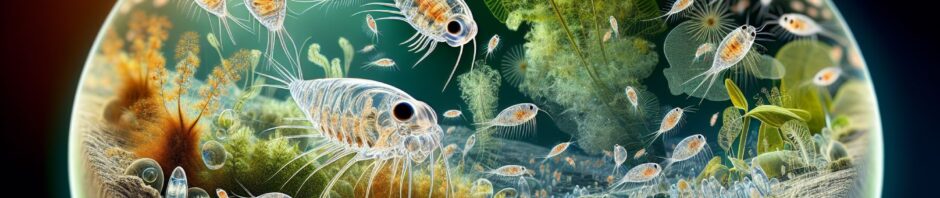
In the intricate web of aquatic life, a group of organisms often overlooked yet vitally important to the health and sustainability of freshwater ecosystems are the Daphnia. Commonly known as water fleas, Daphnia play a pivotal role as both a food source and a biomonitoring tool. This article will delve into the fascinating world of Daphnia, exploring their biology, ecological importance, use in toxicity testing, and the challenges they face in our changing environment.
What are Daphnia?
Daphnia are small, mostly transparent, freshwater crustaceans that belong to the class Cladocera. As a key component of zooplankton, these aquatic invertebrates inhabit various freshwater environments such as ponds, lakes, streams, and rivers. The typical size of Daphnia ranges from 0.2 to 5 millimeters, making them visible to the naked eye as tiny specks darting through the water.
The Biological Features of Daphnia
Daphnia are particularly recognized for their unique body structure: a carapace that encloses most of their body parts, leaving only the head visible. They have a compound eye that is usually red and are known for their rapid jerky movement in the water column, powered by large antennae. They feed by filtering algae, bacteria, and detritus from the water, classifying them as filter feeders.
One of the most fascinating aspects of Daphnia biology is their life cycle, which involves both asexual reproduction through parthenogenesis and sexual reproduction. During favorable conditions, females reproduce asexually, giving birth to genetically identical clones. However, when conditions become harsh, they can switch to sexual reproduction, producing resting eggs encased in protective structures called ephippia. These eggs can survive extreme conditions and hatch when conditions improve.
Daphnia as Indicators of Water Quality
Daphnia are often used as water quality indicators due to their sensitivity to various environmental stressors. Their fast reproductive rate and easy culture in laboratory settings make them excellent candidates for biomonitoring and toxicity testing. Changes in Daphnia population dynamics can signal shifts in water quality caused by factors such as chemical pollutants, dissolved oxygen levels, temperature effects, and the presence of heavy metals.
Ecotoxicology and Daphnia
Ecotoxicology is the study of the effects of toxic chemicals on biological organisms, especially at the population, community, and ecosystem levels. Daphnia species are a staple in ecotoxicological research due to their responsiveness to environmental toxins. Standardized tests, such as the Daphnia acute toxicity test, evaluate the impact of chemical substances on these organisms’ survival. Not only does this help in assessing the potential hazards of chemicals to aquatic ecosystems, but it also aids in the regulation and limitation of harmful substances.
The Role of Daphnia in Aquatic Food Webs
Daphnia are a crucial element in trophic levels and food web dynamics within aquatic ecosystems, bridging the gap between primary producers (like algae) and higher trophic levels, such as fish. They consume phytoplankton and are, in turn, a primary food source for various fish species and invertebrate predators. This makes them an essential link in nutrient cycling and energy transfer in the food web.
Predator-Prey Interactions
Predation is a significant factor influencing Daphnia population dynamics. The presence of fish and other predators can lead to evolutionary adaptations in Daphnia, such as changes in size, behavior, and reproductive timing. Moreover, Daphnia can exhibit behavioral responses to evade predators, such as diel vertical migration, where they move to deeper waters during the day and return to feed at the surface at night.
Environmental Challenges Facing Daphnia
Daphnia populations, like many other aquatic organisms, are threatened by environmental changes. Algal blooms caused by eutrophication and the consequent loss of dissolved oxygen can lead to stressful conditions for these filter feeders. Climate change-induced temperature fluctuations can also affect Daphnia, as they are sensitive to temperature changes which can influence their metabolic rates and breeding cycles.
Additionally, chemical pollutants, including agricultural runoff and industrial waste, disrupt Daphnia’s delicate balance with their environment. Understanding and mitigating these threats is vital for preserving both Daphnia and the ecosystems they support.
The Impact of Algal Blooms and Eutrophication
Algal blooms, which often result from eutrophication – the excessive enrichment of water bodies with nutrients, primarily nitrogen and phosphorus – can have a dual effect on Daphnia. On one hand, an increase in their food source (algae) can initially lead to population booms. On the other hand, dense algal blooms reduce water clarity and oxygen levels, negatively affecting Daphnia survival and leading to population crashes. Furthermore, some algal blooms consist of cyanobacteria, which can be toxic to Daphnia and other aquatic organisms.
The Role of Daphnia in Research and Conservation
Research on Daphnia has expanded our understanding of aquatic ecosystems, and these organisms are often at the forefront of conservation efforts aimed at preserving freshwater habitats. Due to their rapid response to environmental changes, studying Daphnia populations can aid environmental assessment and inform conservation strategies. Continuous monitoring of these tiny but powerful bioindicators is critical to protecting water quality and the biodiversity of aquatic ecosystems.
Daphnia and Climate Change
Climate change is a looming threat that can alter the delicate balance within aquatic ecosystems, affecting Daphnia and other planktonic organisms. Changes in temperature can have complex effects on Daphnia’s life cycle and distribution, potentially leading to mismatches in the timing of their reproduction and the availability of their food sources. This can have cascading effects throughout the food web, ultimately influencing fish populations and the overall health of aquatic environments.
Conclusion
The world of Daphnia is a microcosm of the broader dynamics at play in freshwater ecosystems. These tiny creatures are more than just food for fish; they are indicators of environmental health, subjects of research, and key players in the nutrient cycles of water bodies across the globe. Understanding and preserving the integrity of the habitats that Daphnia, and countless other aquatic organisms, call home is fundamental to sustaining the biodiversity and functionality of freshwater ecosystems.
Protecting Daphnia means protecting our water resources and maintaining the delicate balance that supports life both in and out of the water. As sentinels of our lakes, rivers, and ponds, these seemingly insignificant water fleas hold within them the stories of the waters they inhabit, the changes those waters face, and the future they foretell.
Sources
- Dudycha, J. L. (2021). “Daphnia.” Encyclopedia Britannica. https://www.britannica.com/animal/Daphnia
- Lampert, W. (2011). “Daphnia: Development of a Model Organism in Ecology and Evolution.” Excellence in Ecology, 21. International Ecology Institute.
- Peltier, W. H., & Weber, C. I. (ed.). (1985). “Methods for measuring the acute toxicity of effluents and receiving waters to freshwater and marine organisms.” *