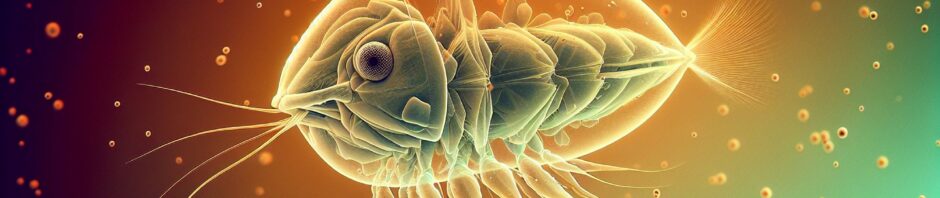
When you mention the term ‘water quality indicator,’ several ideas might cross your mind. You may think of man-made instruments like pH meters or turbidity tubes. However, have you ever considered that some organisms serve as natural monitors for water quality? The humble Daphnia, a genus of small, planktonic freshwater crustaceans, is one of those unique organisms.
Introduction to Daphnia
“Daphnia”^(1^)—which you might know as ‘water fleas’—are interesting creatures. Although they are tiny, measuring from 0.2 to 5 millimeters, they play a crucial role in aquatic ecosystems as primary consumers in the food web dynamics. Often overlooked, their significance lies not only in their role as vital nourishment for fish and other aquatic vertebrates, but also in their surprising function in biomonitoring water quality.
Daphnia the Biomonitor
How does something as tiny as Daphnia give us insights on water quality? Subtle changes in its behavior, population, and life cycles can indicate problems in water quality before they can even be detected by standard laboratory tests.
In an environmental assessment, ecotoxicologists use these tiny ‘aquatic canaries in the coal mine’^(2^) as they respond sensitively to changes in their environment due to factors like pollution, temperature variations, and dissolved oxygen levels. They possess ‘filter feeder’ capabilities, meaning they can strain suspended matter and food particles from water. Yet this incredible filtering process can make Daphnia susceptible to chemical pollutants or toxic substances present in the water. When endangered, they show behavioral responses, including alterations in their feeding rhythms, movement, and reproductive patterns.
In toxicity testing, ‘ephippia’—resting eggs of Daphnia—can remain dormant and viable for long periods in a polluted environment, making them perfect natural bio-indicators of past conditions.
Studying these different aspects of their biology can provide crucial information for ecotoxicology, advancing our understanding of aquatic environmental health and helping in conservation efforts.
Influence on Aquatic Ecosystems
Daphnia aren’t just biological sensors; they also fulfill a crucial ecological role. Their rapid parthenogenetic (asexual) reproduction allows them to quickly adapt to changes in their environment, thus maintaining the balance of the trophic levels in their ecosystem.
As a part of zooplankton—a community of small, floating organisms—Daphnia are key in nutrient cycling, converting the inorganic nutrients in the water column into formats that larger organisms can use. Notably, they can control algal blooms and influence eutrophication, a process where excess nutrients cause dense vegetation growth and subsequent oxygen depletion, leading to a decline in water quality.
While it can seem terrifying to be at the mercy of predatory fish, Daphnia have adapted to these predator-prey interactions in extraordinary ways. In some species, direct predation pressure can induce the development of protective ‘helmets’ or spines, demonstrating the implications of evolutionary adaptations on population dynamics.
In Conclusion
Understanding the life and role of Daphnia isn’t just a fun dive into nature. It’s also important for our approach to monitoring and maintaining water quality and ecosystem health.
This unnoticeable tiny creature isn’t just fish food or a subject of scientific interest. It serves as a robust link between the multiple trophic levels in aquatic ecosystems, keeping check on the water quality, and reminding us of the wonder and complexity of the natural world.
Continue appreciating the diverse lifeforms sharing our world—both the ones that can be seen and those requiring a second, closer look. Might we even develop more respect and caution about our influences on nature, inspired by merely understanding the significant role of the small, yet indomitable Daphnia.