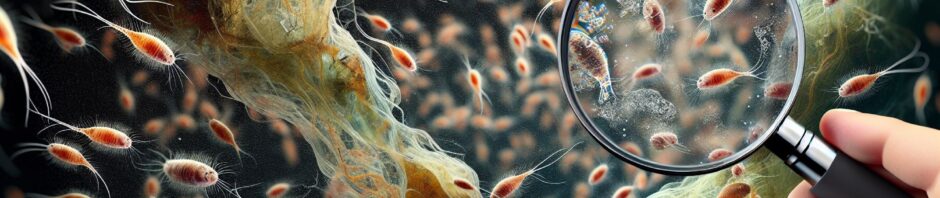
The symbol of aquatic ecosystems’ health, today, we dive into the world of Daphnia. The following insights on Daphnia were bolstered by expert sources such as the National Center for Biotechnology Information, Nature, and ScienceDirect.
Daphnia, also known as “water fleas,” belong to the phylum Crustacea and the order Cladocera. These fascinating freshwater crustaceans are part of a larger group of aquatic invertebrates known as zooplankton. They play a crucial role in the food web, acting as filter feeders, and serve as vital links in the ecology of freshwater bodies. Their importance in aquatic ecosystems extends beyond their role as a food source: they monitor water quality, contribute to toxicity testing and ecological risk assessment, and participate in both nutrient cycling and population dynamics.
Key Players in Aquatic Ecosystems
In freshwater ecosystems, Daphnia are deemed integral. They sit at a pivotal juncture in the food web dynamics, feeding on microscopic algae and bacteria and, in turn, serving as prey for small fish and invertebrates. This predator-prey interaction is essential for maintaining balanced aquatic biodiversity.
Apart from their crucial position in the food chain, Daphnia play a pivotal role in nutrient cycling by feeding on phytoplankton, recycling nutrients back into the water. As a result, they contribute to maintaining optimal levels of dissolved oxygen necessary for the survival of other aquatic organisms.
Daphnia and Biomonitoring
As unlikely as it may seem, these microscopic wonders are excellent water quality indicators. Their populations reflect changes in to their habitats, making them essential biomonitoring tools. Daphnia are particularly sensitive to changes in water temperature and chemical pollutants, and noticeable changes in their numbers can signal potential problems such as eutrophication, resulting in harmful algal blooms.
In toxicity testing and ecotoxicology, Daphnia are often used as model organisms. Researchers turn to Daphnia due to their sensitivity to environmental toxins, helping them assess the impact of various chemicals on aquatic ecosystems. Not only does this help identify threats, but also aids in formulating protective measures for these vulnerable ecosystems.
A Unique Lifecycle
Daphnia’s life cycle and reproductive strategies are intriguing. They exhibit a form of asexual reproduction known as parthenogenesis, where females produce offspring without the need for fertilization. This ensures rapid population growth especially during favorable conditions. However, when resources become scarce or environmental conditions worsen, Daphnia switch to sexual reproduction, producing resting eggs (ephippia) capable of surviving harsh environmental conditions.
As another survival mechanism, Daphnia show fascinating behavioral responses and evolutionary adaptations. For instance, they exhibit vertical migration, moving towards the surface of the water during the night to feed and diving to the depths during the day to avoid predators. This behavior is known as diel vertical migration (DVM).
A Threatened World
Despite their resilience and adaptability, Daphnia populations are not immune to the environmental changes brought about by human activities. Rising temperatures, increasing water pollution, and habitat destruction are all major threats affecting the Daphnia populations, indirectly impacting the broader aquatic ecosystems they inhabit.
The role of Daphnia in freshwater bodies goes beyond simply being a component of the food web––they form an integral part of our ecosystems, acting as essential water quality indicators and playing a pivotal role in nutrient cycling. Therefore, protecting these minuscule warriors is integral to maintaining the balance and health of our aquatic ecosystems.
The research and understanding of these tiny creatures continues to expand, drawing attention to the critical role they play in our rich aquatic systems. Despite being minuscule in size, Daphnia serve as a stark reminder of the irreplaceable interconnectedness of all components in an ecosystem, no matter how seemingly insignificant. Understanding and protecting these small powerhouses, therefore, carries the potential to preserve the health and vibrancy of our aquatic ecosystems, ensuring the survival of a myriad of species, including our own.
If you’ve made this far, consider yourself familiar with some of the unsung heroes of our waters: the Daphnia. These minuscule crustaceans really are master multi-taskers performing functions ranging from food to biomonitoring. Here’s to better appreciation of the smaller things in life and their role in sustaining the larger.