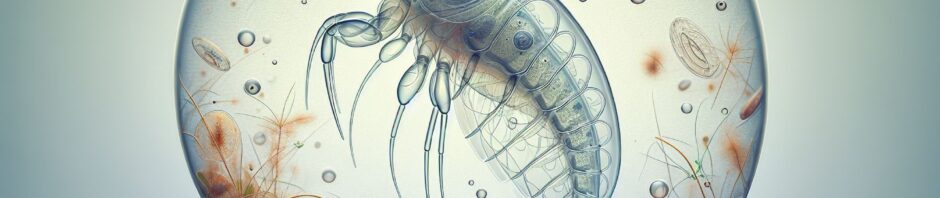
They are tiny, often less than 5 mm in length, but their impact on the aquatic ecosystems and our understanding of environmental health is gigantic. Meet Daphnia, a genus of small planktonic crustaceans, also known as “water fleas.” These organisms may be minuscule, yet they play a monumental role in nutrient cycling, food web dynamics, and ecotoxicology. In this article, we dive into the world of Daphnia to explore their life cycle, ecological importance, and how they serve as water quality indicators and tools for biomonitoring.
What Are Daphnia?
Daphnia belong to the order Cladocera, making them a group of freshwater crustaceans. Found in a variety of aquatic environments, they are a key component of zooplankton—a term that encompasses the small and often microscopic creatures that drift in water columns. Daphnia, specifically, are filter feeders, filtering tiny particles from the water to feed on algae, bacteria, and detritus. But their role extends far beyond simple feeding.
Ecological Role of Daphnia
As feeders, Daphnia are part of a larger network—trophic levels—that constitutes the food web dynamics. They serve as a crucial link between the primary producers (like algae) and higher trophic levels, such as fish, which consume Daphnia as a protein-rich meal.
Nutrient Cycling and Dissolved Oxygen
Daphnia play a significant role in nutrient cycling by excreting waste that can be used as nutrients by plants and other organisms. Not only do they impact nutrient availability, but their breathing and feeding activities also influence the levels of dissolved oxygen in aquatic systems, crucial for supporting diverse aquatic life.
Algal Blooms and Eutrophication
These organisms can also regulate algal populations, curbing the growth of harmful algal blooms that can lead to eutrophication—a process where excessive nutrients lead to dense plant life that depletes the water of oxygen, harming marine life.
Predator-Prey Interactions
The presence and behavior of Daphnia can indicate changes in predator-prey interactions. For example, when fish populations increase, Daphnia tend to reduce their size and reproductive rate as an evolutionary adaptation to evade predation, illustrating a dynamic element of aquatic ecosystems.
The Life Cycle of Daphnia
The life cycle of Daphnia is fascinating and includes both asexual (parthenogenesis) and sexual reproduction. During favorable conditions, they often reproduce asexually, with females producing genetic clones of themselves. With the onset of environmental stress, such as decreasing temperatures or food scarcity, Daphnia revert to sexual reproduction, producing eggs that can withstand harsh conditions. These eggs are often encased in a structure known as an ephippium, which aids in their survival through unfavorable periods.
Parthenogenesis and Ephippia
Parthenogenesis allows for rapid population growth, while the ephippia ensure long-term survival across generations. This dual strategy makes Daphnia exceptionally well-adapted to fluctuating environmental conditions, allowing for quick colonization when conditions improve.
Daphnia as Bioindicators for Water Quality
Because of their sensitivity to changes in the environment, Daphnia serve as excellent bioindicators for water quality. They can reveal the presence of chemical pollutants and the overall health of aquatic systems through behavioral responses, physiology, and population dynamics. This quality has led to their widespread use in biomonitoring programs.
Toxicity Testing and Ecotoxicology
Toxicity testing involving Daphnia is a cornerstone of ecotoxicology, the science that studies the effects of toxic chemicals on biological organisms, especially within the context of ecosystems. The tests assess the impact of various substances on Daphnia survival, reproduction, and behavior, providing valuable insights into the potential hazards of chemical pollutants.
Environmental Assessment and Evolutionary Adaptations
Regular monitoring of Daphnia populations can aid in environmental assessment, helping scientists track changes in aquatic ecosystems that might result from human activities or climate change. Furthermore, observing Daphnia’s evolutionary adaptations to these changes offers valuable data on how species may cope with or succumb to environmental pressures.
Challenges and Considerations
Despite their utility, studying Daphnia poses certain challenges. Population dynamics can be influenced by a myriad of factors, making it difficult to ascertain the sole cause of population changes. Additionally, laboratory conditions can sometimes fail to accurately mirror natural habitats, potentially skewing results.
Moreover, Daphnia, like any living bioindicator, have limitations in the breadth and specificity of the data they can provide. It is also important to consider that their responses to pollutants can be influenced by other environmental variables like temperature and nutrient levels.
Looking Towards the Future
Daphnia could also tell us much about the potential effects of climate change on aquatic ecosystems. The influence of temperature on their life cycle, combined with their role in the food web and their responsiveness to environmental stress, makes them prime organisms for studying these impacts.
As the climate changes, the responses of Daphnia populations may serve as early warnings of broader shifts in aquatic ecosystems. Predictive models that include Daphnia and climate data might one day help us anticipate and mitigate some of the most pressing ecological challenges.
Conclusion
The diminutive Daphnia are an exemplary illustration of the adage “small but mighty.” These freshwater crustaceans are essential to the health and function of aquatic environments. Beyond that, they provide us with a window into the health of our waterways and the impacts of pollution and climate change.
By studying Daphnia and their myriad roles—from nutrient cyclers and food sources to indicator species—we can gain a better understanding of our environment and develop more informed conservation and management strategies.
Sources:
- Ebert, D. (2005). Ecology, Epidemiology, and Evolution of Parasitism in Daphnia. National Center for Biotechnology Information (NCBI) Bookshelf.
- United States Environmental Protection Agency (EPA) (n.d.). Ecological Indicators.
- Underwood, G.J.C. & Kromkamp, J. (1999). Primary Production by Phytoplankton and Microphytobenthos in Estuaries. In: Nedwell, D.B. & Raffaelli, D.G. (Eds.), Advances in Ecological Research, Vol. 29. Academic Press.