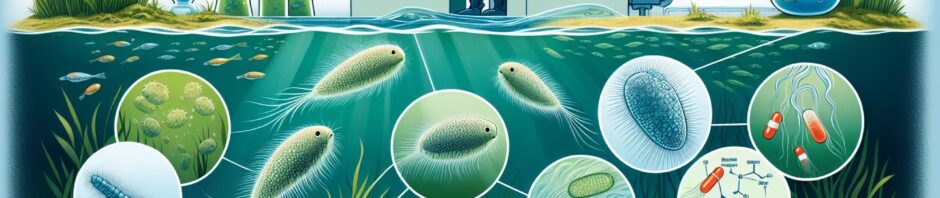
Water is the cradle of life, the flowing essence that sustains ecosystems and nourishes biodiversity. Amongst its hidden cast of characters, the Daphnia—microscopic freshwater crustaceans—play a crucial role in the maintenance and monitoring of aquatic health. Recognized for their sensitivity to environmental changes, Daphnia species are invaluable in biomonitoring and ecotoxicology, acting as living indicators of water quality and helping scientists assess the impacts of various contaminants. This article delves into the fascinating world of Daphnia, discussing their life cycle, ecological roles, and the critical part they play in toxicity testing and environmental assessment.
Introduction to Daphnia
Daphnia, commonly known as water fleas, belong to the larger group of Cladocera—small, primarily freshwater crustaceans. As key members of the zooplankton community, these aquatic invertebrates are pivotal players in freshwater ecosystems. Daphnia have a straightforward, semi-transparent body, which allows for the observation of internal organs, making them a favorite subject in scientific studies.
The Biological and Ecological Significance of Daphnia
Daphnia species exert profound influences on their environment. Their roles are multifaceted:
-
Filter Feeders: Daphnia sift through water as filter feeders, ingesting algae, bacteria, and detritus. This filtration is a critical part of nutrient cycling and helps maintain the clarity and quality of freshwater bodies.
-
Trophic Levels and Food Web Dynamics: Serving as a vital food source, Daphnia form an essential connection between primary producers (like algae) and higher trophic levels, such as fish. They are, therefore, integral to the structure and dynamics of food webs.
-
Population Dynamics: Daphnia populations experience quick growth and can undergo substantial fluctuations, which can serve as indicators of environmental conditions and changes within aquatic ecosystems.
-
Ephippia and the Life Cycle: Daphnia exhibit a fascinating life cycle characterized by both parthenogenesis (asexual reproduction) and sexual reproduction—an adaptation that enables them to respond flexibly to environmental pressures.
Daphnia in Biomonitoring: Water Quality Indicators
Biomonitoring is the scientific technique of using organisms to monitor the health of ecosystems, particularly to detect changes in water quality. Daphnia are regarded as excellent bioindicators due to their rapid reproductive cycle and sensitivity to pollutants, making them early warning signals for ecosystem distress.
How Daphnia Indicate Water Quality
-
Behavioral Responses: Changes in Daphnia’s swimming behavior often signal the presence of toxic substances. Researchers observe these behavioral shifts to evaluate the impact of chemical pollutants.
-
Reproductive Changes: Exposures to toxins may result in decreased reproduction rates or affect offspring viability, which can directly mirror the water’s health.
-
Morphological Abnormalities: The occurrence of deformities in Daphnia populations can be indicative of poor water quality and the presence of harmful substances.
Daphnia’s quick response to a range of pollutants—ranging from heavy metals to organic contaminants—makes them a universal fixture in water quality testing.
The Role of Daphnia in Toxicity Testing and Ecotoxicology
In the field of ecotoxicology—the study of the effects of toxic chemicals on biological organisms, particularly in the context of populations, communities, and ecosystems—Daphnia have become a model organism for toxicity testing.
Principles of Daphnia Toxicity Tests
Toxicity tests with Daphnia typically follow established protocols, like those developed by the Organization for Economic Co-operation and Development (OECD). They involve exposing different generations of Daphnia to sublethal and lethal concentrations of contaminants, observing mortality rates, reproduction, and other potential effects.
Importance in Environmental Assessment
-
Screening Chemicals: Daphnia tests help in screening new chemicals for environmental safety before their release or widespread use.
-
Regulatory Compliance: Regulatory agencies often require Daphnia toxicity data to inform decisions about permissible levels of pollutants.
-
Environmental Impact Studies: When assessing the effects of industrial discharges or accidental spills, Daphnia serve as a primary resource for understanding impact and guiding remediation efforts.
Climate Change and Anthropogenic Impacts on Daphnia Populations
Temperature Effects on Daphnia Physiology
As ectothermic organisms, Daphnia are highly susceptible to temperature fluctuations, which can affect their metabolic rates, reproductive cycles, and survival. In the context of climate change, understanding Daphnia’s responses to temperature variations is essential for predicting changes in aquatic ecosystems.
Daphnia and Eutrophication
Eutrophication—a result of excessive nutrient loads, often caused by agriculture runoff or wastewater discharge—can lead to algal blooms. Daphnia populations can initially prosper in these conditions by feeding on the increased algal growth. However, long-term eutrophication results in oxygen depletion (hypoxia) and potential die-offs of Daphnia and other species.
Evolutionary Adaptations and Future Challenges
To cope with environmental stresses, Daphnia have developed various evolutionary adaptations. Life cycle flexibility allows them to withstand periods of adversity by producing ephippial eggs, which are resistant to desiccation and can remain dormant until conditions improve.
However, with the mounting pressures of climate change, pollution, and habitat loss, Daphnia face increased challenges in maintaining their ecological roles. Understanding and mitigating these threats is imperative for the conservation of freshwater ecosystems.
Conclusion
Daphnia, although tiny and often overlooked, are guardians of our freshwater resources. Through their roles as filter feeders, indicators of water quality, and subjects for toxicity testing, they provide invaluable insights into the health and dynamics of aquatic environments. Their significance stretches beyond the microscope, emphasizing the importance of small-scale processes in sustaining global ecosystems. As we continue to grapple with environmental change, preserving and understanding these minute creatures becomes ever more crucial.
Sources
- Organization for Economic Co-operation and Development (OECD). (2004). Daphnia sp., Acute Immobilisation Test. OECD Guidelines for the Testing of Chemicals, Section 202.
- Lampert, W. (2011). Daphnia: Development of a Model Organism in Ecology and Evolution. International Ecology Institute.
- Gophen, M., & Geller, W. (1984). Filter-feeding rates of Daphnia and their significance in the prediction of plankton production. Journal of Plankton Research, 6(3), 495-506. doi:10.1093/plankt/6.3.495
These sources provide foundational knowledge on Daphnia, their use in scientific research, and their ecological significance, thereby serving as references for further exploration of the topics discussed in this article.