Introduction
In the intricate web of freshwater ecosystems, there’s a group of organisms that play a pivotal role in the health and stability of their environment. Daphnia, often referred to as “water fleas,” are not just crucial components of the food web; they also serve as valuable bioindicators for water quality and environmental changes. This article delves deep into the world of Daphnia, exploring their biology, ecological importance, and the ways in which they are utilized in scientific research and environmental monitoring.
What are Daphnia?
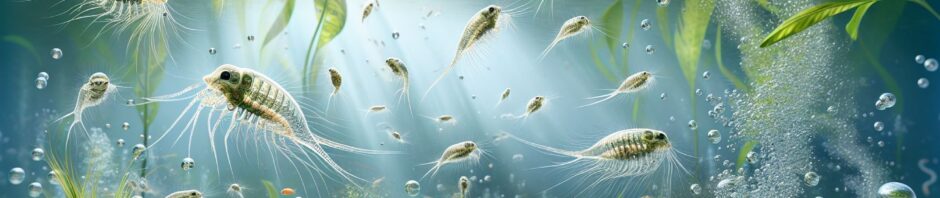
Daphnia belong to a group known as Cladocera, which consists of small, predominantly freshwater crustaceans found across the globe. They are a subset of zooplankton – tiny aquatic invertebrates that drift in water columns. Daphnia’s transparent, often teardrop-shaped bodies, which rarely exceed 5 millimeters in length, are adorned with a distinctive compound eye and a pair of antennae that facilitate swimming.
Life Cycle and Reproduction
Daphnia exhibit a fascinating life cycle that includes both asexual (parthenogenesis) and sexual reproduction modes. During favorable conditions, Daphnia reproduce asexually – females produce genetically identical offspring, allowing for rapid population growth.
However, when environmental conditions deteriorate or seasons change, triggering cues such as reduced food availability or shifts in temperature, Daphnia switch to sexual reproduction. They produce ephippia – tough, protective cases that enclose resting eggs, ensuring the species’ survival through harsh periods. These resting eggs can withstand extreme conditions and hatch when environmental conditions ameliorate.
Ecological Impact and Trophic Levels
As filter feeders, Daphnia consume algae and other microscopic organisms, playing a crucial role in nutrient cycling and helping to control algal blooms. They are also an essential food source for various fish and other aquatic predators, making them integral to maintaining the balance across different trophic levels within the food web.
Daphnia as Bioindicators
Daphnia’s sensitivity to environmental changes, particularly to the presence of chemical pollutants, has positioned them as one of the primary organisms used in biomonitoring and ecotoxicology studies.
Water Quality Indicators
The health of Daphnia populations can reflect the overall water quality in freshwater systems. By observing Daphnia’s behavioral responses, population dynamics, and reproductive patterns, scientists can gauge the presence and impact of toxins. Their short life cycles and rapid response to environmental stressors enable a swift assessment of water conditions.
Toxicity Testing
In laboratories, Daphnia are subjected to toxicity testing, which is integral to environmental assessment processes. Researchers expose these organisms to various concentrations of chemicals to determine their effect on survival, growth, and reproduction. This data is critical for setting regulatory standards and for the development of strategies aimed at pollution prevention and control.
Environmental Assessment and the Role of Daphnia in Aquatic Ecosystems
Environmental assessment relies on understanding the complex interactions within aquatic ecosystems. Daphnia contribute to these insights in several ways.
Predator-Prey Interactions
As both predator and prey, Daphnia are central to the study of food web dynamics. Their relationships with other organisms can shed light on the health of the entire ecosystem. Predator-prey interactions involving Daphnia are often examined to evaluate the flow of energy through trophic levels and to understand how disruptions might propagate within the ecosystem.
Eutrophication and Algal Blooms
Daphnia populations can be drastically affected by eutrophication – the excessive richness of nutrients in a body of water, typically caused by runoff from the land, which induces dense growth of plant life and death of animal life from lack of oxygen. By consuming algae, Daphnia help mitigate the effects of eutrophication, but when the nutrient levels are too high, the resulting algal blooms can outpace Daphnia’s feeding capabilities, leading to their decline and further exacerbating the problem.
Challenges Faced by Daphnia
Despite their resilience, Daphnia face several threats from human activities that impact aquatic ecosystems.
Chemical Pollutants
In addition to being tested against chemicals for environmental assessments, Daphnia in the wild often encounter various pollutants that can induce significant changes in their populations and behaviors. The effects of pesticides, heavy metals, and other contaminants on Daphnia are areas of ongoing research within ecotoxicology.
Temperature Effects
Daphnia are ectothermic organisms, meaning they rely on environmental temperatures to regulate their metabolic rates. Global climate change and the resulting fluctuations in water temperatures can have pronounced effects on their survival, growth, and reproduction, potentially upsetting the balance of aquatic ecosystems.
Dissolved Oxygen and Nutrient Cycling
Daphnia require oxygen to live, and changes in dissolved oxygen levels, often associated with pollution or temperature changes, can influence their viability. Their role in nutrient cycling is consequently affected, with potential knock-on effects for the entire ecosystem.
Concluding Thoughts: The Importance of Daphnia
Daphnia are more than just a part of the aquatic food web – they are the tiny sentinels that warn us about the health of our freshwater environments. By studying these organisms, not only do we gain an understanding of aquatic ecosystems but also gather crucial data to protect and preserve these water bodies.
Through an appreciation of Daphnia’s contributions to biodiversity, ecosystem functions, and environmental monitoring, it becomes evident that these seemingly insignificant creatures carry the weight of our aquatic world in their miniature frames.
For further information about Daphnia and their role in freshwater habitats, consider consulting the following sources:
1. Ebert, D. (2005). Ecology, Epidemiology, and Evolution of Parasitism in Daphnia. National Center for Biotechnology Information (NCBI).
2. Lampert, W. (1987). Laboratory studies on zooplankton-cyanobacteria interactions. New Zealand Journal of Marine and Freshwater Research, 21(3), 483-490.
3. U.S. Environmental Protection Agency (EPA). (2016). Methods for Measuring the Acute Toxicity of Effluents and Receiving Waters to Freshwater and Marine Organisms. EPA.
By fostering a deeper understanding of these creatures and the important role they play in our environment, we can better advocate for policies and actions that support the sustainability of freshwater ecosystems. Daphnia, while small, are undeniably mighty in the realm of ecological research and environmental assessments.