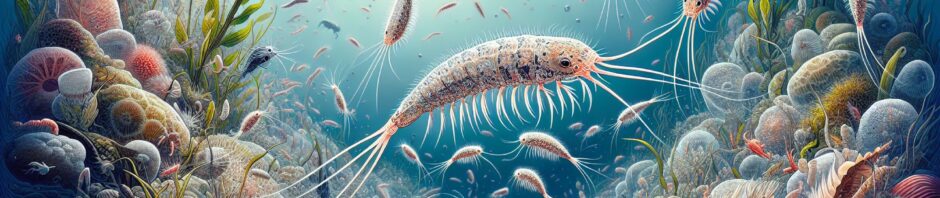
In the vast world of small but mighty organisms, Daphnia holds a particularly fascinating place. Sometimes referred to as “water fleas,” these freshwater crustaceans are a critical component of freshwater ecosystems. Despite their minute size, Daphnia impacts everything from the clarity of water to the foundations of life within ponds and lakes. In this article, we’ll delve deep into the world of Daphnia, exploring their life cycle, ecological significance, and contributions to environmental assessment and biomonitoring.
A Brief Introduction to Daphnia
Daphnia are small planktonic crustaceans that belong to the order Cladocera. Typically measuring between 0.2 and 5 millimeters in length, they may be tiny, but they play an outsized role in their habitats. Daphnia are found across the world in various freshwater environments, including ponds, lakes, and slow-flowing rivers.
Key Characteristics:
- Body Structure: They have a distinctive exoskeleton, often transparent, and an eye that can move through the body. Their heart beats visibly through their transparent carapace.
- Morphology: Their appendages are leaf-like and allow these small creatures to swim in a jerky, hopping motion, hence the nickname “water fleas.”
- Feeding Habits: Daphnia are filter feeders; they consume algae, bacteria, and other tiny organic materials by filtering them from the water.
- Reproductive Traits: They are known for rapid reproduction through parthenogenesis in favorable conditions and sexual reproduction when the environment becomes stressful.
Daphnia’s Ecological Significance
Keystone Species in Freshwater Environments
Daphnia are often described as keystone species, meaning they have a disproportionately large impact on their environment relative to their abundance. Their role as filter feeders significantly controls the populations of algae and microorganisms. By consuming phytoplankton, they help maintain water clarity and prevent the overgrowth of algae, which can lead to deleterious algal blooms.
Position in the Food Web
These crustaceans occupy a vital position in trophic levels and food web dynamics in freshwater ecosystems. They serve as a primary food source for a range of predators, including fish, insects, and other aquatic invertebrates. This makes Daphnia a critical link between the primary producers (like algae) and higher trophic levels (such as fish).
Daphnia’s Life Cycle and Reproductive Strategies
Intriguing Reproductive Adaptations
Daphnia display a fascinating array of reproductive strategies. The most common is parthenogenesis, where females produce offspring from unfertilized eggs when conditions are favorable – a fast method of reproduction that can rapidly increase population numbers.
Switch to Sexual Reproduction
However, when the environment becomes less hospitable – due to factors like lower food availability, decreases in temperature, or increases in predator presence – Daphnia switch to sexual reproduction. This produces ephippia – resistant cases that protect the embryos and can withstand harsh conditions until the environment becomes conducive to life again.
The Use of Daphnia in Biomonitoring and Water Quality Assessment
Bioindicators of Ecological Health
Due to their sensitivity to various pollutants and environmental changes, Daphnia are widely used as bioindicators for water quality and aquatic health. They respond quickly to changes in their environment, making them ideal organisms for assessing the impact of chemical pollutants, nutrient loads, and other stressors on aquatic ecosystems.
In Ecotoxicology and Testing
In the field of ecotoxicology, Daphnia are frequently used in toxicity testing. They are subjected to different substances to determine potential impacts on aquatic life. Data gathered from these tests contribute to understanding the environmental risks posed by chemicals and other pollutants.
Contributions to Environmental Assessment
Understanding population dynamics, behavioral responses, and evolutionary adaptations in Daphnia populations can provide crucial data for environmental assessments. Such insights help scientists and policymakers in the development of conservation strategies and pollution control measures.
Indicators of Eutrophication
Daphnia populations can signal the onset of eutrophication, a process where water bodies become overly enriched with nutrients, leading to excessive plant growth and oxygen depletion. Their presence, abundance, and health reveal much about the nutrient cycling and levels of dissolved oxygen in water.
Addressing Challenges: Algal Blooms and Eutrophication
Algal blooms can decimate local fish populations and throw entire aquatic ecosystems into disarray. As filter feeders, healthy populations of Daphnia can manage algae levels and mitigate the risk of algal blooms by consuming excess plant matter. However, if nutrient levels in the water become too high due to agricultural runoff or other factors, even Daphnia’s appetite for algae can’t keep up, and eutrophication can occur.
The Interplay of Temperature and Chemical Pollutants
Temperature effects and the presence of chemical pollutants are critical factors influencing Daphnia’s population dynamics. These organisms can often adapt to gradual changes in water temperature but may struggle when exposed to sudden shifts or extreme conditions. Additionally, Daphnia’s sensitivity to chemicals makes them early indicators of pollution.
Understanding Predator-Prey Interactions
Predator-prey interactions involving Daphnia are fundamental to maintaining the balance of aquatic ecosystems. These interactions can be a dance of adaptations and counter-adaptations, with certain species of Daphnia evolving specific defenses against particular predators.
Potential as Sustainable Fish Food
Given their high nutritional content and ease of cultivation, Daphnia hold potential as a sustainable alternative to traditional fish food. Aquaculture operations could benefit from using Daphnia to feed cultured fish, thus promoting more environmentally friendly and cost-effective practices.
Concluding Thoughts
Daphnia may be small, but their impact on aquatic ecosystems is enormous. Their role as filter feeders, their place within food webs, and their sensitive nature to environmental changes make them invaluable for maintaining ecological balance and assessing environmental health. By understanding and preserving Daphnia and their habitats, we can ensure healthier freshwater ecosystems for the myriad of species that depend on them, including ourselves.
Sources for Further Reading:
- Ebert, D. (2005). Ecology, Epidemiology, and Evolution of Parasitism in Daphnia. National Center for Biotechnology Information. https://www.ncbi.nlm.nih.gov/books/NBK2042/
- Lampert, W. (2011). Daphnia: Development of a Model Organism in Ecology and Evolution. Excellence in Ecology. https://www.int-res.com/abstracts/ee/o18/
- Colbourne, J.K., Pfrender, M.E., Gilbert, D., et al. (2011). The ecoresponsive genome of Daphnia pulex. Science. https://science.sciencemag.org/content/331/6017/555
By gaining a deeper understanding of Daphnia and acknowledging their vital contributions, we