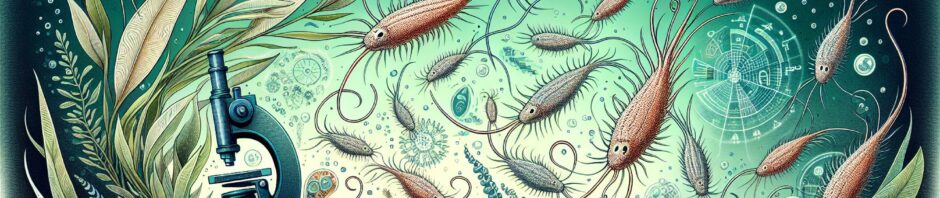
Daphnia, often referred to as water fleas, are small, planktonic crustaceans found in a variety of freshwater environments from the stagnant waters of ponds and lakes to the flowing currents of rivers and streams. These fascinating creatures are more than just mere inhabitants of water bodies; they play a pivotal role in aquatic ecosystems, trophic levels, and food web dynamics. Furthermore, Daphnia serve as vital indicators of water quality and are often used in toxicity testing and biomonitoring to assess the health of aquatic environments. This article delves into the life of Daphnia, exploring their life cycle, their role in the environment, and how they help scientists understand and protect our freshwaters.
Life Cycle and Reproduction: Balancing Asexual and Sexual Strategies
Daphnia exhibit a complex life cycle characterized by their ability to reproduce both asexually and sexually, a strategy that allows them to quickly adapt to changing environmental conditions. Asexual reproduction, or parthenogenesis, is the modus operandi for Daphnia during favorable conditions, allowing populations to increase rapidly. Females produce genetically identical offspring from unfertilized eggs, which enables a swift response to abundant resources.
However, as environmental conditions deteriorate, Daphnia switch to sexual reproduction to generate genetic diversity and resistance against stressors. They produce resting eggs, enclosed in a protective case called an ephippium, which can endure harsh conditions and hatch when the environment becomes suitable again. This dual reproductive strategy makes them an intriguing subject for studies on evolutionary adaptations and population dynamics.
Filter Feeders in Freshwater Ecosystems
Daphnia are considered filter feeders, using their specialized appendages to sift through water and trap particles of food, which primarily consist of algae, bacteria, and detritus. Their filtering capacity is not just essential for their survival but also has broader implications. By consuming vast amounts of algae, Daphnia can control algal blooms and maintain the transparency and oxygen levels of the water, significantly impacting nutrient cycling and dissolved oxygen levels.
Moreover, the presence and abundance of Daphnia can influence the rates of energy transfer and nutrient cycling at various trophic levels within an aquatic food web. They are a crucial food source for higher trophic levels, including fish, hence their importance as fish food in both natural habitats and aquaculture.
Indicators of Water Quality and Biomonitoring
Daphnia are widely recognized as excellent water quality indicators. Their sensitivity to various environmental stressors, including temperature effects, chemical pollutants, and changes in water pH, makes them ideal subjects for biomonitoring and ecotoxicology studies. Scientists use Daphnia to test the toxicity of chemicals by observing behavioral responses and survival, which can reveal the potential impact of contaminants on aquatic life.
The health and behavior of Daphnia populations can provide early warning signs of ecosystem distress, which is crucial in environmental assessment. When Daphnia populations decline, it can indicate problems like eutrophication, the presence of toxic substances, or other ecological imbalances.
Predator-Prey Interactions and Adaptations
Daphnia are not just prey but also participants in complex predator-prey interactions. They have developed a range of evolutionary adaptations to avoid predation, including changes in size, behavior, and even the development of protective spines or helmets when exposed to chemical cues from predators. These adaptations signify the dynamic nature of food web dynamics and the continuous arms race between predators and prey.
Conclusions
The tiny Daphnia play a substantial role in freshwater habitats, influencing water quality, food web dynamics, and providing key insights into the health of aquatic ecosystems through biomonitoring. These water fleas serve as a model organism for scientific research, contributing valuable knowledge that aids in the preservation of our precious freshwater resources.
Understanding Daphnia and their interactions within aquatic environments is crucial for environmental conservation, informing water management practices, and supporting biodiversity. The intricate ecological web painted by the life and function of Daphnia demonstrates the interconnectedness of life and the importance of maintaining the delicate balance of nature’s aquatic dance floor.
References:
- Ebert, D. (2005). Ecology, Epidemiology, and Evolution of Parasitism in Daphnia. Bethesda (MD): National Center for Biotechnology Information (US).
- Lampert, W. (2011). Daphnia: Development of a Model Organism in Ecology and Evolution. Oldendorf/Luhe, Germany: International Ecology Institute.
- Colbourne, J. K., Pfrender, M. E., Gilbert, D., & Thomas, W. K. (2011). The Ecoresponsive Genome of Daphnia pulex. Science, 331(6017), 555–561.
Disclaimer: The above article is a knowledgeable piece intended for educational purposes. For specific scientific research and applications, please consult authoritative scientific resources.