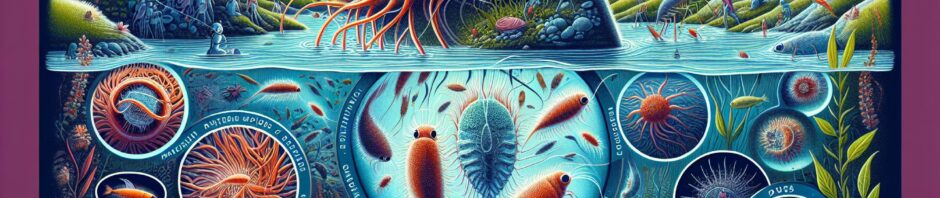
Freshwater ecosystems are some of the planet’s most vital resources. They provide drinking water, irrigation for crops, habitats for wildlife, and countless other ecological services. Among the many inhabitants of these waters, few organisms are as crucial—and perhaps as underestimated—as the humble Daphnia. Commonly known as water fleas, these tiny crustaceans are at the heart of aquatic food webs, play significant roles in nutrient cycling, and serve as indicators of water quality. In this article, we delve into the fascinating world of Daphnia to uncover their importance to aquatic ecosystems and their use in environmental assessment through biomonitoring and ecotoxicology.
Understanding Daphnia and Their Role in Aquatic Ecosystems
What Are Daphnia?
Daphnia are small freshwater crustaceans that belong to the group Cladocera. They are found worldwide in various freshwater environments including ponds, lakes, rivers, and streams. One of their distinctive features is their transparent carapace, which allows scientists and enthusiasts alike to observe their internal organs and even their beating heart.
The Life Cycle of Daphnia
Daphnia exhibit a fascinating life cycle, which includes both asexual (parthenogenesis) and sexual reproduction. For much of the year, Daphnia reproduce asexually, with females producing genetically identical offspring. However, when environmental conditions become challenging, such as during changes in temperature or food scarcity, they switch to sexual reproduction. This results in the production of ephippia, tough-shelled resting eggs that can survive adverse conditions and hatch when favorable conditions return.
Daphnia as Filter Feeders
Daphnia are filter feeders and play a vital role in controlling algal populations by consuming them as their primary food source. They can filter large volumes of water relative to their size, clearing it of algae and particulate matter, which helps maintain water clarity and quality. In doing so, Daphnia influence the availability of resources to other species and thereby regulate the dynamics of the food web.
Daphnia: Tiny but Mighty Contributors to Freshwater Ecosystems
Nutrient Cycling and Trophic Levels
By feeding on algae and being preyed upon by fish and invertebrates, Daphnia are central to nutrient cycling and trophic levels in aquatic systems. They convert algae into a form that is consumable by higher trophic levels. The waste produced by Daphnia, in turn, becomes a nutrient source for other organisms, including bacteria and algae, thus completing the nutrient cycle.
Population Dynamics
The population dynamics of Daphnia are closely related to food availability, predator-prey interactions, and environmental conditions like temperature and dissolved oxygen. Their populations can explode under the right conditions, leading to extensive grazing of algae. However, they can also be vulnerable to sudden crashes due to predation pressure or changes in water quality.
Daphnia as Indicators of Water Quality
Daphnia are extremely sensitive to changes in water conditions, which makes them excellent bioindicators. Environmental stressors such as the presence of chemical pollutants, eutrophication, and changes in temperature can all affect their survival and reproductive rates.
Biomonitoring with Daphnia
Biomonitoring is the use of living organisms to assess the health of the environment, and Daphnia are widely used for this purpose. Their rapid response to toxins makes them ideal organisms for monitoring water quality and assessing the impacts of pollutants. For example, the survival and reproduction of Daphnia are measured to determine the toxicity of effluents and other water samples.
Ecotoxicology and Daphnia
In the field of ecotoxicology, Daphnia have become essential subjects for assessing the impacts of chemicals on aquatic organisms. Studies involve exposing Daphnia to various concentrations of chemicals and observing behavioral responses, mortality rates, and effects on reproduction. This information is crucial for establishing safety standards and regulatory limits for pollutants in freshwater systems.
Environmental Assessment and the Contributions of Daphnia
Assessing Eutrophication and Algal Blooms
Daphnia populations can be significantly affected by eutrophication, an excessive richness of nutrients in water bodies, often due to runoff from the land, which causes dense growth of plant life and death of animal life from lack of oxygen. By monitoring Daphnia populations, scientists can gain insights into the onset of algal blooms and the degree of eutrophication, enabling them to suggest and implement remediation strategies.
Daphnia in Environmental Restoration
After incidents of pollution or habitat degradation, Daphnia can play a role in the recovery of freshwater ecosystems. Their ability to rapidly clear water of algae and recycle nutrients contributes to the restoration of ecological balance and water quality. Thus, reintroducing or protecting Daphnia populations might be part of environmental recovery efforts.
Conclusion and Future Directions
Daphnia may be tiny, but their impact on freshwater ecosystems is monumental. They are crucial for healthy aquatic environments, serving as filter feeders, indicators of water quality, subjects for toxicity testing, and participants in nutrient cycling and food webs. Understanding and protecting these miniature powerhouses can greatly benefit the conservation and management of freshwater resources across our planet.
Research on Daphnia, from their genetic responses to pollutants to their evolutionary adaptations to changing environments, continues to advance. As we face growing environmental challenges, the role of Daphnia in monitoring and protecting our freshwater ecosystems becomes ever more vital.
Sources
- Ebert, D. (2005). Ecology, Epidemiology, and Evolution of Parasitism in Daphnia [Internet]. Bethesda (MD): National Library of Medicine (US), National Center for Biotechnology Information. Available from: http://www.ncbi.nlm.nih.gov/entrez/query.fcgi?db=Books
- Lampert, W. (1987). Daphnia: Development of a Model Organism in Ecology and Evolution. Excellence in Ecology Series, Book 1. Oldendorf/Luhe, Germany: International Ecology Institute.
- Environmental Protection Agency (EPA). (2021). Aquatic Life Ambient Water Quality Criteria for Copper. U.S. EPA Office of Water, Washington, D.C. Available from: https://www.epa.gov/ambient-water-quality-criteria-aquatic-life