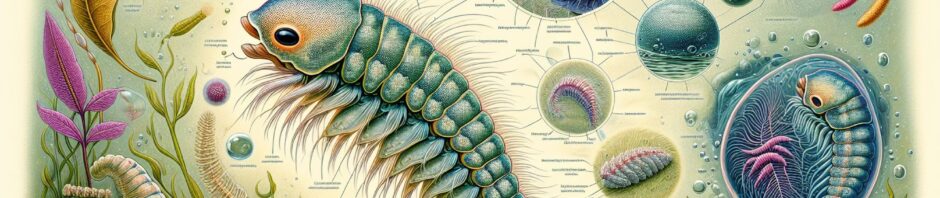
Daphnia, more commonly known as “water fleas,” are a genus of small, planktonic crustaceans that inhabit the world of freshwater systems. Despite their minuscule size, these aquatic invertebrates play a colossal role in their ecosystems. Understanding Daphnia is not just an exercise in curiosity; it is a journey into the intricacies of aquatic life that reveals the immense value of these organisms in environmental assessment, ecotoxicology, and the maintenance of water quality.
Introduction to Daphnia: The Freshwater Phenomenon
Daphnia are members of the Cladocera order, one of the several groups that constitute zooplankton. As filter feeders, they are critical in the food web dynamics of their environment, grazing on algal blooms and converting them into a form of biomass that is accessible to larger predators, such as fish. Moreover, due to their sensitivity to environmental changes and pollutants, Daphnia serve as excellent biological water quality indicators.
The life cycle of Daphnia is fascinating, involving both asexual reproduction (parthenogenesis) and sexual reproduction. Most of the time, Daphnia populations consist of females that reproduce without males. However, under certain environmental conditions, males are produced, and sexual reproduction takes place, resulting in the production of resting eggs encapsulated within protective cases called ephippia.
The Ecological Importance of Daphnia
Key Players in Nutrient Cycling
As central figures in nutrient cycling, Daphnia influence the availability of nutrients in freshwater systems. These tiny creatures consume microscopic algae, bacteria, and detritus, breaking them down and releasing nutrients back into the water – an essential process that sustains the growth of other organisms.
Regulators of Algal Blooms
By feeding on algae, Daphnia can suppress excessive algal growth. This role is especially critical in the prevention and control of harmful algal blooms, which can deplete dissolved oxygen levels and produce toxins, leading to eutrophication and hypoxic conditions that are detrimental to aquatic life.
Biomonitoring and Water Quality
Daphnia are particularly sensitive to a range of chemical pollutants and environmental changes, making them ideal subjects for biomonitoring and toxicity testing. The health and behavior of Daphnia populations can signal alterations in the aquatic environment, indicating the presence of pollutants long before other signs of distress become apparent.
The Life of Daphnia: A Cycle of Survival and Adaptability
The Life Cycle: From Birth to Ephippia
The Daphnia life cycle is both remarkable and complex. Under optimal conditions, females reproduce asexually, creating genetically identical offspring that are born live after developing in a brood chamber. However, when environmental triggers such as food shortage, overcrowding, or temperature changes occur, Daphnia will produce males and sexual reproduction takes place. The resulting ephippia can withstand harsh conditions, ensuring the survival of the species during unfavorable times.
Parthenogenesis: A Marvel of Asexual Reproduction
In parthenogenesis, Daphnia females produce offspring that are clones of themselves. The absence of males in this reproductive mode suggests an evolutionary adaptation that maximizes reproductive output when conditions are stable, allowing for rapid population growth without the need for mating.
Sexual Reproduction: An Evolutionary Safe-Keep
The conditions that trigger the shift to sexual reproduction and the creation of ephippia are a testament to the evolutionary ingenuity of Daphnia. The eggs within ephippia enter a state of diapause, which can last for several years. These eggs hatch only when conditions become favorable again, providing a robust mechanism for enduring uncertain and changing environments.
Population Dynamics: Boom or Bust
Daphnia populations can exhibit dramatic fluctuations. These boom or bust cycles mirror the availability of resources and environmental conditions. Understanding these fluctuations is essential, as they have significant implications on the balance of aquatic ecosystems, touching upon trophic levels and predator-prey interactions.
Advanced Study and Utilization of Daphnia
Ecotoxicology: Daphnia as Sentinels
In ecotoxicology, Daphnia are used to test the toxicity of chemical compounds and assess their potential impact on aquatic organisms. Their ease of cultivation and sensitivity to pollutants make them excellent lab subjects for environmental risk assessment.
Behavioral Responses to Environmental Stress
The behavioral responses of Daphnia, such as changes in swimming patterns and avoidance of contaminants, provide insight into their stress levels. These responses can serve as early warning signs, indicating the presence of harmful substances in the water.
Evolutionary Adaptations to a Changing World
Daphnia have undergone numerous evolutionary adaptations to survive in the dynamic environment of freshwater systems. From the cyclic nature of their life history to the subtle changes in their body structure, these adaptations reflect the evolutionary responses to biotic and abiotic factors like predation pressure and temperature effects.
The Impact of External Forces on Daphnia
Eutrophication: A Double-Edged Sword
Although Daphnia aid in controlling algal growth, their role becomes complicated in the presence of eutrophication. Excessive nutrients in the water can lead to algal blooms that surpass the grazing capacity of Daphnia, creating a feedback loop that exacerbates low oxygen conditions and threatens their survival.
Temperature Effects: Climate Change Considerations
As ectothermic creatures, the metabolic rates of Daphnia are heavily influenced by temperature. With climate change leading to warmer waters, the balance of Daphnia populations and their ability to fulfill their ecological roles could be affected.
Chemical Pollutants: A Lurking Threat
Chemical pollutants pose a significant threat to Daphnia. Pesticides, heavy metals, and endocrine-disrupting chemicals can all affect Daphnia at various levels – from impairing their reproductive capabilities to triggering mortality.
Conclusion: Embracing the Significance of Daphnia
Daphnia are far more than just a component of freshwater ecosystems; they are a symbol of the intricate web of life that spans from the smallest microorganisms to the largest predators. As filter feeders, biomonitoring agents, and subjects in scientific research, Daphnia hold considerable scientific and ecological interest.
Sources
Below are three references that provide a wealth of information for those interested in delving deeper into the world of Daphnia and their role in aquatic ecosystems:
- Daphnia: Development of a Model Organism in Ecology and Evolution – Edited by Norbert Krebs and Jurgen Lampert (2003)
- Ecotoxicology of Amphibians and Reptiles – Edited by Donald W. Sparling, Greg Linder, Christine A. Bishop, and Sherry Krest (2010)
- Water Quality Assessments – A Guide to Use of Biota, Sediments and Water in Environmental Monitoring – Edited by Deborah Chapman (1996)
Daphnia may be small, but their impact is mighty. Their continued study and conservation are vital to maintaining the health and vibrancy of our freshwater systems. Through proper environmental assessment and stewardship, we can ensure that Daphnia, along with the countless lives they support, will thrive for