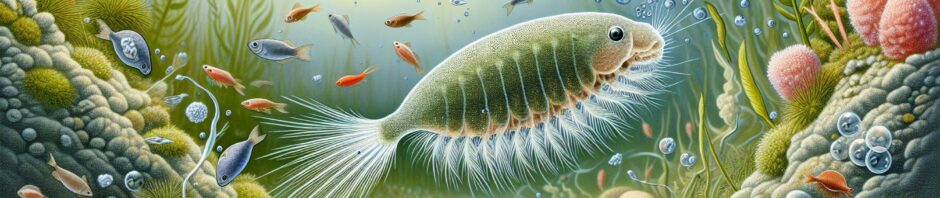
Daphnia, commonly known as water fleas, are tiny freshwater crustaceans that play a critical role in aquatic food webs and serve as an important indicator of environmental health. Found in diverse water bodies ranging from ponds to lakes, these minuscule organisms have piqued the interest of ecologists, biologists, and environmental scientists across the globe. In this comprehensive article, we will delve deep into the world of Daphnia, exploring their life cycle, ecological significance, and their use in biomonitoring and toxicity testing to assess water quality and ecosystem health.
Introduction to Daphnia
Daphnia are part of the Cladocera, a group of small crustaceans found in freshwater ecosystems. These planktonic organisms are known for their transparent exoskeleton and jerky, hopping movements through the water, which earned them the nickname “water fleas.” They are incredibly important in the food web dynamics, serving as a primary food source for various fish species while also being filter feeders that consume algae, bacteria, and decaying organic matter.
Understanding the Daphnia Life Cycle
Daphnia exhibit a fascinating life cycle that can include both asexual and sexual reproduction. Most of the time, they reproduce asexually through parthenogenesis, where females produce genetically identical offspring without the need for male fertilization. However, when environmental conditions become harsh or during specific times of the year, Daphnia may switch to sexual reproduction. This process results in the creation of ephippia, which are protective cases that enclose dormant embryos capable of withstanding unfavorable conditions.
The Importance of Daphnia in Aquatic Ecosystems
Daphnia hold a pivotal position within trophic levels of aquatic ecosystems. As filter feeders, they help maintain water clarity by consuming algae, including those that cause algal blooms. This feeding activity can also influence nutrient cycling and the availability of dissolved oxygen. Moreover, Daphnia are sensitive to various environmental stressors, making them excellent water quality indicators. Their responses to changes in temperature, chemical pollutants, and dissolved oxygen levels provide invaluable data for ecotoxicology and environmental assessment.
Biomonitoring and Water Quality Indicators
Biomonitoring, the use of organisms to monitor environmental conditions, regularly involves Daphnia. Scientists use various assays and toxicity tests with Daphnia to detect the presence of harmful substances in water and to assess their effects on living organisms. The results from these tests can indicate the presence of pollutants long before chemical analyses show detectable levels, allowing for timely interventions to protect aquatic ecosystems and human health.
Daphnia and Toxicity Testing
In the field of ecotoxicology, Daphnia are frequently used as model organisms due to their ease of culture, fast reproductive cycles, and sensitivity to pollutants. Standardized tests have been developed to evaluate the acute and chronic effects of chemical pollutants on Daphnia populations. Behavioral responses and evolutionary adaptations to these pollutants can also provide insight into the mechanisms of toxicity and help in the development of environmental regulations.
Challenges and Conservation
Despite their resilience, Daphnia populations can be threatened by factors such as habitat loss, eutrophication, and climate change. These challenges highlight the need for ongoing research and conservation efforts to ensure that Daphnia can continue to fulfill their crucial roles in aquatic ecosystems.
Daphnia: The Sentinels of Water Quality and Ecosystem Health
The Dual Reproductive Modes of Daphnia
The reproductive strategy of Daphnia is a fascinating study in adaptation and survival. As we’ve mentioned, through parthenogenesis, Daphnia can rapidly populate an aquatic environment, with females producing clones that mature in just a few days.
However, with the onset of adverse conditions, such as decreasing temperatures, food scarcity, or overcrowding, Daphnia switch to sexual reproduction. This allows for the creation of ephippia, tough, resistant structures that protect the embryos during harsh periods. Later, when conditions improve, these ephippia hatch into a genetically diverse population, equipping the species with a better chance of thriving in a changing environment.
Daphnia as Bioindicators
Daphnia’s sensitivity to environmental changes has made them exemplary bioindicators. A change in their population density, size distribution, or reproductive patterns can signal a shift in water quality. Researchers often use acute and chronic bioassays, which involve exposing Daphnia to various concentrations of pollutants to gauge their lethality and sublethal effects over time.
For example, Daphnia’s heartbeat is visible through their transparent carapace, and a change in this rate can be a quick and reliable indicator of water toxicity. Chemicals that affect nerve or muscle function, such as insecticides, can cause a noticeable increase or decrease in this heart rate, which is quantifiable and can be assessed with relative ease.
Daphnia and Ecosystem Services
Within aquatic ecosystems, Daphnia provide a vital ecosystem service by controlling algal populations through their feeding habits. By consuming significant amounts of algae, they can prevent the formation of harmful algal blooms, which can lead to eutrophication – the process where water bodies become overly enriched with minerals and nutrients, leading to excessive plant growth and decay that harms water quality and aquatic life.
Moreover, Daphnia facilitate nutrient cycling as they process large quantities of organic matter. They excrete waste that is higher in nutrients compared to the algal cells they ingest, making these nutrients more available to other organisms in the ecosystem.
Evaluating Environmental Impact
Toxicity Testing with Daphnia
Ecotoxicology relies heavily on organisms like Daphnia to evaluate the impact of chemical pollutants on living creatures. The standard test species, Daphnia magna, serves as a model for understanding how chemicals can affect survival, growth, and reproduction in aquatic invertebrates.
One of the commonly used tests is the LC50 test, which determines the concentration of a substance that is lethal to 50% of the Daphnia test population. These tests help in establishing safe concentration limits for chemicals released into the environment.
Daphnia’s Role in Population Dynamics
Daphnia not only respond to environmental stressors but also affect the population dynamics of other species in the ecosystem. For instance, their grazing can control phytoplankton communities, thus influencing the food web’s primary production. In addition, because they serve as prey for numerous fish species, their availability can directly impact fish populations and diversity.
Predator-prey interactions in which fish consume Daphnia can lead to what is known as “trophic cascades,” where changes at one trophic level ripple through the ecosystem, affecting several other levels. Daphnia’s ability to adapt their behavior and morphology in the presence of predators further adds to the complexity of these interactions.
Conclusion
Daphnia are much more than simple organisms drifting in water bodies; they are essential components of aquatic ecosystems and powerful models for scientific research. Their diverse roles in ecosystem function, coupled with their usefulness in biomonitoring and toxicity testing, underscore the importance of protecting these species and their habitats. By understanding the behavior, life cycle, and ecological significance of Daphnia, we can better appreciate their