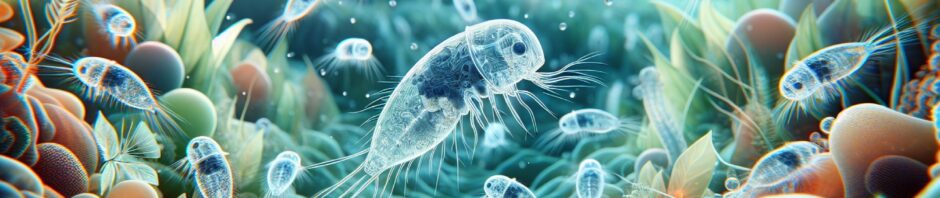
In the realm of freshwater ecosystems, minute creatures often go unnoticed, yet they play pivotal roles in maintaining the balance of aquatic life. Among these vital organisms are Daphnia, a group of small, translucent crustaceans that dwell in various bodies of freshwater. Despite their barely discernible size, Daphnia are powerhouses when it comes to their ecological importance, impact on water quality, and use in scientific research. In this comprehensive exposition, we shall delve into the world of Daphnia, exploring their biology, ecological role, and significance in environmental assessment and biomonitoring.
The Biology of Daphnia: A Snapshot
These freshwater crustaceans, commonly known as “water fleas”, belong to the order Cladocera and are part of a broader category of organisms known as zooplankton. Daphnia charmed scientists with their transparent carapace, which renders their internal organs visible, facilitating in vivo studies. Remarkably, Daphnia can be found in an array of aquatic habitats, including ponds, lakes, rivers, and temporary pools.
Life cycle and Reproductive Strategies
Daphnia exhibit a fascinating life cycle that encompasses both asexual and sexual reproduction, a phenomenon known as cyclical parthenogenesis. During favorable conditions, they reproduce asexually through parthenogenesis, leading to a rapid increase in population. However, when the environment becomes adverse, such as the onset of winter or when food is scarce, Daphnia switch to sexual reproduction. This transition results in the production of resistant eggs encased in a protective structure called the ephippium. These eggs are capable of withstanding extreme conditions and can remain dormant until conditions become favorable again for hatching.
Feeding Behavior
As filter feeders, Daphnia propel water through their body using specialized appendages, trapping microscopic particles which include algae, bacteria, and detritus. This filtering ability not only sustains them but also plays a crucial role in keeping the water clear and aiding in nutrient cycling.
Ecological Role
Water Quality Indicators and Biomonitoring
One of the most important aspects of Daphnia’s existence in aquatic environments is their role as bioindicators. Daphnia are highly sensitive to changes in water quality, making them an excellent choice for biomonitoring. The presence, behavior, and health of Daphnia populations can indicate the state of the ecosystem and highlight the presence of chemical pollutants and other harmful substances.
Impact on Trophic Levels and Food Web Dynamics
In food web dynamics, Daphnia act as a bridge between primary producers, like algae, and higher trophic levels, including fish. The health and abundance of Daphnia populations can significantly influence the distribution and population dynamics of these higher trophic levels, demonstrating their vital role in maintaining ecosystem balance.
Environmental Assessment and Scientific Research
Toxicity Testing and Ecotoxicology
In the field of ecotoxicology, Daphnia spp. are widely used for assessing the impacts of various substances on living organisms. Their short life cycle and sensitivity to pollutants make them ideal subjects for toxicity testing, helping to determine the potential harmful effects of chemicals on aquatic ecosystems before they are released into the environment.
Research on Evolutionary Adaptations and Behavioral Responses
Daphnia are not only ecological sentinels but also champions of scientific research. Due to their transparent carapace, environmental adaptability, and the ease of cultivating them in the lab, they provide an excellent model organism for studying a wide range of biological phenomena, including evolutionary adaptations and behavioral responses to environmental stressors.
Daphnia and Environmental Challenges
Eutrophication and Algal Blooms
One of the prevalent issues in modern aquatic ecosystems is eutrophication—the process by which excessive nutrients, particularly phosphorus and nitrogen, build up in water bodies leading to dense algal growth, known as algal blooms. Daphnia play a key role in controlling these blooms by consuming algae, but when the algal population becomes too dense, it can overwhelm the Daphnia, leading to a decline in water quality and a decrease in dissolved oxygen levels.
Temperature Effects and Climate Change
As with many organisms, temperature effects can significantly impact Daphnia populations. Global climate change and its associated temperature fluctuations could potentially alter Daphnia’s life cycle, reproduction rates, and distribution, thereby affecting their role within the aquatic ecosystem.
Balancing the Ecosystem: Daphnia at Work
Predator-Prey Interactions
Daphnia navigate a world filled with threats, namely from various predators such as fish and insects. The balance of predator-prey interactions is crucial, as it affects not only the survival of Daphnia but also the overall stability of the ecosystem. The strategies Daphnia employ to evade predators, like vertical migration and the production of defensive spines, are examples of their remarkable adaptability.
Nutrient Cycling and Dissolved Oxygen
By grazing on primary producers and recycling nutrients through their waste, Daphnia contribute significantly to nutrient cycling within aquatic ecosystems. Additionally, clear waters facilitated by Daphnia’s filtering help maintain higher levels of dissolved oxygen, pivotal for the survival of many aquatic species.
Conclusion: Guardians of Freshwater Realms
The exploration of Daphnia unveils the immense importance of seemingly inconsequential creatures and their impact on the health and viability of freshwater ecosystems. As sentinels of aquatic environments, they serve as early warning systems for pollution, indicators of environmental changes, and subjects facilitating advances in ecological and biological research.
Daphnia’s role in freshwater habitats, alongside their use in scientific research, underscores the need for their protection and the conservation of their habitats. Efforts to preserve these organisms contribute to the broader quest to support ecological integrity and ensure the continuing health of freshwater ecosystems globally.
Resources and Further Reading
For those interested in a deeper dive into the captivating world of Daphnia and their relatives, consider exploring the following resources:
- Lampert, W. (2011). Daphnia: Development of a Model Organism in Ecology and Evolution. Excellence in Ecology.
- Loureiro, C., Castro, B. B., Claro, M. T., & Soares, A. M. V. M. (2012). Toxicity of binary mixtures of metals and pyrethroid insecticides to Daphnia magna Straus. Implications for multi-substance risks assessment. Aquatic Toxicology, 118-119, 83-92.
- U.S. Environmental Protection Agency (EPA) – Using Daphnia to Monitor Water Toxicity.
This article provides a broad overview and does not serve as a comprehensive scientific review; however, it highlights the fascinating aspects of Daphnia and their critical function within freshwater ecosystems.