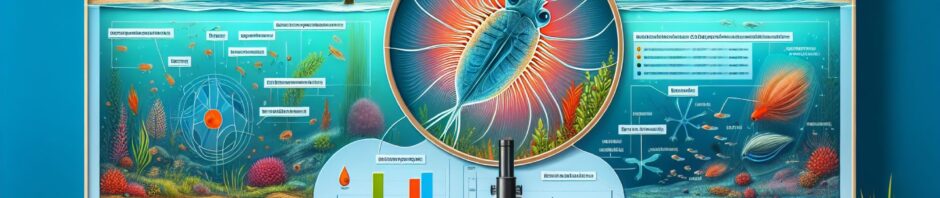
In the vast and intricate web of life that sustains our planet’s freshwater ecosystems, there exist numerous organisms that are vital yet often overlooked. Among them is Daphnia, a genre of small planktonic crustaceans with profound significance in environmental science, ecology, and biomonitoring. Daphnia play a critical role as water quality indicators, filter feeders, and a crucial link in the food web dynamics of aquatic habitats. In this extensive exploration, we’ll discuss the life cycle, ecological importance, and the utility of Daphnia in ecotoxicology and environmental assessment, shedding light on why these microscopic freshwater crustaceans are essential to both nature and scientific research.
What is Daphnia?
Daphnia, commonly referred to as water fleas, are part of the order Cladocera and a key component of zooplankton within freshwater ecosystems. Their size varies between 0.2 to 5 millimeters, making them visible to the naked eye as tiny specks darting in water. The semi-transparent body of Daphnia allows for a unique view into their inner workings, including the beating heart and developing embryos.
Life Cycle and Reproduction
The life cycle of Daphnia [1] encompasses both sexual and asexual reproduction, with the latter being more common under favorable conditions. This asexual process, called parthenogenesis, allows female Daphnia to produce clones of themselves, ensuring rapid population growth. Sexual reproduction occurs as environmental conditions deteriorate, facilitating the production of resistant resting eggs, known as ephippia, that can withstand harsh conditions until the environment becomes favorable again.
Asexual Reproduction: Parthenogenesis
In an asexual cycle, a female Daphnia can produce several generations of offspring without the need for males. This reproductive strategy allows for the quick expansion of populations during seasons with abundant resources.
Sexual Reproduction: Copulation and Ephippia
When conditions worsen – due to factors such as decreasing food supply, increasing population density, or onset of winter – sexual reproduction is triggered. This culminates in the production of ephippia, which are hardy egg cases that can endure adverse conditions and hatch when the environment becomes supportive once more.
Ecological Importance of Daphnia
Role as Filter Feeders
Daphnia, as filter feeders, are instrumental in controlling algae populations and maintaining water clarity [2]. They feed by filtering particles, primarily algae and bacteria, from the water, which has a direct impact on the water quality and nutrient cycling within an ecosystem.
Indicators of Water Quality and Environmental Health
Due to their sensitivity to changes in water quality and the presence of chemical pollutants, Daphnia serve as effective bioindicators [3]. Their health and population dynamics can reflect the overall condition of the freshwater habitat they inhabit. Biomonitoring efforts often include Daphnia to detect early signs of contamination or ecological disturbances.
Food Web Dynamics and Trophic Levels
In aquatic food webs, Daphnia occupy a crucial mid-level trophic position. They consume phytoplankton and, in turn, are a primary food source for a range of predators, including fish and insect larvae. The abundance and health of Daphnia populations can significantly influence the structure and stability of food webs in their respective ecosystems.
Daphnia in Scientific Research
Ecotoxicology and Toxicity Testing
Owing to their rapid life cycle and parthenogenic reproduction capabilities, Daphnia are widely used as model organisms in ecotoxicology for assessing the effects of various chemical pollutants on aquatic life. Routine toxicity tests involve exposing Daphnia to different concentrations of pollutants and recording their behavioral responses, survival rates, and reproductive success [4]. This data helps in establishing the threshold levels for chemicals that may pose a risk to freshwater systems.
Environmental Assessment and Biomonitoring
The role of Daphnia in environmental assessment is not limited to laboratory settings. In natural and man-made freshwater bodies, regular population surveys and health checks of Daphnia can reveal insights into the overall status of these aquatic ecosystems. Effective biomonitoring programs often target multiple indicators, such as dissolved oxygen, nutrient levels, and the presence of Daphnia and other aquatic invertebrates, to make comprehensive assessments.
Threats and Conservation Challenges
Algal Blooms and Eutrophication
Eutrophication, the process of excessive nutrient enrichment leading to dense algal blooms, can severely impact Daphnia populations and disrupt aquatic ecosystems [5]. These blooms can reduce oxygen levels in the water, block sunlight, and sometimes release toxins, all of which are detrimental to Daphnia and other aquatic organisms.
Chemical Pollutants
The release of industrial, agricultural, and domestic chemicals into freshwater bodies can directly affect Daphnia and the ecological balance. Persistent pollutants may accumulate in the food web, leading to long-term ecological and health consequences.
Climate Change and Temperature Effects
Temperature plays a significant role in the life cycle and population dynamics of Daphnia. Global climate change, with its attendant increase in water temperatures and occurrence of extreme weather events, poses a threat to their survival and the delicate balance within aquatic ecosystems they help maintain.
Conclusion
The humble Daphnia, though diminutive in size, are titans of ecological value and scientific significance. They are intrinsic to aquatic food webs, serve as essential bioindicators of water quality, and are central to research in ecotoxicology. As sentinels of environmental health, their well-being is a beacon that reflects the larger state of our freshwater resources. It is our collective responsibility to ensure the protection of these vital organisms and, by extension, the health of entire aquatic ecosystems.
References:
1. Ebert, D. (2005). Ecology, Epidemiology, and Evolution of Parasitism in Daphnia. Bethesda (MD): National Library of Medicine (US), National Center for Biotechnology Information.
2. Lampert, W. (1987). Laboratory Studies on Zooplankton-Cyanobacteria Interactions. New Zealand Journal of Marine and Freshwater Research, 21(3), 483-490.
3. Bownik, A. (2017). Daphnia as an Emerging Model Organism in Environmental Toxicology: A Review. Toxicology and Environmental Health Sciences, 9, 137-151.
4. U.S. Environmental Protection Agency (EPA). (2002). Short-Term Methods for Estimating the Chronic Toxicity of Effluents and Receiving Waters to Freshwater Organisms (4th ed.). EPA-821-R-02-013.
5. Smith, V. H., Joye, S. B., & Howarth, R. W. (2006). Eutrophication of Freshwater and Marine Ecosystems. Limnology and Oceanography, 51(1, part 2), 351-355.