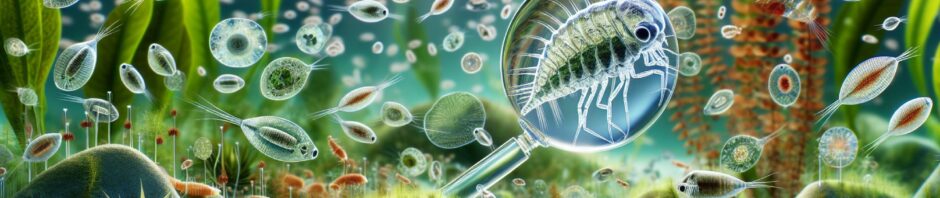
Daphnia, often referred to as “water fleas,” are small, predominantly freshwater crustaceans belonging to the order Cladocera. They are a crucial component of aquatic ecosystems and are widely used in toxicity testing, environmental assessment, and biomonitoring due to their sensitivity to changes in water quality. In this extensive article, we’ll explore the world of Daphnia, from their role as filter feeders in the food web to their use as water quality indicators, and discuss why these diminutive organisms are vital to the health of our aquatic environments.
Introduction
Key to understanding the health and dynamics of freshwater habitats are the myriad of creatures inhabiting them, and Daphnia represents one of the most valuable species for scientists and environmentalists. With a myriad of characteristics that make them ideal for study — including their transparent bodies, rapid life cycle, and the ability to reproduce both sexually and asexually — Daphnia serve as a microcosm for larger environmental trends and processes.
What are Daphnia?
Daphnia are small planktonic crustaceans, typically ranging from 0.2 to 5 mm in size. As a part of the zooplankton community, they occupy a significant position in the trophic levels of aquatic food webs. They consume algae and bacteria, fulfilling their role as filter feeders, and in turn provide nourishment for a variety of fish and other predators.
Their bodies are encased in a transparent carapace, which allows for easy observation of internal processes, such as heartbeat, digestion, and even the development of offspring. This biological characteristic has made Daphnia a preferential subject of scientific research.
Life Cycle and Reproduction
The life cycle of Daphnia is a fascinating aspect of their biology. Under favorable conditions, they mostly reproduce asexually by parthenogenesis, with females producing genetically identical clones. This method allows for rapid population growth, which is why Daphnia populations can explode under the right environmental conditions.
When the environment becomes stressed—due to factors such as food shortages, overcrowding, or changes in temperature—Daphnia can switch to sexual reproduction. They produce male offspring and resting eggs, known as ephippia, which can withstand harsh conditions and lie dormant for extended periods until favorable conditions return.
Daphnia as Bioindicators
Constant monitoring of water quality is vital to protect aquatic ecosystems and the human use of water resources. This is where biomonitoring with organisms like Daphnia comes in. Due to their sensitivity to changes in the water such as pH variations, dissolved oxygen levels, presence of chemical pollutants, and temperature effects, Daphnia populations can provide early warning signals of environmental stress.
Toxicity testing often employs Daphnia as a model organism. The acute immobilization test or the reproduction test involves exposing Daphnia to different concentrations of a substance to determine its toxic effects. The results of such tests contribute to our understanding of how pollutants may impact not only Daphnia but the aquatic ecosystem as a whole.
Daphnia and Ecotoxicology
Ecotoxicology is the study of the effects of toxic chemicals on biological organisms, particularly at the population, community, or ecosystem level. Daphnia play a crucial role in this field as they respond to a wide range of substances, including metals, pesticides, and industrial pollutants.
Evaluating the impact of these substances on Daphnia can reveal potential risks to aquatic environments and help in the development of environmental regulations and guidelines for pollutant discharge.
In the Face of Environmental Stress
Daphnia populations are greatly affected by environmental changes such as algal blooms, eutrophication, and variations in nutrient cycling. Algal blooms, often caused by an excess of nutrients (such as nitrogen and phosphorus) in the water, can create a buffet for filter feeders like Daphnia. However, some algal species are toxic and can decimate populations of these crustaceans, impacting the entire food web.
Eutrophication occurs when water bodies become overly enriched with nutrients, leading to excessive plant growth and decay. This process depletes dissolved oxygen in the water, making it harder for aerobic organisms, including Daphnia, to survive. These scenarios dramatically illustrate the interconnectedness of aquatic ecosystems and highlight the importance of managing nutrient levels and agricultural runoff.
Behavioral Responses and Adaptations
The simplicity of Daphnia’s anatomy belies the complexity of their behaviors and evolutionary adaptations. They exhibit a range of behavioral responses to evade predators, including vertical migration and changes in swimming patterns. These strategies help Daphnia avoid the daytime visual predators by migrating to deeper waters and returning to feed near the surface at night.
Moreover, Daphnia have evolved various protective mechanisms, such as the development of spines and helmets, to increase their chances of surviving predation. These adaptive traits can change within a few generations, illustrating the rapid evolutionary capacity of these organisms.
The Role in Aquatic Food Webs
Daphnia are often described as the cornerstone of freshwater food webs. Acting as primary consumers, they efficiently convert phytoplankton into a form that can be used by higher trophic levels, including fish and amphibians. The population dynamics of Daphnia can significantly influence the cycling of energy and nutrients through an ecosystem.
Their fluctuations in abundance can have a cascading impact on food web dynamics — sometimes stabilizing, other times destabilizing the populations of algae, higher invertebrates, and fish.
Challenges and Conservation
Despite their resilience and adaptability, Daphnia face numerous challenges. Climate change, habitat loss, and pollution threaten their persistence and, by extension, the health of aquatic ecosystems. The conservation of these organisms is not typically direct; rather, it is achieved by protecting their freshwater habitats and ensuring sustainable environmental practices are in place.
Conclusion
Daphnia are more than just a common inhabitant of freshwater environments; they are essential biological indicators and key actors in the health and stability of aquatic ecosystems. As scientists continue to learn from Daphnia, it becomes increasingly clear that the preservation of these minute powerhouses is inextricably linked to the broader efforts to protect and restore freshwater systems.
With ongoing environmental changes, it is imperative that we understand and value the role of these organisms. Awareness, combined with research and conservation efforts, can ensure that Daphnia remain the tiny sentinels guarding the well-being of our precious water resources.
References
- Colbourne, J.K., Pfrender, M.E., Gilbert, D., et al. (2011). The ecoresponsive genome of Daphnia pulex. Science, 331(6017), 555-561. doi:10.1126/science.1197761
- Lampert, W. (2011). Daphnia: Model Herbivore, Predator and Prey. Polar Biology, 34(11), 1735-1745.
- Lynch, M., Spitze, K. (1994). Evolution toward a new adaptive optimum: phenotypic evolution in a fossil Daphnia population. Evolution, 48(4): 1293-1301.
With their central position in freshwaters around the globe, continued research on