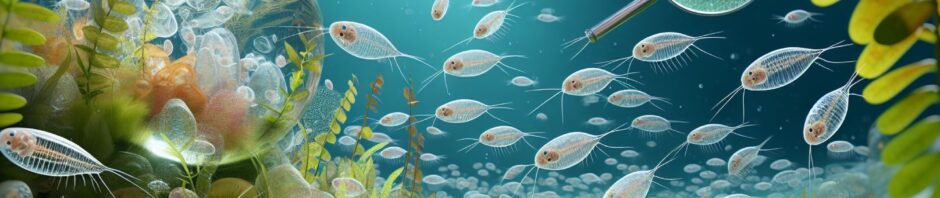
In the vast web of life that blankets our blue planet, some of the most fascinating and important players are nearly invisible to the naked eye. Among these, the genus Daphnia, colloquially known as water fleas, provides an exceptional window into the health of aquatic ecosystems, the intricacies of food web dynamics, and the impacts of environmental changes. With their complex life cycle, delicate balance within trophic levels, and highly responsive nature, Daphnia have become a crucial subject for studies in ecotoxicology, water quality monitoring, and ecological research at large. In this deep-dive article, we will explore the unique biological and ecological characteristics of Daphnia, their role in ecosystems, and how they help us assess and protect the vitality of our freshwater environments.
Anatomy of Daphnia: Microscopic Giants of Freshwater
Belonging to the class Branchiopoda and order Cladocera, Daphnia are small, often transparent, freshwater crustaceans that populate ponds, lakes, and slow-moving rivers across the globe. Typically ranging from 0.2 to 5 mm in size, these aquatic invertebrates have an exoskeleton, or carapace, which covers their body and gives them a distinct, almost shield-like appearance. They possess a set of compound eyes, which in many species is fused into a single, large eye, granting them a keen sensitivity to light and movement.
Despite their size, Daphnia play an outsized role in aquatic ecosystems. They are known as filter feeders, using their specialized mouthparts to sieve through water for algae, bacteria, and detritus. This feeding strategy not only sustains them but also helps maintain water clarity and quality.
Key Role in Aquatic Food Webs
Daphnia are at the heart of aquatic food webs, serving as a bridge between primary producers like algae and higher trophic levels such as fish. By consuming vast quantities of phytoplankton, they regulate algal populations, preventing destructive algal blooms that can result in eutrophication. As prey, they are a nutritionally rich source of food for many species of fish and other aquatic predators, thus supporting commercial fishing and biodiversity in natural waters.
Life Cycle and Reproductive Strategies
The life cycle of Daphnia is as curious as it is sophisticated. They primarily reproduce through parthenogenesis—a form of asexual reproduction where females produce genetically identical offspring from unfertilized eggs. This mode of reproduction allows for rapid increases in population, a strategic advantage when conditions are favorable.
However, under the stress of environmental changes or cues indicating impending harsh conditions, Daphnia can switch to sexual reproduction. This shift results in the production of ephippia, protective cases containing eggs that can endure through extreme conditions and hatch when the environment becomes hospitable again. The ability to toggle between reproductive strategies is an evolutionary adaptation that confers both rapid population growth and long-term survival.
Daphnia as Bioindicators of Water Quality
Given their sensitivity to environmental variables such as dissolved oxygen, pH levels, temperature, and the presence of chemical pollutants, Daphnia are widely used as bioindicators for water quality and ecotoxicology. Researchers monitor their population dynamics, behavioral responses, and mortality rates to gauge the impact of pollution, helping to inform environmental assessments and management strategies.
Biomonitoring and Ecotoxicological Testing
In labs, scientists expose Daphnia to various controlled conditions, introducing them to different concentrations of known and suspected contaminants to study their effects. This process, known as toxicity testing, is a staple in the field of environmental assessment and is critical in setting guidelines for wastewater treatment and establishing permissible levels of pollutants in bodies of water.
Ecological Research and Modeling
Beyond their use in biomonitoring, Daphnia also serve as model organisms for studying evolutionary adaptations, population dynamics, predator-prey interactions, and nutrient cycling within aquatic ecosystems. Their relatively rapid lifecycle, ease of culturing in laboratory settings, and the wealth of available genetic information make them efficient subjects for research, leading to valuable insights into the broader workings of freshwater ecosystems.
Challenges and Threats to Daphnia Populations
Despite their resilience and adaptability, Daphnia populations are not impervious to threats. Habitat destruction, climate change-induced temperature shifts, and increased levels of pollutants significantly impact their numbers and, by extension, the health of the entire freshwater system. It is crucial to study and address these concerns, as imbalances in Daphnia populations can have cascading effects, destabilizing food webs and leading to the decline of commercial fisheries and overall biodiversity.
Conclusion
Daphnia are much more than just tiny specks floating in our waters; they are sentinels of environmental health and keystones of freshwater ecosystems. By continuing to study and protect them, we not only gain valuable scientific insights but also take active steps in preserving the intricate dance of life that unfolds in lakes, rivers, and ponds around the world. The well-being of Daphnia is inherently linked to our own—after all, we share the same delicate and finite resource: water.
References:
- Lampert, W. (2011). Daphnia: Development of a Model Organism in Ecology and Evolution. International Ecology Institute.
- Dodson, S. I., & Frey, D. G. (1991). Cladoceran and other Branchiopoda. In J. H. Thorp & A. P. Covich (Eds.), Ecology and Classification of North American Freshwater Invertebrates (pp. 723-786). Academic Press.
- Colbourne, J. K., Pfrender, M. E., Gilbert, D., & Thomas, W. K. (2011). The ecoresponsive genome of Daphnia pulex. Science, 331(6017), 555-561. DOI: 10.1126/science.1197761
Markdown format was applied to provide a structurally organized article focused on Daphnia.