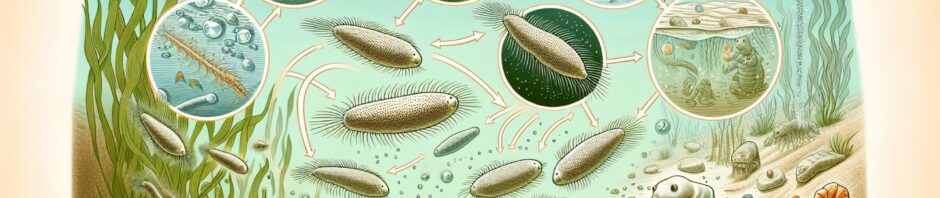
Daphnia, often referred to as water fleas, are a group of small planktonic crustaceans that play a pivotal role in freshwater ecosystems. Their significance extends from acting as a primary food source for various predators to serving as indicators of water quality. This article delves into the multifaceted nature of daphnia, exploring their ecological importance, life cycle, and contributions to environmental assessment.
Introduction to Daphnia
Daphnia are part of the broader group of organisms known as Cladocera. As non-marine cladocerans, they inhabit an array of freshwater environments, from ponds and lakes to slow-flowing rivers. They are a key group within zooplankton communities, comprising a considerable portion of the aquatic invertebrate population.
An Overview of Their Ecological Significance
Trophic Levels and Food Web Dynamics
Daphnia reside at a crucial juncture in trophic levels—they consume algae and bacteria and, in turn, are preyed upon by larger organisms such as fish. They are integral to energy transfer within aquatic food webs, often affecting the structure and productivity of these communities.
Nutrient Cycling and Dissolved Oxygen
Through their feeding actions, daphnia contribute to nutrient cycling, particularly the phosphorus and nitrogen cycles. Their filter-feeding process clears water columns of excess particles and influences the levels of dissolved oxygen, which is critical for the survival of aquatic life.
Daphnia’s Life Cycle and Reproduction
Understanding the life cycle of daphnia is key to comprehending their ecological roles. They display two reproductive strategies: parthenogenesis, a form of asexual reproduction where females produce offspring without males, and sexual reproduction, which occurs under more stressful conditions and leads to the creation of ephippia—durable resting eggs that can withstand unfavorable conditions.
Biomonitoring and Water Quality Indicators
Daphnia are highly sensitive to changes in their environment. Because of their rapid response to stressors, they serve as excellent water quality indicators, helping scientists in biomonitoring and ecotoxicology to detect harmful substances and assess the general health of aquatic ecosystems.
Life Cycle and Reproduction of Daphnia
The life cycle of daphnia is fascinating, with their ability to switch between asexual and sexual reproduction based on environmental cues. Under favorable conditions, females reproduce asexually, resulting in rapid population increases that can sometimes lead to algal bloom control. Yet, when environmental conditions worsen, the switch to sexual reproduction increases genetic diversity and the resilience of future generations.
Asexual Reproduction: Parthenogenesis
Throughout the growing season, as long as conditions remain stable, daphnia reproduce through parthenogenesis. This process is efficient for rapid population growth and does not require the presence of males. Females give birth to clones that are genetically identical to themselves.
Sexual Reproduction and the Role of Ephippia
In contrast, when resources become limited or environmental conditions deteriorate, sexual reproduction is triggered. Males are produced, and breeding results in the formation of ephippia. Ephippia are protective cases that contain eggs capable of enduring harsh conditions, such as freezing temperatures or desiccation. Once conditions improve, these eggs hatch, and daphnia populations rebound.
Significance in Aquatic Ecosystems
Predator-Prey Interactions
Daphnia are at the heart of predator-prey dynamics in freshwater systems. Their abundance makes them primary targets for fish and other invertebrate predators. Fluctuations in daphnia populations can have cascading effects throughout the ecosystem, influencing the abundance and diversity of both prey (such as algae) and predators.
Algal Blooms and Eutrophication
Eutrophication is a process driven by excessive nutrient inputs, often leading to harmful algal blooms. Daphnia can help control these blooms by feeding on algae. However, an unchecked increase in nutrients can lead to daphnia population crashes, removing this natural control and exacerbating the problem of eutrophication.
Effects of Chemical Pollutants and Environmental Stressors
Daphnia are highly sensitive to changes in water quality, including the presence of chemical pollutants. Their population dynamics and behavioral responses serve as a gauge for the presence of toxic substances and can be used in toxicity testing. Fluctuations in factors like temperature, dissolved oxygen, and pH can all impact daphnia populations and, by extension, the broader aquatic community.
Daphnia as Bioindicators and in Ecotoxicology
The application of daphnia in environmental assessment is extensive, as they are commonly used in standard toxicity tests. These tests assess the impact of chemicals on living organisms and are a cornerstone in ecotoxicological studies. Guidelines and protocols have been established for using daphnia in lab-based tests, making them a reliable and relevant species for detecting environmental hazards.
Biomonitoring and Water Quality Standards
Regulatory agencies often rely on the results of biomonitoring using daphnia to set water quality standards. The sensitivity of daphnia to various pollutants makes them ideal candidates for assessing the impact of industrial discharges, agricultural runoff, and other sources of contamination.
Contributions to Environmental Policy and Regulations
The findings from studies involving daphnia help shape environmental policy and influence regulatory decisions. By establishing the levels of pollutants that cause adverse effects in these organisms, guidelines can be set to protect not only daphnia populations but the entire aquatic ecosystem which depends on them.
Conservation and Management of Daphnia Populations
Given their importance, the conservation of daphnia populations is essential for the health of freshwater ecosystems. Management practices aimed at mitigating pollution, controlling nutrient runoff, and preserving natural habitats all contribute to maintaining balanced daphnia communities.
Challenges in Conservation
Habitat destruction, climate change, and the introduction of invasive species pose significant threats to daphnia populations. Research into their evolutionary adaptations, genetic diversity, and population dynamics provides insights into how to best protect these vital organisms.
Future Directions for Research and Monitoring
Continuous monitoring of daphnia populations and the conditions of their habitats will be crucial in the years to come. Investing in research that explores the effects of changing environmental factors, such as temperature and pH, on daphnia populations will offer valuable data for predictive modeling and ecosystem management.
Conclusion
Daphnia are much more than tiny inhabitants of freshwater environments—they are linchpins in aquatic ecosystems, serving critical functions that sustain both their own species and a myriad of other organisms. As filter feeders, they contribute to water clarity, nutrient cycling, and the control of algal populations. In their capacity as a food source, they support complex food webs and influence predator-prey dynamics. As sensitive bioindicators, they enable the early detection of ecological disturbances and toxicity, helping safeguard the health of aquatic organisms.
The study and preservation of daphnia are imperative, as they embody the interconnectedness of life within aquatic systems. Through continued research, conservation, and responsible environmental management, the resilience and stability of these ecosystems can be ensured. The tiny daphnia, often overlooked, are indeed true giants when it comes to their environmental significance.
Sources
- Lampert, W