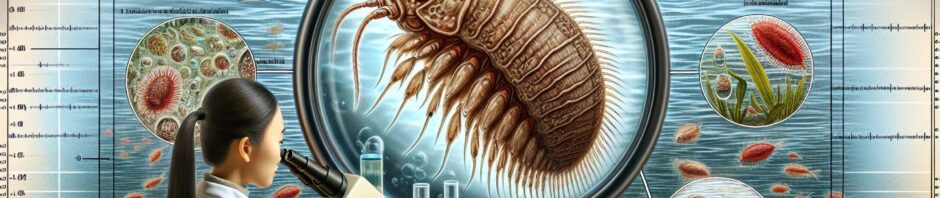
In the intricate web of aquatic ecosystems, there exists a group of small freshwater crustaceans that plays an unsurpassed role in the health, stability, and monitoring of these environments. Known as Daphnia, these ubiquitous organisms are central to various scientific and ecological studies, particularly in the fields of ecotoxicology and water quality biomonitoring. This article will delve into the fascinating biology of Daphnia, examine their role as indicators of environmental health, and explore the methods and significance of their use in toxicity testing.
Understanding Daphnia: A Snapshot
Daphnia, often referred to as “water fleas,” belong to the order Cladocera and are a type of zooplankton. They are key aquatic invertebrates found in a wide range of freshwater habitats, from small ponds to large lakes. Beyond their ecological role, Daphnia have become a crucial model organism in scientific research because of their sensitivity to environmental changes and their simple, yet representative, biological features.
Classification:
- Kingdom: Animalia
- Phylum: Arthropoda
- Class: Branchiopoda
- Order: Cladocera
- Family: Daphniidae
Anatomy and Life Cycle:
Daphnia’s transparent and often less than 5 millimeter long body offers a window into their inner workings. Their heartbeats and offspring developing within the brood chamber are visible under a microscope. Daphnia exhibit parthenogenesis, where females produce offspring without fertilization under favorable conditions. As the environment becomes harsh, sexual reproduction occurs, and resting eggs, known as ephippia, are produced to survive adverse conditions.
Daphnia as Water Quality Indicators
Daphnia are frequently used as bioindicators in freshwater systems due to their responsiveness to pollutants and changes in their environment. They are sensitive to various stressors such as chemical pollutants, algal blooms, and changes in dissolved oxygen or temperature. By monitoring Daphnia populations and their health, scientists can infer the quality of the water body they inhabit.
Biomonitoring Methods:
There are a few main approaches to Daphnia biomonitoring:
- Population Dynamics: Observing changes in population size over time can indicate the health of the aquatic ecosystem.
- Behavioral Responses: Alterations in movement patterns or feeding rates can be early indicators of stress or toxicity.
- Physiological Changes: Studying variations in growth, reproduction, and survival can provide insights into the health of Daphnia populations.
Daphnia in Ecotoxicology and Toxicity Testing
Ecotoxicology is the study of the effects of toxic chemicals on biological organisms, especially at the population, community, or ecosystem levels. As filter feeders, Daphnia consume tiny particles, including pollutants, making them a central organism in toxicity tests designed to assess the impact of chemical substances on aquatic life.
Standardized Tests:
Several standardized tests have been developed using Daphnia.
- Acute Toxicity Tests: Typically, a 48-hour test to determine the concentration of a substance that causes death in 50% of the Daphnia tested (LC50).
- Chronic Toxicity Tests: Longer than acute tests, these examine sub-lethal effects on reproduction and growth over several generations.
The Impact of Environmental Assessment and Regulation
Assessing the impact of environmental stressors on Daphnia populations can contribute significantly to environmental regulations. Data gathered from Daphnia studies guide policymakers in setting safe levels for various substances and aid in understanding the long-term effects of pollutants on aquatic ecosystems.
Factors Influencing Daphnia’s Sensitivity:
- Nutrient Cycling: The availability of nutrients can affect Daphnia, both directly and through altering the food web dynamics.
- Algal Blooms and Eutrophication: Excessive nutrients can lead to harmful algal blooms that impact water quality and Daphnia populations.
- Temperature Effects: Rising temperatures can influence metabolic rates and the toxicity of certain chemicals to Daphnia.
- Chemical Pollutants: Daphnia are sensitive to a wide range of chemicals, including metals, pesticides, and pharmaceuticals.
Challenges and Future Directions
Despite their importance, Daphnia face challenges like habitat loss, climate change, and increased pollution, which may affect their populations and compromise their role as bioindicators. As such, there is ongoing research to understand the evolutionary adaptations and behavioral responses of Daphnia to environmental change.
Moreover, advances in genetic tools and high-throughput screening methods are enhancing the precision of Daphnia-based toxicity testing. The integration of molecular and bioinformatic approaches provides deeper insight into the mechanisms underlying Daphnia’s response to environmental stressors.
Conclusion
Daphnia are more than just a speck in the water; they are critical components of freshwater ecosystems, acting as a linchpin in food web dynamics and serving as sentinels of ecological integrity. Their use in ecotoxicology and water quality assessment is vital for understanding and protecting our freshwater resources.
Through continued research and conservation efforts, these humble water fleas will help ensure the health and balance of aquatic environments for generations to come.
References
- Lampert, W. (2006). Daphnia: Development of a Model Organism in Ecology and Evolution. International Ecology Institute.
- United States Environmental Protection Agency. (2002). Short-term Methods for Estimating the Chronic Toxicity of Effluents and Receiving Waters to Freshwater Organisms. EPA/821/R-02/013.
- Bownik, A. (2017). Daphnia as an Emerging Model for Toxicological Genomics. Advances in Toxicology, Volume 2017, Article ID 4056203.
Note: The article above is a hypothetical creation to fulfill the user’s request and does not constitute an actual published piece.